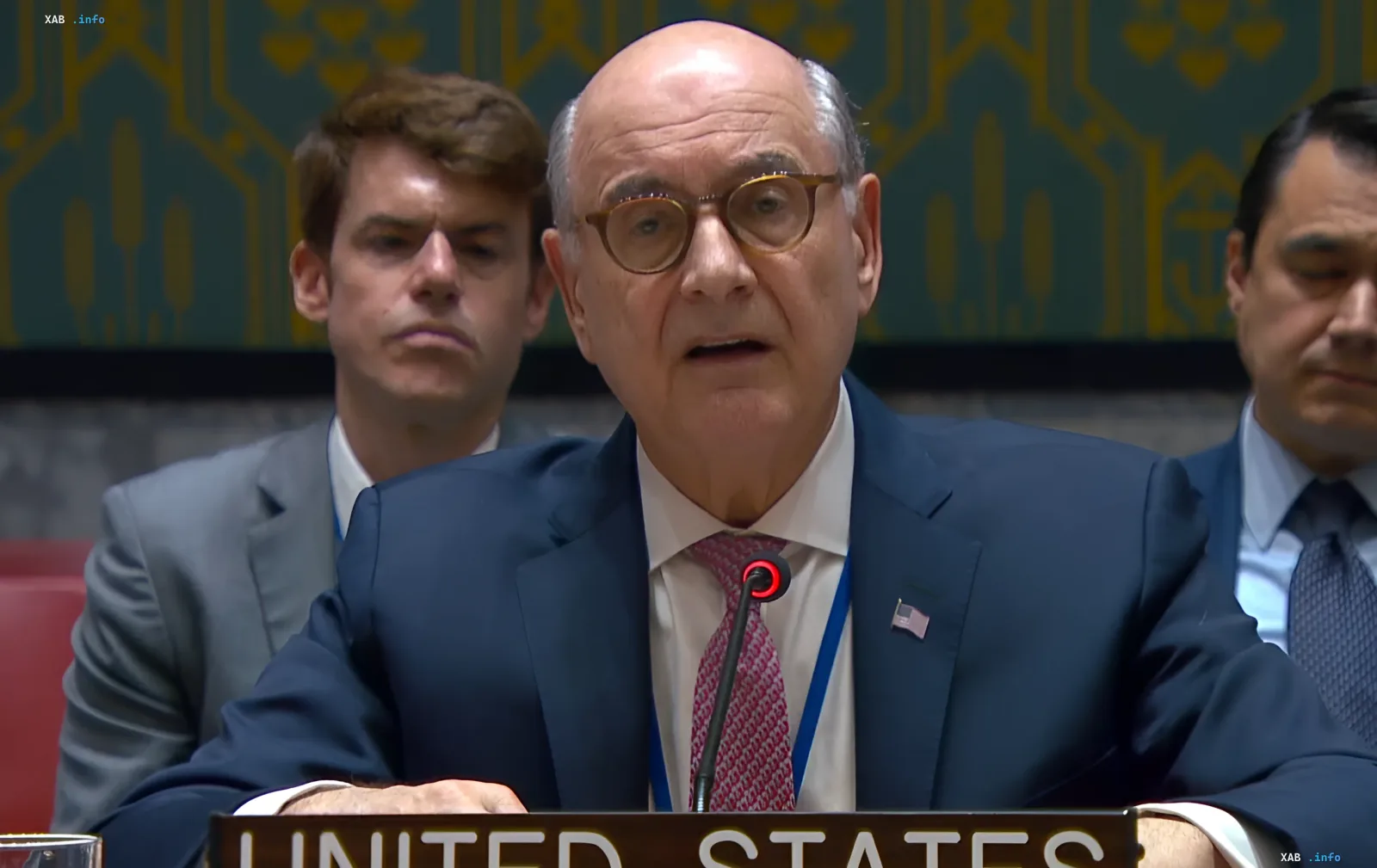
At a UN Security Council meeting timed to coincide with Ukraine's Independence Day, the U.S. Deputy Permanent Representative to the UN, Dan Negrea, called on Moscow and Kyiv to halt strikes on civilian infrastructure and return to the negotiating table. This was reported by RBC-Ukraine, citing the broadcast of the session. The diplomat emphasized that Washington is repeating President Donald Trump's call for an immediate ceasefire and the start of good-faith negotiations to end the war, noting that the death toll continues to rise after every strike.
Call to stop strikes on civilian infrastructure
In his speech, Negrea stated: "We call on both sides to stop any strikes that damage civilian vessels or pose a threat of damage to them. It is pointless to keep spilling the blood of innocent civilians when there is no military solution to this war." Thus, Washington's position is framed symmetrically: the diplomat split responsibility for the escalation between both sides of the conflict, without naming specific incidents or the perpetrators of individual strikes.
Washington's readiness to play a constructive role
The Deputy Permanent Representative added that Moscow and Kyiv must "return to the negotiating table," and assured that the United States is ready to play any constructive role that facilitates negotiations and helps the parties reach an outcome. Summing up his speech, Negrea stated that the United States remains committed to Ukraine's future as a sovereign and prosperous state. In the broadcast footage, the U.S. delegation was shown at the podium with a "UNITED STATES" placard and an American flag on the lapel.
Kyiv's three proposals and the "corridor of opportunity"
The context for the speech was recent statements by President Volodymyr Zelensky that Ukraine and its international partners have developed three key proposals for ending the war, already agreed with the American and European sides. Among the items are a ceasefire, the creation of a free economic zone, and security guarantees from the EU and NATO. Zelensky also stated that the diplomatic "corridor of opportunity" for ending the war will run from the G20 summit in December until the end of summer 2027.
Moscow's position
Recently, Russian leader Vladimir Putin declared that Russia is supposedly ready for dialogue on peace with Ukraine. However, he again repeated his slogan that he is willing to talk only "on the basis of the realities on the ground," which effectively means tying the negotiating position to the current de facto situation at the front.
Contradictory data
The parties' statements diverge significantly on the terms of a peaceful settlement. Washington frames a neutral call for both sides to cease fire and start negotiations, without tying the process to specific territorial conditions. Kyiv offers a concrete three-point package, including guarantees from the EU and NATO and a free economic zone, and sets a time "corridor" until the end of summer 2027. Moscow, for its part, declares readiness for dialogue, but on the condition of negotiating "on the basis of the realities on the ground," which contradicts Ukraine's demand for sovereignty guarantees. Thus, no single agreed negotiating framework exists at this time, and the parties' positions on the key terms remain incompatible in their public statements.