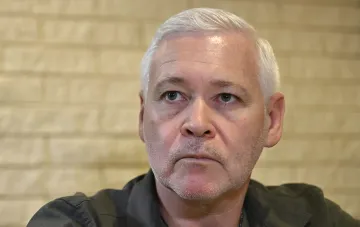
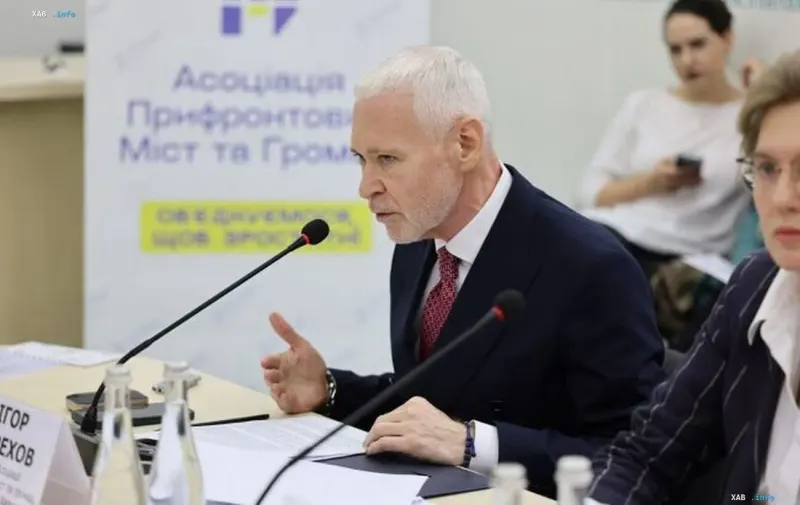
At a board meeting of the Association of Frontline Cities and Communities (AFCC), Kharkiv Mayor Ihor Terekhov presented a package of proposals for forming the state budget for 2027. According to him, the budget must help people and businesses survive at the front line and keep residents from leaving frontline territories. Terekhov emphasized that the issues under discussion "directly concern the financial capacity of our communities, the support of people and businesses, and the decisions that needed to be made as early as yesterday," and called for an "open and constructive conversation," since residents are waiting for concrete state decisions.
What the Funds Are Needed For
The Association proposed allocating additional funding in the 2027 budget for the recovery and support of frontline communities: maintaining their financial sustainability, energy sustainability, developing the social sector, and implementing key infrastructure projects. The specific areas named are water supply, wastewater, energy, healthcare, construction of shelters, housing, and utility infrastructure. Terekhov noted that this is "not a wish list," since the Association's specialists have calculated virtually every proposed area, and that from these facilities "it literally depends whether people will remain in their communities and whether these communities can function normally."
Figures and the Package of Proposals
According to the figures presented at the meeting, frontline zones as a whole need an additional 67 billion hryvnias. At the same time, 34 communities prepared 51 priority public investment projects worth a total of about 8.4 billion hryvnias, while the Association's overall package of proposals, according to Terekhov, amounts to 75 billion hryvnias. The participants of the meeting supported a number of key financial mechanisms: retaining the 64% personal income tax rate, compensating the difference in tariffs, and carrying over remaining funds to subsequent budget periods if project implementation is delayed due to the security situation or late arrival of funding.
Legislative Guarantees for Residents
Deputies raised the question of legislative guarantees for people who continue to live and work in frontline communities. The discussion concerned introducing separate guarantees for those who ensure the functioning of communities under constant danger, as well as taking working conditions into account when calculating pension service. Previously, Terekhov had stated that one year of work in frontline territories should count as two years of insurance service. The head of the AFCC emphasized that communities see the real needs of their territories more clearly, while the government forms the budget and policy, and parliament makes the final decisions, and called for not losing the voice of frontline communities in this process.
Contradictory Data
The figures presented at the meeting contain a discrepancy that is important to take into account. On the one hand, it is reported that frontline zones "need an additional 67 billion hryvnias in total." On the other — Terekhov speaks of a "package of proposals for 75 billion hryvnias," while 34 communities separately provided projects worth 8.4 billion. The difference between 67 and 75 billion is not explained in the original source: it is not specified whether the 75-billion package includes the same 67-billion need plus additional measures, or whether these are two different slices of calculation (community needs versus the Association's full package of proposals, possibly with a broader scope). Until official details are provided in the budget draft text, both figures should be regarded as different, but not fully reconciled indicators.
The Role of Communities in Budget Formation
In concluding, Terekhov stated that the Association's task is to ensure that in the process of forming the budget and state policy "the voice of frontline communities is not lost," since the allocated figures determine the ability of these territories to work, recover, and provide a normal life for people "where it is hardest today." Thus, the AFCC's proposals for the 2027 budget become one of the key inputs of regional interests into national financial decisions against the backdrop of ongoing combat operations at the front line.