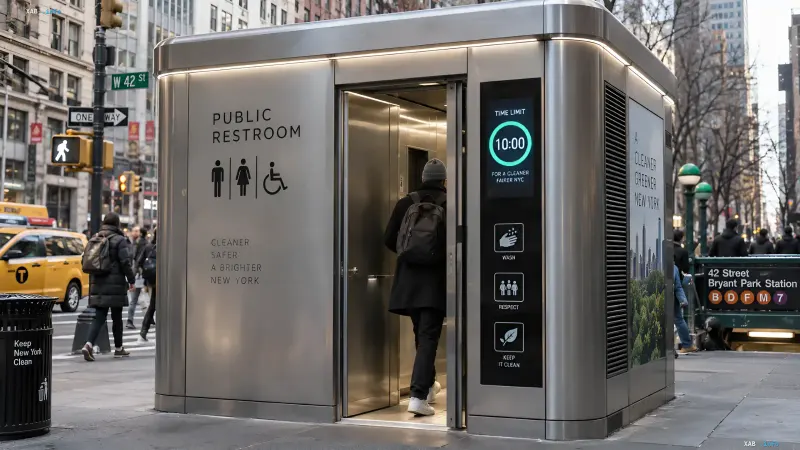
New York City has rolled out a major municipal infrastructure project worth $4 million aimed at improving public sanitation. The initiative involves installing 17 modern public restrooms located in high-traffic areas and public spaces across all five boroughs of the metropolis. This step addresses the long-standing shortage and unsanitary conditions of older public facilities.
Operational Features and Technology
The new high-tech cabins are completely free for citizens and visitors, operating daily from 7:00 AM to 10:00 PM. To use the restroom, visitors can scan a QR code, unlock the door via a specialized mobile application, or make a phone call. The interiors provide comfortable conditions, including accessibility for people with disabilities, contactless control systems, modern sinks, baby-changing stations, and reliable climate control.
Time Limit and Warning System
A primary structural and software feature of the new facilities is a strict time limit on occupancy. According to official municipal regulations, each usage session is limited to exactly 10 minutes. The process is fully automated: after five minutes, the system informs the user that half the time has elapsed, and at the eight-minute mark, a final warning is issued. Once 10 minutes expire, bright lights and an audible alarm turn on inside the cabin, after which the door automatically unlocks.
Project Goals and Timeline
The New York City administration emphasizes that implementing strict timeframes and automation is designed to maximize throughput, ensuring that as many people as possible can utilize the amenities throughout the day. Active installation work began in mid-September 2026, with completion scheduled for late October of this year.
Controversial Data
While official reports from the city administration highlight convenience, hygiene, and service accessibility for the maximum number of citizens, active debates have unfolded in urban communities. Some residents and urban planners express concern over the strict 10-minute limit, noting that in a bustling metropolis or during unforeseen health issues, such a restriction could create stressful situations for users.