On August 19, 2026, Ukrainian business faced an unprecedented challenge: massive losses from Russian shelling of warehouses and logistics centers reached billions of hryvnias. Amidst the ongoing war, the state admits its inability to directly compensate these losses to companies due to a lack of funds in the budget. This was stated by Danilo Hetmanets, Head of the Verkhovna Rada Financial Committee, in an interview with RBC-Ukraine, emphasizing that direct business losses are comparable to the country's annual GDP.
Credit programs as an alternative to direct payments
Hetmanets pointed out that instead of direct compensation, the state should focus on creating conditions for businesses to access credit programs. According to him, large companies such as "Epitsentr" and "Nova Poshta" are ready to take billions of hryvnias from the banking system at acceptable interest rates. The deputy noted that expanding the "5-7-9%" program is already being discussed with the Prime Minister and the Minister of Economy. However, small and medium-sized businesses will not be able to compete for these resources if the programs are opened without restrictions.
The problem of insurance limits
The existing war risk insurance program works "very conditionally," as the compensation limit is only 30 million hryvnias. For large chains, this is a negligible amount, although small businesses could show greater activity. Hetmanets proposed increasing the program's funding by 10–30 times — to 10–30 billion hryvnias. The Rada expects relevant proposals from the Ministry of Economy and is ready to support the initiative, even if additional funds are required.
Contradictory data
On the one hand, Hetmanets claims that the state is obliged to subsidize part of the interest rate and provide guarantees for business. On the other hand, he admits that the budget does not have resources for direct compensation. This creates a contradiction: how can the state simultaneously limit direct payments and expand credit programs if the budget is already overloaded? Furthermore, there is no clarity on how funds will be distributed between large and small businesses to avoid inequality.
Recent strikes on infrastructure
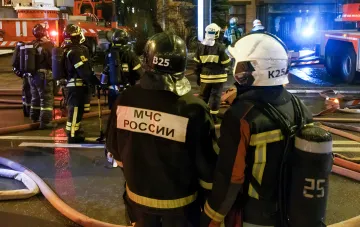
Just the day before, on August 18, 2026, Russian forces struck the "Kyivguma" factory. The manufacturer is assessing the damage, and production has been temporarily suspended. Explosions did not subside almost all day in the Kyiv region: Russian missiles hit a train used by the company EVA. A distribution center was damaged, exacerbating logistical problems for business. These events highlight the need for an urgent solution to insurance and lending issues.
Prospects and risks
If the state cannot promptly expand insurance and lending programs, business may face even greater losses. Small and medium-sized businesses risk ending up in an even more vulnerable position if resources are directed primarily to large companies. At the same time, without state support, many enterprises may not survive, leading to rising unemployment and an economic downturn. The parliament and government must find a balance between the interests of different economic sectors and budget capabilities.