Massive attack on the capital: second night in a row
On the night of August 19, 2026, Moscow was once again subjected to a large-scale attack by unmanned aerial vehicles. This is the second night in a row that Russian authorities have recorded massive strikes on the capital and surrounding regions. According to Moscow Mayor Sergei Sobyanin, more than 20 drones were shot down in the past few hours — the figure continues to rise as information is clarified. Explosions were heard in various districts of the city, including industrial zones and suburbs.
The situation is complicated by the fact that similar attacks occurred in previous nights: on the night of August 18, fires were recorded in the Moscow region, and on August 16, a major fire broke out at a Wildberries warehouse. The Mayor of Moscow previously noted a multiple increase in the number of attacks by Ukrainian strike drones on the capital, which indicates an escalation of tension.
Aviation restrictions: Moscow and Yaroslavl airports suspend operations
Due to security threats, Rosaviatsiya temporarily restricted the operation of several airports in the Moscow region. In particular, Yaroslavl airport suspended operations — the regional governor explained this as a precautionary measure due to the possible entry of drones into the airspace. Restrictions on takeoffs and landings were also introduced at Sheremetyevo, Domodedovo, and Vnukovo airports, leading to flight delays and cancellations.
Contradictory data: exactly how many drones were shot down?
Official figures on the number of downed unmanned aerial vehicles vary depending on the source. Moscow Mayor Sergei Sobyanin, in his statements, first indicated 10, then 20 downed drones. However, other sources, including news portals, report significantly higher figures: according to Mail.ru, air defense forces repelled an attack of 113 UAVs. At the same time, RBK-Ukraine and m24.ru refer to more modest estimates — from 4 to 20 units. These discrepancies may be due to different counting methodologies (for example, including decoys or drones shot down while approaching other regions).
Consequences of the attack: fires, damage, and threat to infrastructure
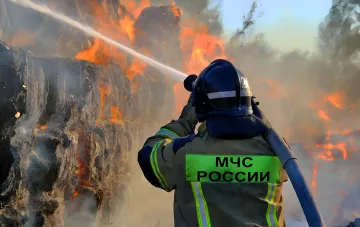
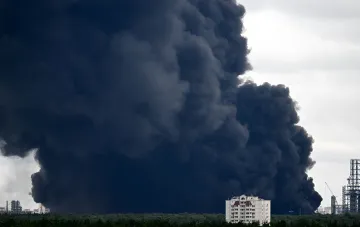
As a result of the attacks, fires were recorded at industrial facilities, including an Ozon warehouse and the territory near an oil refinery. According to TSN.ua, explosions occurred near critically important infrastructure, increasing risks to energy supply and logistics. There are also reports of damage to civilian objects, although official data on casualties has not yet been confirmed. Experts note that such attacks are aimed not only at causing material damage but also at destabilizing the operation of key nodes of the Russian economy.
Context: increase in attacks on Moscow in August 2026
Attacks on Moscow in August 2026 became part of a general trend of intensifying strikes on Russian cities. At the beginning of the month, Sergei Sobyanin already complained about a sharp increase in the number of Ukrainian drone attacks. This coincides with a change in tactics: instead of targeted strikes, there is a shift towards massive raids aimed at overloading air defense systems and creating chaos in the rear. Analysts link this to possible preparations for larger-scale operations or a response to actions by the Russian side on the front.