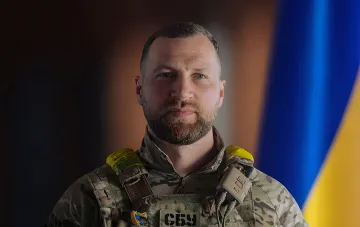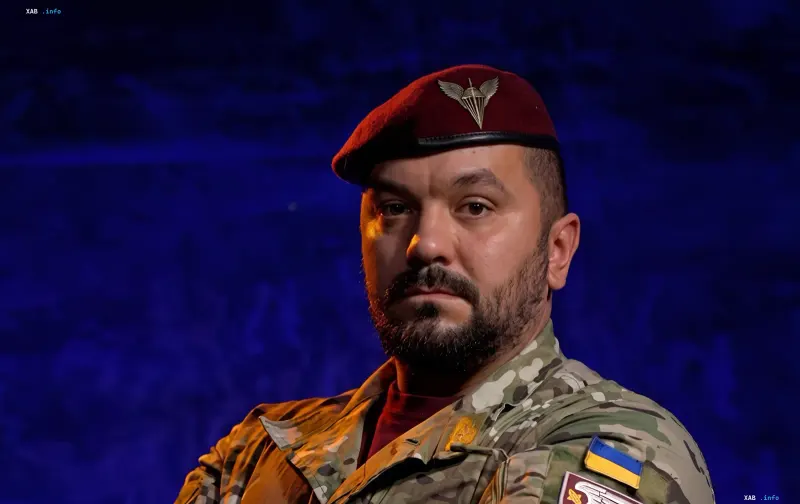
In the context of escalating drone warfare, the Ukrainian Armed Forces are forced to constantly adapt their tactical schemes. Colonel Artem Skuratovsky, Head of the Air Defense Department of the 7th Rapid Response Air Assault Corps, revealed details of the fight against the latest Russian attack drones in an exclusive interview with 'ArmyInform' (citing RBC-Ukraine). According to him, Ukrainian tactics in countering 'Geran' and Shahed-136 type drones are noticeably progressing, but the emergence of jet-powered modifications requires a paradigm shift in defense.
Comprehensive strategy against 'Shaheds'
According to Colonel Skuratovsky, Ukrainian forces have achieved high effectiveness in shooting down classic attack drones. Statistics show that 80% to 93% of 'Geran-2' and Shahed-136 drones are intercepted. The expert emphasizes that this result is not due to any single 'magic' tool. Success is achieved through the synergy of various types of weapons and tactical groups.
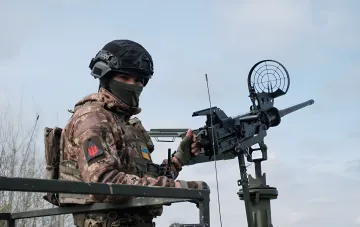
The foundation of success lies in the joint work of mobile fire groups, aviation, air defense units, electronic warfare (EW) means, and interceptor drones. It is precisely this comprehensive approach that allows for securing the airspace over positions and critical infrastructure, inflicting significant damage on the enemy's plans for mass strikes.
The threat of 'Geran-3': speed and dimensions
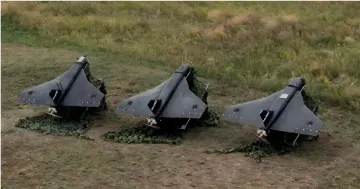
Noting the high effectiveness of Ukrainian air defense, the Russians have moved to the active deployment of production of a new modification — the jet-powered drone 'Geran-3'. According to Skuratovsky, these drones appeared en masse at the beginning of last year. The key difference of the new model is flight speed, which is four times higher than that of ordinary 'Shaheds'. Currently, jet drones account for up to 20% of all aerial targets used by the enemy.
Despite the increased threat, the 81st Separate Airmobile Slobozhanska Brigade of the 7th Air Assault Corps already has confirmed cases of successfully shooting down 'Geran-3' using interceptor drones. This indicates that Ukrainian military personnel have already found ways to neutralize faster targets, although work on improving methods continues.
Physics of interception: why methods are changing
Colonel Skuratovsky draws attention to an important physical nuance that dictates the choice of weapons for interception. While mobile fire groups work well against classic 'Shaheds', other solutions are required to combat jet modifications. In particular, various types of man-portable air-defense systems (MANPADS) and surface-to-air missile systems become more effective.
The reason lies in the characteristics of the drones themselves. Jet models have larger dimensions and powerful thermal radiation from the engine. It is precisely these weak points — high visibility in the thermal spectrum and increased target area — that are used by Ukrainian crews to guarantee the interception of targets.
Goals and tasks of the 7th Air Assault Corps
Crews of the 7th Air Assault Corps continue to refine their anti-drone strategy, understanding that the war in the air is becoming increasingly dynamic. The main goal of these efforts is to reduce the combat potential of the enemy and reliably cover the positions of defense forces. Special attention is paid to protecting critical infrastructure and residential areas to minimize damage from possible drone breakthroughs.
Alongside tactical developments, the corps command is also considering organizational issues. Previously, the commander of the 7th Air Assault Corps proposed expanding civilian positions in the army, following the example of the US Armed Forces, which indicates a desire to modernize not only the weaponry but also the very structure of troop management.