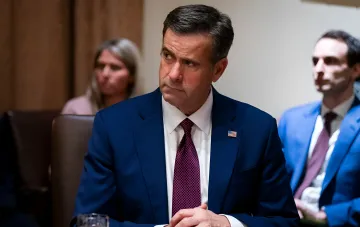
On 25 August 2026, the director of the U.S. Central Intelligence Agency, John Ratcliffe, arrived at Moscow's Vnukovo Airport without any prior announcement. According to Flightradar24 data, the U.S. heavy transport aircraft C-17A Globemaster III — the main U.S. Department of Defense aircraft used for diplomatic transport — landed in the Russian capital after 9:00 local time. The aircraft spent about eight and a half hours in Moscow and took off again for Riga, Latvia, at around 17:30, where it completed its route. Neither side had announced the visit in advance, which in itself signaled its closed and operational nature.
The Kremlin's official version: 'establishing contacts'
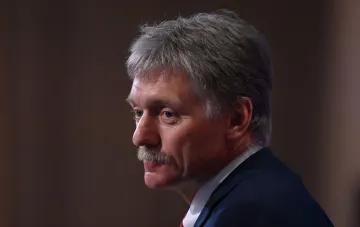
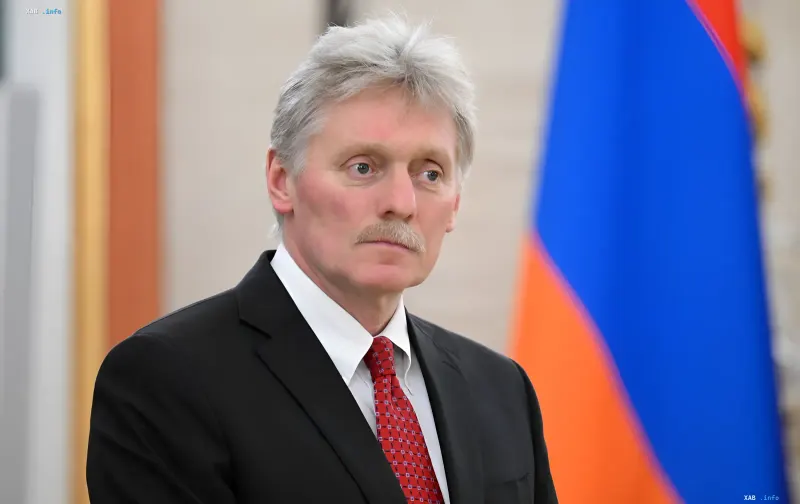
When answering journalists' questions about the purpose of the CIA director's trip, Russian presidential press secretary Dmitry Peskov limited himself to the phrase 'establishing contacts between security services.' He refused to provide any additional details. In a comment to TASS, Peskov clarified that no meetings between Ratcliffe and Vladimir Putin were planned as part of this trip. Notably, earlier on Tuesday Peskov had stated that the Kremlin had 'no information' about U.S. military aircraft arriving at Vnukovo and that the Russian side did not plan to meet with representatives of the U.S. administration that week. Thus, Moscow's official position is kept to a minimum: the visit is acknowledged, but its content remains closed.
The aircraft's route: Andrews — Riga — Moscow — Riga
According to Flightradar24, the C-17A took off from Joint Base Andrews (Washington) on Sunday evening, heading for Riga. The aircraft spent about 24 hours in the Latvian capital before flying to Moscow on the morning of Tuesday, 25 August. The choice of the C-17A Globemaster III for such a trip is no coincidence: this aircraft allows high-level delegations to bring along specialized equipment, electronic devices and support staff, which is characteristic of visits involving the exchange of intelligence. The total time spent in Moscow — around 8.5 hours — indicates a working-meeting format rather than a protocol event.
What, according to media reports, lay behind the visit
The Washington Post, as cited by RBC-Ukraine, reported that following the meeting the U.S. side was to return with details. An RBC-Ukraine source said that Washington had asked Kyiv to refrain from striking Moscow in the coming days during the stay of the U.S. delegation. Sources told Financial Times that the request for a pause covered the period from 24 to 26 August and concerned not only Moscow but also Saint Petersburg and the northern regions of Russia. The Wall Street Journal, for its part, wrote that the U.S. had received intelligence on Russia's early preparations for mobilization and on plans to 'test NATO's resolve.' According to analysts familiar with the situation, Ratcliffe's visit was intended as a warning to Moscow not to take such a step. A number of other outlets suggested that Moscow discussed a mutual cessation of strikes on the energy infrastructure and ports of Ukraine and Russia, as well as a cessation of hostilities in Sumy and Kharkiv oblasts, as steps toward a broader de-escalation.
Contradictory data
There is a significant gap between the Kremlin's official position and Western media reports. Peskov characterizes the visit as a routine 'establishing of contacts between security services' and emphasizes that there were no meetings with Putin. At the same time, earlier that same day he had stated that the Kremlin had no information about the arrival of U.S. military aircraft — which directly contradicts the fact of a visit that had already taken place and which he himself commented on. The media, by contrast, describe the trip as an operational intelligence signal: a warning about mobilization plans, a request for a pause in strikes, and discussions of de-escalation measures. Neither version has been documented, and neither side has disclosed the protocol of the meeting. Thus, readers are left with two narratives — a 'technical contact' and a 'strategic warning' — and the choice between them depends on the degree of trust in a given source.
Historical context: since November 2021
The last known visit by a CIA director to Moscow took place in November 2021, when William Burns, who headed the agency under President Joe Biden, personally warned Vladimir Putin and his closest aides against an attack on Ukraine and outlined in detail the consequences of such a step. As is known, within weeks of that meeting Moscow launched a full-scale invasion. Ratcliffe's visit on 25 August 2026 marked the first appearance of the CIA director in the Russian capital in more than four years and, according to analysts, carries a similar warning charge — against a backdrop of intelligence on preparations for mobilization and a potential test of the NATO alliance's resilience.