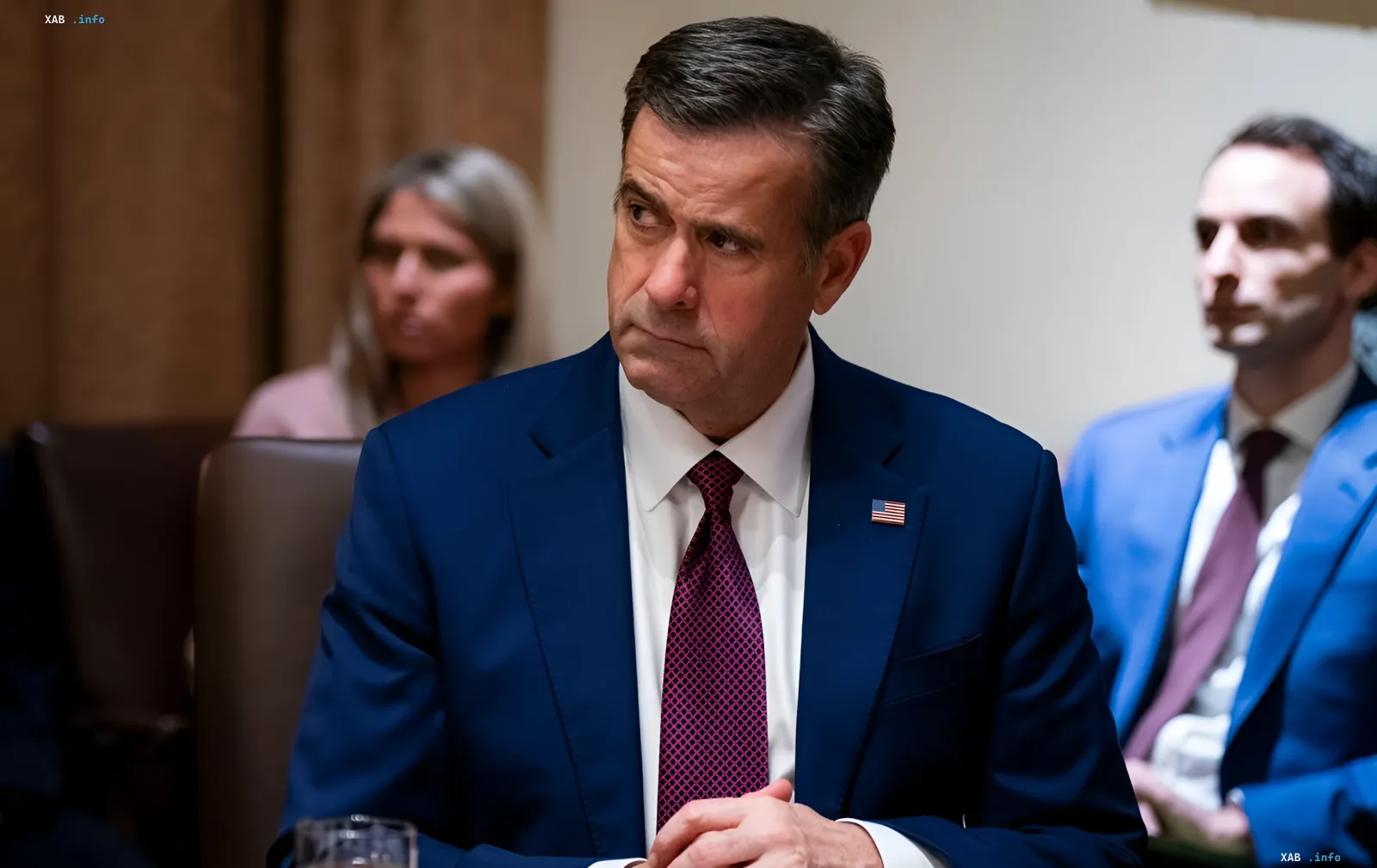
The Director of the U.S. Central Intelligence Agency, John Ratcliffe, made an unannounced visit to Moscow that lasted only a few hours. The trip took place against the backdrop of the Donald Trump administration's efforts to end Russia's war against Ukraine and the growing tension between Moscow and the West. This is reported by RBC-Ukraine, citing Newsweek, which analyzed the possible reasons for the visit by the head of American intelligence. According to The Washington Post, after returning from Russia, Ratcliffe briefed the White House, confirming the high priority of the mission on the president's agenda.
Trump's Confirmation and the Kremlin's Position
Donald Trump himself publicly confirmed that he was the one who sent Ratcliffe to Moscow. "Something may come of it. We are working very hard to end this war," the U.S. president stated. Kremlin spokesman Dmitry Peskov, for his part, reported that Ratcliffe met with representatives of Russian intelligence, not with Vladimir Putin, although the Russian president was briefed on the course of the negotiations. Former British defense attaché in Russia John Forman emphasized that the CIA director's trip to Moscow is an extremely unusual event: "The U.S. president does not send the CIA director to Moscow unless it is a serious matter."
Mobilization and Escalation: Two Main Scenarios
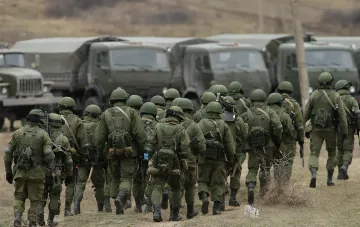
One of the key possible reasons for the visit was Washington's attempt to reassure the Kremlin about carrying out a new mobilization. The Wall Street Journal suggested that Ratcliffe may have delivered a warning to Putin following U.S. intelligence reports of a mobilization project being prepared after the parliamentary elections scheduled for September 20. Ukrainian President Volodymyr Zelenskyy had earlier stated that Russia could mobilize up to 300,000 additional servicemembers to replenish its losses. At the same time, another likely topic of the negotiations was the risk of Russian escalation against NATO countries: U.S. media materials cite an intelligence assessment that envisages scenarios ranging from a cyberattack to a limited invasion aimed at testing the Alliance's unity and its readiness to fulfill its Article 5 obligations. Russia's mobilization military exercises in the Kaliningrad region — an exclave on the Baltic Sea that could end up at the center of a potential conflict — are also mentioned separately.
Contradictory Data
There is a direct discrepancy in versions on the question of the impending mobilization. On the one hand, U.S. intelligence, according to WSJ, has detected the preparation of the corresponding project, and Zelenskyy estimated the scale of possible conscription at 300,000 people. On the other hand, the Kremlin categorically denies preparing a new mobilization: Peskov has stated that such claims are spread by the Ukrainian authorities. A similar inconsistency exists in the assessment of the visit's goals as well: Newsweek and Euronews offer five different versions — from a warning about mobilization to discussing the exchange of intelligence with Iran — yet none of them has been officially confirmed by either Washington or Moscow. The exact nature of the negotiations and their outcomes remain classified.
Prisoner Exchange and the Iran Question
Another possible subject of discussion was American citizens held in Russian prisons. The CIA has previously played a key role in such arrangements: in 2024, as part of an exchange, Wall Street Journal journalist Evan Gershkovich and former U.S. Marine Paul Whelan were released. Ratcliffe also took part in negotiations on the release of Ksenia Karelin — a citizen of Russia and the United States convicted in Russia of treason. In early August 2026, Russia released former Marine Robert Gilmour. Moscow's relations with Tehran could have been a separate topic: at the Senate Intelligence Committee hearings on March 18, Ratcliffe stated that Iran is asking Russia to share intelligence on U.S. military assets in the Middle East. RUSI research fellow Sari Arho Gavrill suggested that the visit may have been linked to warning Moscow about possible hybrid activity in the Baltic states or to the exchange of intelligence with Iran.
A Diplomatic Signal Against a Backdrop of Stalemate
The visit took place against the backdrop of a noticeable stalemate in U.S. efforts to achieve a peace agreement on Ukraine. In this context, Ratcliffe, according to analysts, may have been assessing how ready Moscow is to talk seriously about negotiations, as well as conveying a signal: if Russia does not soften the conditions for ending the war, the United States may increase its support for Kyiv, including in matters of intelligence and long-range strikes. The combination of factors — from mobilization risks to the Iran track — makes this visit one of the most significant episodes of Russian-American interaction in 2026, although its final outcome remains a matter of speculation until official statements from the parties.