Chinese automotive giant BYD has achieved a technological breakthrough in the premium electric vehicle segment by unveiling its flagship crossover, the Great Han. At the heart of this new model lies a revolutionary lithium-iron-phosphate battery with a capacity of 102.3 kWh, developed by its subsidiary FinDreams. This powertrain component demonstrates impressive energy density, providing the vehicle with a driving range that was previously considered unattainable for mass-market models.
FinDreams Technology and Record-Setting Range
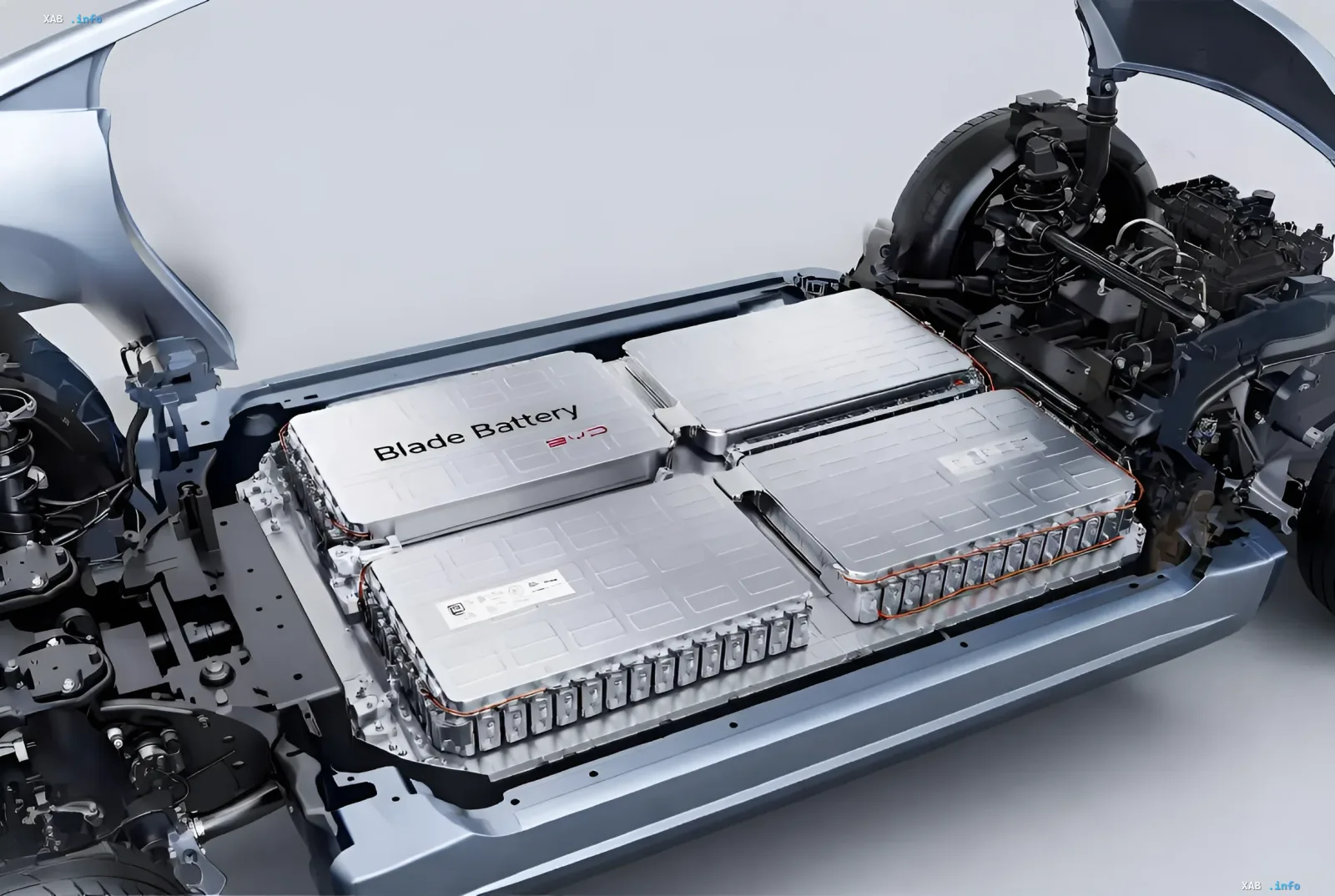
The new battery, known as the Blade Battery, weighs 725.9 kg, accounting for more than 30% of the vehicle's total curb weight. Despite its substantial weight, the design allows for the effective placement of the high-capacity block in the vehicle floor without compromising passenger space. BYD engineers have managed to achieve a result where the electric vehicle can cover colossal distances on a single charge.
In the rear-wheel-drive version, equipped with a single electric motor producing 370 kW (496 hp), the range according to the CLTC cycle varies from 970 to 1008 km. This places the Great Han alongside the longest-range electric cars in the world, eliminating one of the main barriers to switching to electric transport—the fear of running out of charge while on the road.
Powertrain and Dynamics
For those who prefer aggressive dynamics, the top-tier Great Han AWD trim is available. It is equipped with two electric motors with a combined peak power of 570 kW (764 hp). This power reserve allows the heavy vehicle to accelerate with figures characteristic of sports coupes. The curb weight of the all-wheel-drive version is 2505 kg, which is 200 kg more than the rear-wheel-drive model, yet the range remains impressive—ranging from 820 to 880 km according to the CLTC cycle.
Dimensions and Market Positioning
Visually, the BYD Great Han is a monumental vehicle. Its dimensions are 5256 x 1999 x 1510 mm, and the wheelbase reaches 3130 mm. For a visual comparison: the new model is 66 mm longer than the standard Mercedes-Benz S-Class, which is traditionally considered the benchmark for comfort and size in the premium segment.
Despite its massive dimensions and advanced technology, BYD plans to offer the vehicle at a price of around $44,000. Such a pricing strategy puts the Chinese manufacturer in a favorable position, allowing it to compete with European and American brands not only on specifications but also on the cost of ownership.