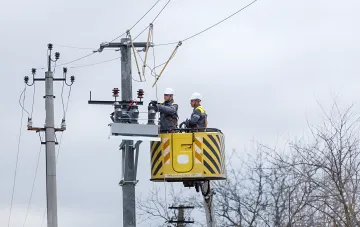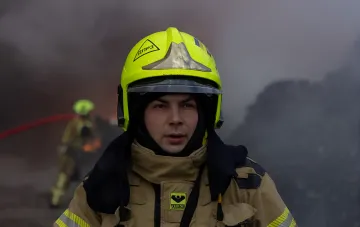
Amid ongoing strikes on critical infrastructure, Ukrainian media and social networks have actively spread claims that the country's authorities have allegedly declared a state of emergency not only in the energy sector, but also in heat and water supply, as well as internet operations. The pretext for such publications was Cabinet of Ministers Resolution No. 1292, which several outlets interpreted as an expansion of the state of emergency regime to new industries. However, as reported by RBC-Ukraine citing an official Cabinet statement on Facebook, the government explicitly denied this interpretation: no state of emergency has been introduced in energy, heat supply, or any other sector.
Official Government Position
The press service of the Cabinet of Ministers emphasized that Resolution No. 1292 is strictly organizational in nature. According to government representatives, the document does not proclaim any new state of emergency regime — it merely defines who is specifically responsible for restoring facilities after attacks and how to coordinate actions between agencies. 'In reality, the Cabinet has appointed heads of operations to eliminate the consequences of Russian attacks on critical infrastructure. Now, specific ministers are responsible for eliminating consequences in energy, heat and water supply, and communications. Moving forward, their joint work will be coordinated by a joint headquarters,' the Cabinet noted. Thus, this is about distributing responsibilities and creating a coordination mechanism, rather than introducing any special legal regime.
The Essence of Resolution No. 1292
Putting aside the emotional tone of the publications, the content of the document boils down to an administrative decision: specific responsible ministers are assigned to each sector of critical infrastructure, and their joint actions will be coordinated through a unified headquarters. This means that during the next blackout, heat outage, or water cut, it will be clearly known which ministry and which leader bear responsibility for eliminating the consequences and restoring system operations. The government insists that this decision is designed to increase manageability in crisis situations, rather than expand the list of sectors declared 'emergency.' It is precisely this difference — between the organizational distribution of roles and the introduction of an emergency regime — that became the source of discrepancies in the media space.
Context: Daily Attacks on Energy
The denial came against the backdrop of Russia continuing to launch daily strikes on Ukraine's energy infrastructure facilities, resulting in power outages in several regions. Specifically, on October 20, the invaders struck an energy facility in the Shevchenkivskyi district of Kyiv, causing power supply disruptions in four districts of the capital simultaneously. It is precisely such regular attacks that create fertile ground for rumors about the 'expansion' of the emergency regime: the more frequently outages occur, the more actively messages about new 'emergency' decisions appear online, which the government then has to dismantle piece by piece.
Water Supply Under Pressure
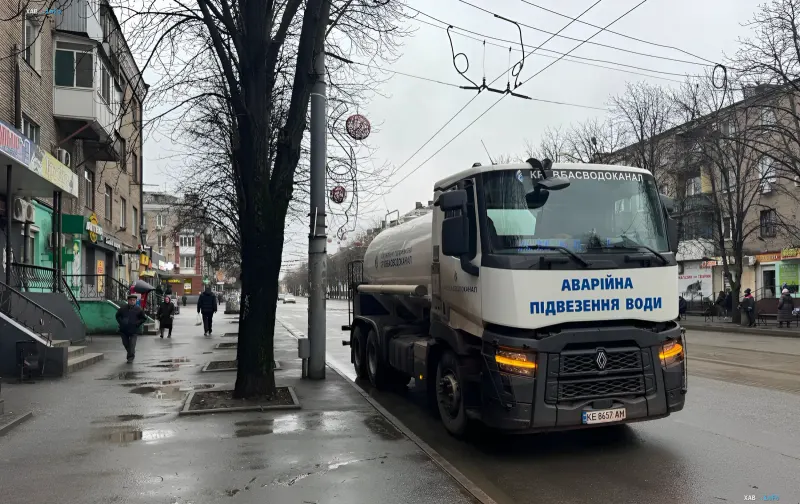
Special attention deserves the water supply sector, which has increasingly entered the risk zone recently due to damage to energy and engineering networks. On the streets of Ukrainian cities, specialized equipment for emergency water supply can increasingly be seen — tankers marked as 'аварійна підвезення води' operating amidst supply disruptions. This clearly demonstrates that problems with water and heat do exist and require prompt response, but, as the Cabinet explains, they are being resolved through organizational mechanisms and appointed responsible ministers, rather than through the formal introduction of a state of emergency. Thus, real work to eliminate the consequences of strikes continues, but its legal qualification by the government is unambiguous: an emergency regime has not been introduced in any of the mentioned areas.