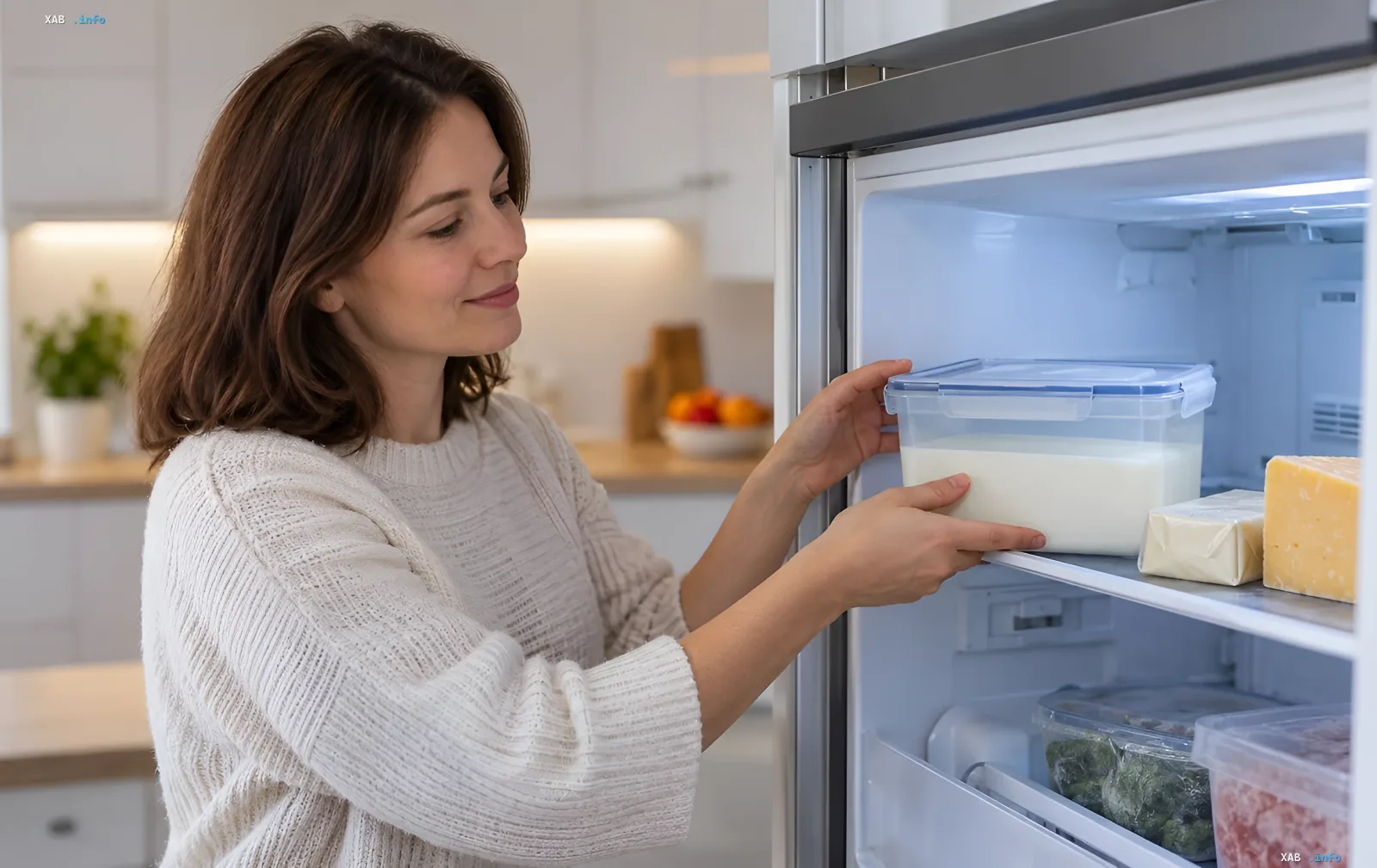
Amid regular power grid disruptions and potential long blackouts, preserving perishable foods becomes extremely relevant. Many households try to stock up in advance, but not all dairy products handle low temperatures equally well. According to recommendations from specialized agencies, such as the US Food Safety and Inspection Service (USDA) and the National Center for Home Food Preservation (NCHFP), proper freezing helps extend food shelf life, but requires following certain technological nuances.
Specifics of Freezing Milk, Cream, and Butter
Regular pasteurized milk handles storage in the freezer exceptionally well, keeping for about three months. It is important to leave a little free space in the container since liquid expands when frozen. After thawing in the refrigerator, such milk is ideal for cooking porridges, baking, or sauces. Heavy and whipped cream can also be frozen, though it is recommended to thoroughly mix or whip them before use because their texture may change slightly. Butter is one of the most trouble-free items for the freezer: wrapped tightly in proper packaging, it maintains its quality for six to nine months.
Complex Products: Cheese, Ricotta, and Sour Cream
Hard and semi-hard cheeses can be frozen for up to six months, but after thawing they become more brittle and grainy, making them better suited for pizza or casseroles rather than cheese platters. As for cottage cheese, ricotta, cream cheese, and sour cream, experts advise against freezing them as stock. Sour cream separates heavily after thawing, turning watery and losing its uniform creamy consistency. Yogurt also alters its structure, so it is best used exclusively in baked goods or smoothies.
Safety Rules and Refrigerator Autonomy
For effective freezing, experts advise using airtight containers or special freezer bags that protect products from foreign odors. All specified periods apply to freezers maintaining a temperature of -18 degrees Celsius or lower. It is vital to remember that freezing cannot make spoiled food safe. During a power outage, refrigerator and freezer doors should remain closed: a closed refrigerator retains cold for about four hours, a fully loaded freezer for up to 48 hours, and a half-loaded one for roughly 24 hours.