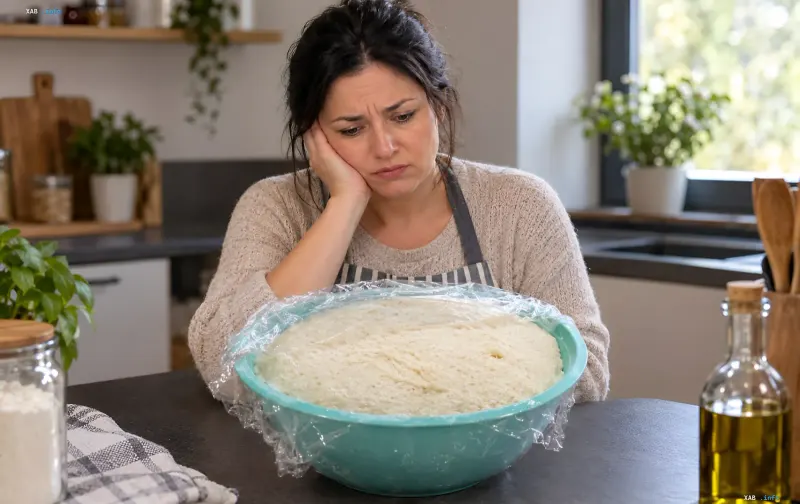
A situation familiar to anyone who bakes at home: you have kneaded yeast dough, patiently waited for it to rise, and suddenly the lights go out in your apartment or house. The oven doesn't work, the microwave is useless, and the yeast continues its work. If you leave the dough in the warmth, it risks over-fermenting, losing its elasticity, and failing to provide the fluffy result you were counting on. This is precisely why the question of preserving yeast dough during power outages is becoming especially relevant in times of unstable energy grid operations.
Cold fermentation: the main preservation method
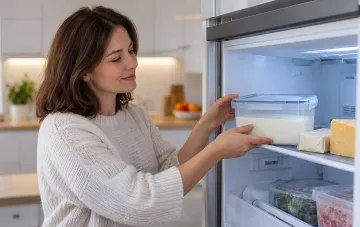
If the dough has already risen but baking it at the moment is impossible, the most effective solution is to move the dough to the refrigerator. Low temperatures significantly slow down yeast activity and, consequently, the release of carbon dioxide, which causes the dough to expand. Professional bakers call this technique cold fermentation or retarding fermentation. Even experienced bakers use it to more flexibly plan the preparation of bread and pastry. Experts at King Arthur Baking emphasize that yeast dough can be refrigerated during both the first and second rising stages.
Practical steps: how to properly put the dough in the refrigerator
To ensure the dough is not harmed, you must follow a few simple rules. First, transfer the dough to a sufficiently large bowl or container so it has room to expand further. Second, cover the container with a lid or plastic wrap so the surface does not dry out. Third, put the dough in the refrigerator as quickly as possible, without leaving it on a warm counter for too long. Finally, do not fill the container to the brim: even in the cold, fermentation does not stop completely. Bakers at King Arthur Baking note that cold rising can take significantly longer than rising at room temperature. For many recipes, 8–12 hours serve as a guideline, but the specific time depends on the dough's composition and its initial state. It is important to remember: the refrigerator does not "turn off" the yeast, it only slows it down, so periodically check the dough, especially if the recipe has a high yeast content.
What to do with already shaped dough and how to act during prolonged outages
Sometimes, dough that has already risen is formed into rolls, buns, or prepared as a loaf. You should not put them back in the bowl and re-knead them. It is enough to lay the pieces on a baking sheet or leave them in a baking pan, cover them with plastic wrap or a lid, and put them in the refrigerator. Experienced bakers advise focusing not only on time but also on the appearance of the dough: if it has barely increased in size after the refrigerator, it may need extra time for proofing at room temperature. If the power is out for a long time and the refrigerator has stopped keeping the required temperature, a thermal bag or a cooling box will help. The portal FoodSafety recommends placing a well-covered container with dough inside, and placing ice packs or bottles of cold water nearby. The main thing is that the dough does not touch the frozen elements directly and does not freeze through. This is not a full-fledged refrigerator replacement, but it helps maintain cool conditions for longer.
Over-proofed dough: can it be saved and what not to do
If you returned to the kitchen and the dough has expanded too much, become too airy, and started to collapse, this is not a reason to throw it away. In professional cooking, this state is called over-proofing. The publication Modernist Cuisine claims that many types of yeast dough can be saved by re-shaping. However, the second rise after re-shaping usually happens faster, so you should not leave the dough unattended for long. If the dough has become runny, sticky, completely lost its structure, and cannot hold its shape, restoring its original quality will be extremely difficult.
The main mistake: trying to accelerate the process with heat
A common mistake is trying to accelerate fermentation by placing the dough in the warmest place possible. If baking is currently impossible, extra heat will only exacerbate the situation: yeast works more actively in a warm environment, the dough may over-ferment too quickly, and its structure will not withstand the gas buildup. The textbook Professional Baking by Wayne Gisslen emphasizes that cooling is used specifically to slow down fermentation, and covering the dough in the refrigerator is necessary to prevent it from drying out. Therefore, do not leave the dough near a radiator, in direct sunlight, or in an oven that you have tried to preheat. If you need to postpone baking until the power is restored, coolness is a much more reliable solution than heat.