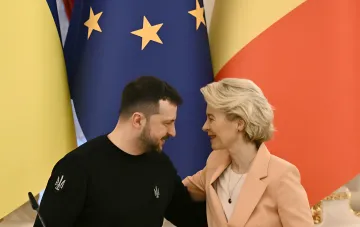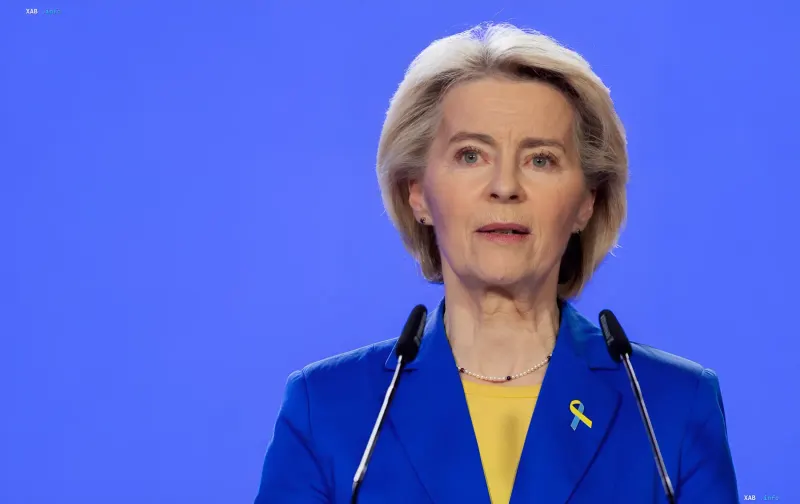
On October 30 in Montreal at a two-day summit, Canadian Prime Minister Mark Carney and European Commission President Ursula von der Leyen announced the creation of a new partnership called the 'Alliance for the Future'. The initiative aims to deepen economic and technological cooperation between Canada and the 27-nation European Union, as well as to jointly counter global threats. According to the leaders, closer relations between the two sides 'have the potential to provide unprecedented stability and opportunities' for both. At the same time, Ottawa agreed to participate in providing a 90 billion euro support loan to Ukraine.
What is the 'Alliance for the Future'
The new grouping is conceived as a platform for cooperation among countries that share common values and strive to better respond to global challenges. Mark Carney, speaking to reporters, stated that 'our societies have experienced new shocks', referring to the devastating consequences of the climate crisis, 'the erosion of democratic norms', and 'the weaponization of trade'. At the same time, the initiative is not limited to two participants: according to the leaders, the alliance is open to other states that share its goals. The partnership is not restricted to international security issues—the parties plan to expand economic ties, reduce trade and tourism barriers, and create new opportunities in education. Following the negotiations, it was stated that further work should contribute to the formation of a more integrated market worth tens of billions of dollars.
Support for Ukraine: 90 Billion Euros and the 2027 Deficit
One of the key outcomes of the summit was Canada's agreement to participate in providing a 90 billion euro support loan to Ukraine. For Kyiv, these agreements are important primarily in the context of Ottawa's additional financial participation. According to Politico data, Ukraine may face a shortfall of about 70 billion euros in 2027, which is why Brussels intends to persuade London and Ottawa to increase their contributions to support Ukraine. In addition to Canada, the EU wants to involve the UK in additional funding. Concurrently, Brussels is discussing other options to cover Ukraine's financial needs for 2027: new joint borrowing on financial markets and the use of frozen Russian assets totaling about 210 billion euros.
Technologies and Supercomputers
Another result of the summit was an agreement allowing Canada to join the European supercomputer network. Thanks to this, Canadian specialists will be able to use European computing power to train artificial intelligence models. Thus, technological cooperation is becoming one of the practical pillars of the new alliance alongside the economic and educational tracks.
Cost of Living and Trade Conflicts
During the summit, Carney and von der Leyen also raised the issue of the cost of living, emphasizing that international trade conflicts can directly impact the expenses of ordinary citizens. Ursula von der Leyen noted that when trade is used as an instrument of economic pressure, families feel the consequences—in particular, this reflects on prices for supermarket products and automobiles. According to her, suppliers of energy, critical minerals, and semiconductors, previously considered reliable partners, are increasingly becoming a means of leverage over other states. Mark Carney, in turn, emphasized the benefits of competition and expressed hope that cooperation between Canada and the EU will help strengthen supply chains and better withstand economic shocks.
Significance of the Agreements
Taken together, the results of the Montreal summit form a framework of long-term partnership designed to strengthen cooperation between states striving for greater resilience against international shocks. For Ukraine, the central element remains Canada's participation in loan support, while the 'Alliance for the Future' as a whole is designed as a mechanism for policy coordination in conditions where, according to the leaders' assessment, trade and resources are increasingly used as tools of pressure.