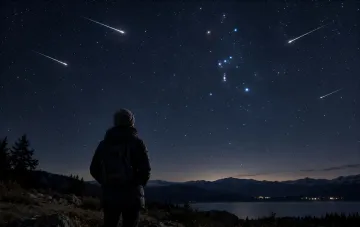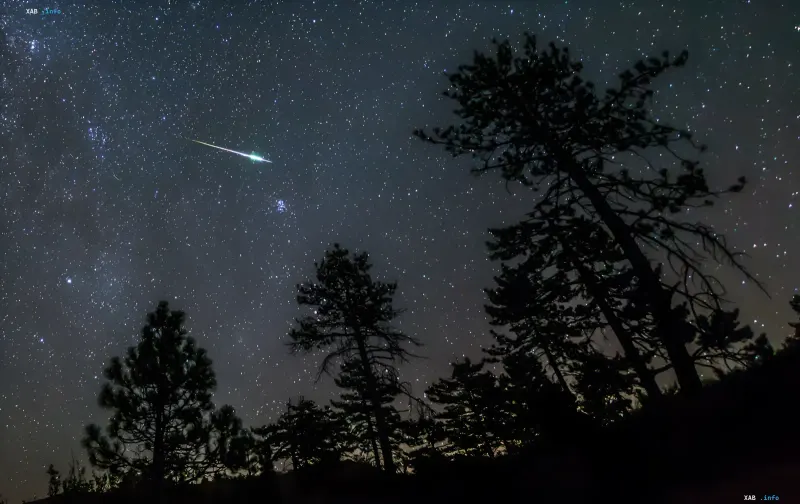
On the night of August 13, 2026, the sky over Ukraine will become the stage for one of the most spectacular astronomical events of the year — the peak of the Perseid meteor shower. According to forecasts by the International Meteor Organization (IMO) and NASA, the best time for observation will be the second half of the night, when the activity of "shooting stars" will reach its maximum. This event, which attracts the attention of both professional astronomers and amateurs, promises to be particularly impressive due to favorable lunar phases.
Activity Timeline and Forecasts for 2026
The Perseids are traditionally active from July 17 to August 24, resulting from Earth passing through a stream of cosmic dust left by comet 109P/Swift-Tuttle. However, the intensity of the stream is uneven. Already in the evening of August 12, observers will be able to see about 5 meteors per hour. By midnight, this figure will rise to approximately 10 meteors per hour. A real explosion of activity is expected in the early morning hours: around 03:00 local time, the number of meteors could reach 40 per hour under favorable conditions. In ideal scenarios, with no light pollution, the stream is capable of delivering 50 to 100 meteors per hour.
Unique Viewing Conditions: The Role of the Moon
One of the key factors for successful observation in 2026 will be the position of the Moon. In previous years, bright moonlight often "drowned out" faint meteors, making them invisible to the naked eye. However, in August 2026, conditions are favorable: on August 5, the Moon reached the last quarter phase, and by August 9, it turned into a thin crescent and moved away from the constellation Perseus. This means that on the night of the peak, moonlight will not create interference, allowing even the faintest particles burning up in the atmosphere to be seen.
How to Properly Watch the Sky: Expert Tips
Observing the Perseids does not require complex equipment — the naked eye is sufficient. However, it is important to give your eyes 20–30 minutes to adapt to the darkness. Astronomers recommend leaving the city limits to avoid artificial light pollution. You should orient yourself towards the north and northeast, where the radiant of the stream is located — the point from which the meteors seem to emerge. At the same time, experts advise not to look directly at the radiant, but to place it at the edge of your field of vision. This will make it easier to distinguish Perseids from random meteors appearing in other parts of the sky. The optimal duration of observation is at least an hour, as the activity of the stream can be intermittent.
Scientific Value and Historical Context
The Perseids are one of the oldest known meteor showers, with observations dating back more than 2,000 years. Their peculiarity lies not only in the quantity but also in brightness: the stream often demonstrates fireballs — extremely bright meteors leaving glowing trails behind them. Systematic observations by amateurs have real scientific value: recording the time, brightness, and color of meteors helps scientists study the dynamics and composition of the stream.
Additional Astronomical Event: Solar Eclipse
August 12, 2026, will be significant not only for lovers of the night sky. On the same day, a partial solar eclipse will take place, visible in certain regions of the Earth, including Ukraine. This event has already caused a wide resonance in the European energy sector: due to the temporary reduction in insolation, electricity production at photovoltaic plants will decrease by approximately 9,700 MW. Thus, August 12 will be the day when humanity will observe two grand celestial phenomena affecting both culture and infrastructure.