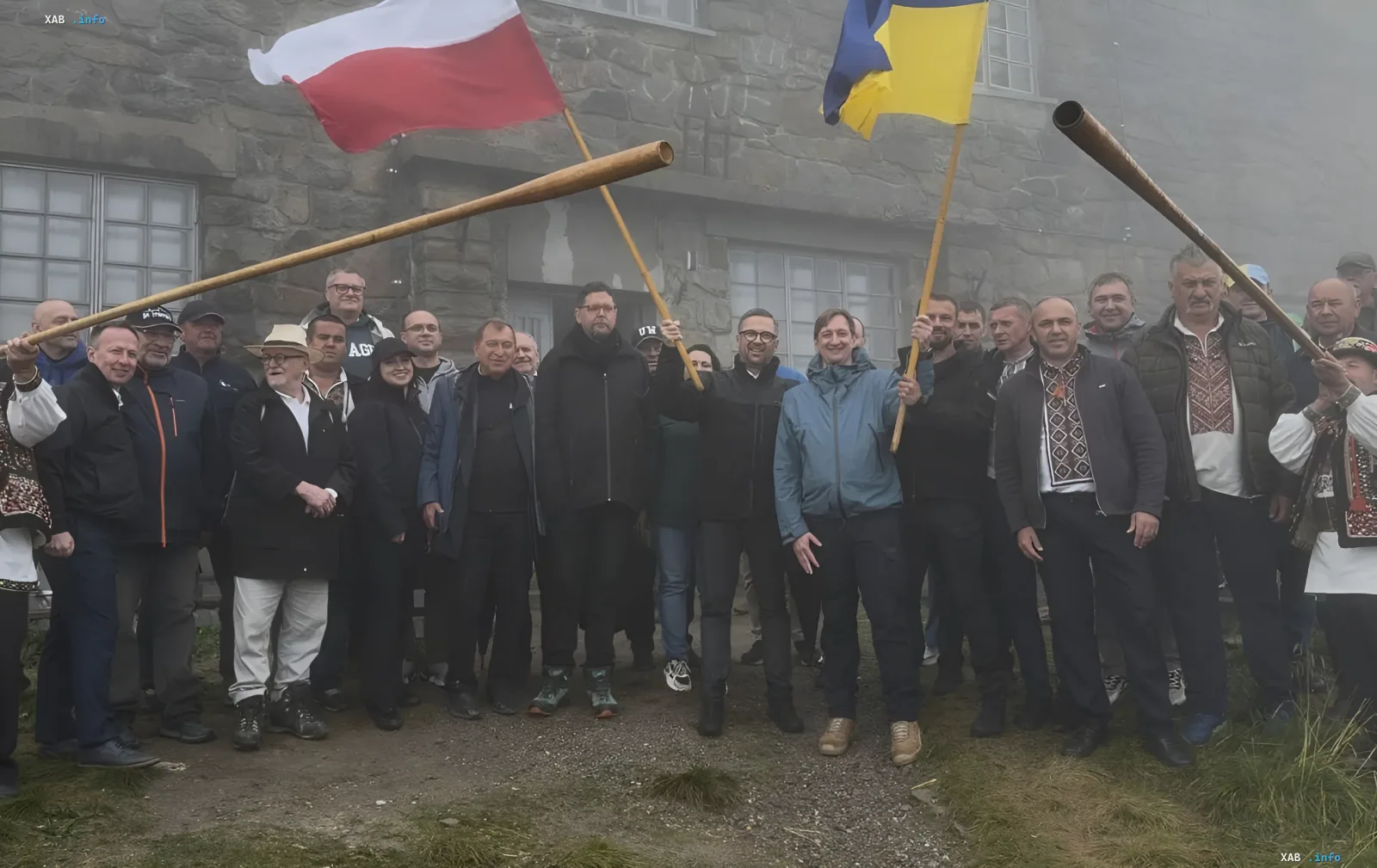
An International Center for Collective Use of Scientific Equipment has been opened at the summit of Pip Ivan mountain in the Carpathians. The ceremony was attended by Ukraine's Minister of Education and Science, Andrii Butenko, and Poland's Minister of Science and Higher Education, Marcin Kulasek, as announced by the head of the Ukrainian ministry on Facebook. The new space will operate on an open-access principle: any research team, not only the station's staff, will be able to apply to use the equipment.
A Modern Telescope Under a Dome Built for a Harsh Climate
The renovated observatory is equipped with a modern telescope under a specially designed dome, engineered to withstand the severe weather conditions of the Chornohora range. According to the project's participants, this is one of four high-altitude observatories of this level. The next stage will be the installation of a robotic complex: once it is commissioned, the telescope will be able to be operated remotely, allowing research to continue without the permanent presence of staff at the summit.
Cooperation Declaration: Beyond Astronomy
Simultaneously with the center's opening, the parties signed a cooperation declaration covering more than the academic sphere. The document provides for the development of joint scientific projects, the exchange of students and faculty, and support for young researchers. Thus, Pip Ivan becomes not just a point on the map but an institutional platform for sustainable Ukrainian-Polish scientific cooperation.
The Station's History: From Warsaw University to Ruins and Revival
The observatory on Pip Ivan was built in 1938 as a scientific station of Warsaw University. After World War II, the building fell into disrepair and remained a ruin for decades. The renovation project began as early as 2012 and was carried out by Vasyl Stefanyk Precarpathian National University together with Polish partners. Despite the full-scale war, the work was completed, and the observatory now functions again as an international scientific center.
A Wide Range of Research: From Astronomy to Climate
The observatory will serve as a platform for research across several scientific fields. In addition to astronomy, scientists will be able to study high-mountain flora, the unique ecosystems of the Carpathians, climate change, and meteorological processes. Meteorological laboratories are already operating on the center's grounds, and the natural conditions of Chornohora make it one of the most valuable sites for long-term ecological observations.