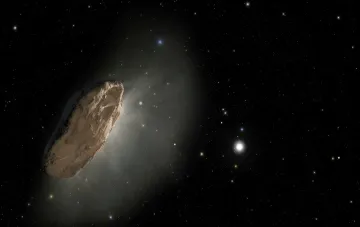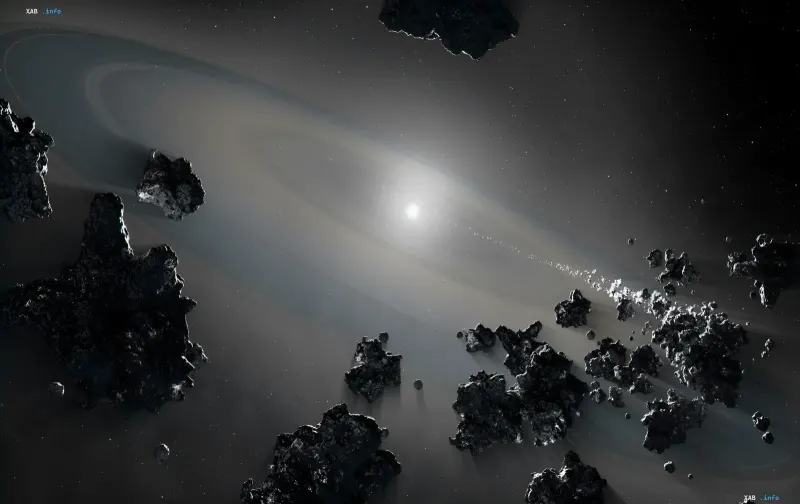
Leading space agencies around the world, including NASA and ESA, have conducted large-scale planetary defense exercises, simulating the scenario of an inevitable impact of a giant asteroid on a densely populated region of Earth. The simulation explored a situation where a space rock up to 300 meters in diameter proved practically invulnerable to existing interception and total destruction methods, requiring extraordinary response measures from the international community.
Background and Threat Detection
According to the developed scenario, the threat was detected by astronomers eight years prior to the hypothetical collision with our planet. At the initial stage, the probability of impact was assessed as minimal, at just 1 in 100. However, as new astrometric data arrived, trajectory calculations were refined, and the potential impact zone rapidly narrowed down, ultimately pointing to the territory of the United States, specifically the state of Colorado.
Interception Attempt and Kinetic Impact
To prevent a global catastrophe, relevant agencies decided to build an unprecedented fleet of six kinetic impactors. These spacecraft were designed for a precise collision with the asteroid to alter its orbit and deflect it away from Earth. Launched in 2024, the probes successfully rammed the object, but instead of complete destruction or deflection, the asteroid merely broke apart into massive fragments.
The Consequences of the New York Impact
One of the massive debris pieces continued its uncontrolled movement along the original course and entered our planet's atmosphere at a staggering speed of 43,000 miles per hour. As a result of the impact near New York, a colossal explosion occurred, with a force 1,000 times greater than the atomic bomb dropped on Hiroshima. Under the simulation conditions, authorities had no technical means left to neutralize the threat, and a massive evacuation of the population became the only effective way to save lives.
Expert Analysis and Global Risks
According to official data from the Center for Near Earth Object Studies (CNEOS), approximately 20,000 potentially hazardous asteroids have already been recorded in near-Earth space, with astronomers discovering about 150 new space objects every month. Such exercises clearly demonstrate humanity's vulnerability to cosmic threats and the urgent need to develop early warning systems as well as new technologies for deflecting dangerous celestial bodies far from Earth.