The migration crisis in the Spanish enclave of Ceuta ended as abruptly as it began. However, this incident was merely the tip of the iceberg, exposing deep systemic problems within the European Union and demonstrating how geopolitical rivals exploit the bloc's vulnerabilities for hybrid pressure.
For several days, the small Spanish city on the African coast found itself at the center of attention for world leaders. Although the situation has been de facto stabilized, the events of July 30th served as a severe stress test for a bloc that was intended to be monolithic.
Border Breach: The Scale of the Disaster
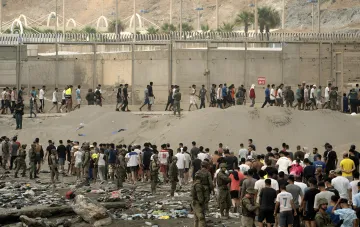
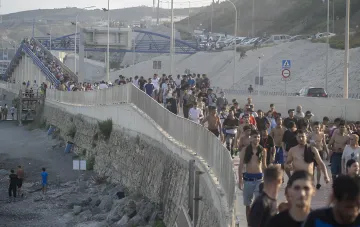
On Thursday, July 30, mass groups of Moroccan migrants effectively breached the border, penetrating the Spanish exclave in North Africa — the city of Ceuta. The situation developed rapidly: within a single day, the number of arrivals reached 60,000 people. For a city with a population of only 85,000, this became a genuine catastrophe.
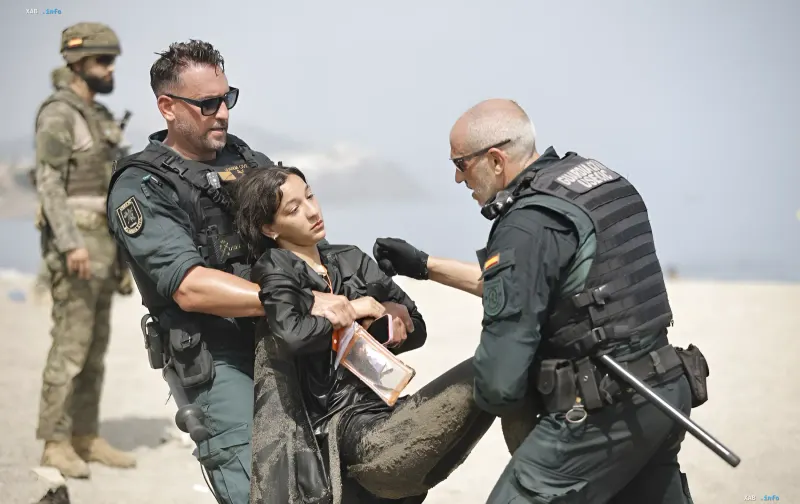
The Spanish government immediately declared a violation of sovereignty and deployed reinforced police and military forces to the enclave. However, the reaction to the incident within Europe was fragmented. No unified political position was formed, and partner countries acted according to their own discretion.
Fracture within the EU: From Threats to Isolation
Instead of solidarity, European capitals demonstrated panic and mutual accusations. France announced the deployment of troops to the French-Spanish border. Denmark and the Czech Republic called for suspending Spain's participation in the Schengen zone to prevent the spread of migrants across Europe.
Italy took the most radical steps, announcing a unilateral suspension of the Schengen agreement with Spain. Lawyers note that legally such a "suspension" is impossible, but the political signal was clear. It is worth noting that the enclave of Ceuta, being Spanish territory, is formally not part of the Schengen zone.
Only after some time was the EU able to formulate a common position. Leaders of 22 out of 27 countries signed a joint letter noting the inadmissibility of uncontrolled border crossings and the use of migration as a tool of hybrid influence. The document emphasizes the need to quickly deploy Union instruments, specifically the border agency Frontex, to restore control.
Madrid's Reaction: "Isolation Instead of Help"
Spanish Prime Minister Pedro Sánchez personally arrived in Ceuta on Friday to take control of the situation. According to government data, the crisis was practically resolved within 48 hours: the majority of illegal migrants were expelled, and security was restored.
Sánchez sent a letter to the European Commission expressing sharp dissatisfaction with the reaction of his colleagues, who, in the moment of crisis, chose a strategy of isolating Spain instead of offering assistance. He also cited Frontex data: the number of illegals entering the EU through Spain is twice as low as through Italy, even though Madrid is the only Union country with a land border with Africa.
Both the EU letter and Sánchez's appeal call for an extraordinary video conference of interior ministers. The goal of the meeting is to develop a joint response strategy and enshrine the principle that monitoring external borders is a shared responsibility of all countries, not just those on the front line.
Causes of the Breach: Rumors and Police Inaction
Although the crisis can be considered resolved, Ceuta remains a symptom of more serious problems. According to Sánchez, the cause of the breach was the actions of mafia groups that spread a false rumor that illegal immigrants could not be deported from Spain.
This rumor arose against the backdrop of a June decision by the Spanish Supreme Court, ruling that the government could not immediately expel migrants attempting to reach Spanish territories in Africa by sea. Sánchez claims that people mistakenly interpreted the court's decision as a total ban on expulsion, whereas it only concerned the timing of the procedure.
However, legal nuances do not explain all details, specifically the actions of the Moroccan side. According to one migrant who spoke to The New York Times, the Moroccan police simply stopped controlling the border at a certain point. "They just kept repeating: come here, come here," he described the actions of law enforcement officers who did not stop the crowd but pointed the way to the border.