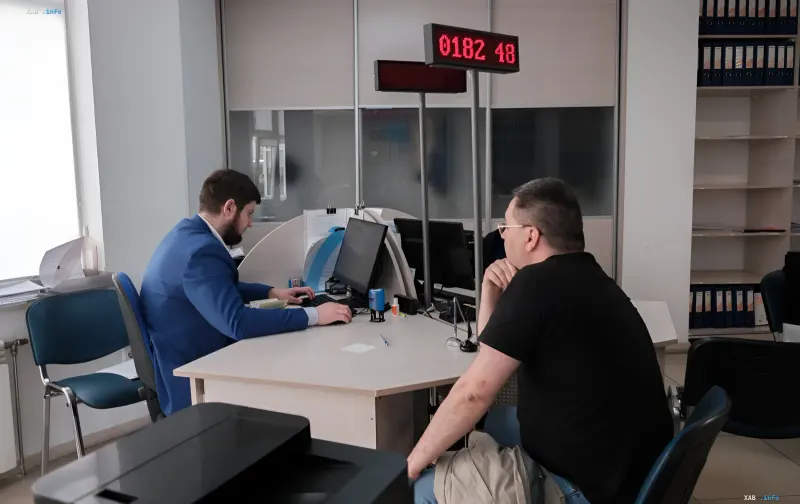
A new procedure has come into force in Ukraine, allowing citizens subject to military service to change the grounds for an existing mobilization deferral through the Centers for Providing Administrative Services (CNAP). This was reported by RBC-Ukraine, citing the Ministry of Digital Transformation. The change applies to those who already have a deferral but have acquired a new lawful ground for it — for example, they have changed their place of work, obtained a new status, or other circumstances entitling them to a deferral have changed.
How to File an Application at CNAP
To change the grounds for a deferral, a citizen must personally visit any CNAP with documents confirming the new status. A key point: when filing the application, the applicant should clearly inform the administrator that a deferral already exists and that they need to change its grounds, not obtain one for the first time. After the documents are accepted, the system automatically verifies the information in the state registry "Obereg," including the fact of registration on the military register. The application is then forwarded for review to the commission of the district or city Territorial Center for Recruitment and Support of the Army (TCRS) with which the applicant is registered.
The Role of CNAP and the TCRS Commission
It is important to understand that CNAP performs exclusively the function of receiving and forwarding documents in this process. The decision on a deferral under the new grounds is made solely by the TCRS commission. In other words, the administrative services center has no authority to approve or reject a deferral — it merely ensures the logistics of documents between the citizen and the authorized body. This fundamental division of powers eliminates the possibility of "independently" changing one's status without oversight by the military commissariats.
What Happens to the Old Deferral During Review
The Ministry of Digital Transformation emphasizes: while the TCRS commission reviews the application for new grounds, the existing deferral is not revoked and retains full legal force. It will lose its effect only after the new information is entered into the "Obereg" registry. In the event that the TCRS refuses to grant a deferral under the new grounds, the existing status also does not cease to apply — the preliminary deferral remains in force until the expiration of its original term. Thus, the citizen does not end up in a "gray zone" without a legal status during the review period.
Filing Deadlines and Procedure Limitations
You can visit CNAP to change the grounds for a deferral on any day while the previous status remains in effect. However, if the goal is not to change the grounds but simply to extend the deferral without altering the conditions of its grant, the application can be filed no earlier than 30 days before the expiration of the current status. It is separately noted that it is not possible through CNAP to transfer a deferral to a reservation (job protection) or, conversely, to replace a reservation with a deferral — a separate procedure is provided for reservations. It is also not possible through CNAP to simply cancel an existing deferral: if a citizen wishes to terminate it, they must submit the corresponding application directly to their TCRS.
Contradictory Data
A discrepancy in the attribution of the information has been identified between sources. RBC-Ukraine and a number of other publications cite the Ministry of Digital Transformation as the source of the procedure's clarification. However, the publication "Glavne" (The Main Thing) indicates in the headline of its article that the Ministry of Defense is the department that announced the innovation. It is possible that the information was disseminated jointly by both departments, or that one of the sources made an error in attribution. Until an official comment is received from both ministries, the exact original source of the clarification remains unconfirmed.
Context: Deferral for Teachers and Other Grounds
Previously, RBC-Ukraine reported that teachers and other pedagogical workers may obtain a mobilization deferral provided they work at their main place of employment for at least 0.75 of a full-time position. To confirm the right to a deferral, data on employment and teaching workload must be up to date in the state information systems. The new procedure through CNAP allows such specialists, as well as other categories of citizens subject to military service, to promptly reprocess a deferral when circumstances change, without having to make personal visits to the TCRS at the document submission stage.