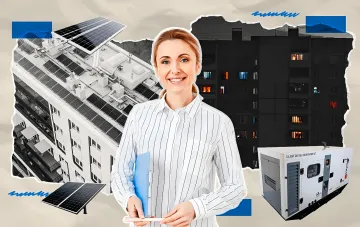
The autumn-winter season in Ukraine traditionally prompts residents to think about home autonomy. Frequent power outages, heating supply disruptions, and grid instability make backup power not just a matter of comfort, but an element of basic safety. Against this backdrop, the Ukrainian marketplace ROZETKA has launched a special offer allowing customers to purchase key equipment for energy independence — charging stations, generators, and battery systems — in installments of up to 12 payments. Let's break down exactly what should be prepared, how the main types of backup power differ, and how to avoid paying the full amount all at once.
What must work during an outage: defining the task
The first and most important thing to do before buying is to clearly determine which equipment must function during a blackout. If it's only about smartphones, a desk lamp, and charging a laptop, a portable charging station will be enough. However, if the home has a refrigerator, a router, a computer, medical equipment, or if several rooms in a private house need to be powered for many hours, a single power bank or compact station is no longer sufficient. In such cases, the question becomes one of a generator or a full-fledged battery system integrated into the home electrical network.
Portable charging stations: compactness for an apartment
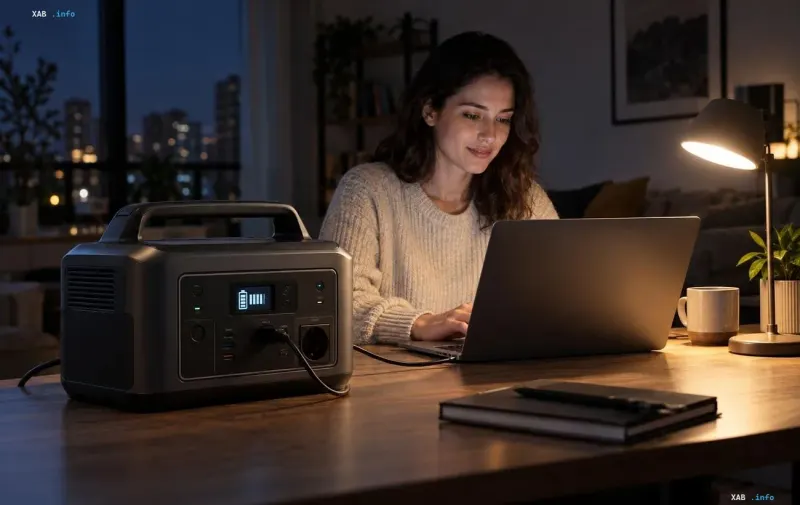
A portable charging station is the simplest and safest option for backup power in a city apartment. Depending on the model's capacity, it can keep a router running, provide lighting, charge smartphones and laptops, and power individual household appliances. A specific example from the current ROZETKA offer is the Bluetti (PowerOak) AC180P charging station, priced at 44,899 UAH. Under the promotion, it can be purchased in 12 payments of 3,742 UAH each. Such devices require no ventilation, produce no exhaust fumes, and generate no noise, making them suitable for use in an enclosed room.
Generators: power for a private home and safety rules
If you have a private home or need to power more powerful equipment for an extended period, a gasoline or diesel generator becomes one of the workable options. The ROZETKA catalog, for example, features the MaxPeedingRods MXR4500i inverter generator for 18,900 UAH, available in 12 payments of 1,575 UAH each. Inverter technology provides more stable voltage, which is important for sensitive electronics. However, generators require strict adherence to safety rules: they must never be used in an apartment, on an enclosed balcony, or in any unventilated space due to the risk of carbon monoxide poisoning. The generator's operating zone is only open space in the fresh air.
Battery systems: a comprehensive approach to autonomy
For those planning a more comprehensive backup power system, there are battery modules that can be used as part of a home energy system. An example is the Dyness PowerHaus LiFePO4 51, priced at 48,000 UAH on ROZETKA. Under the special offer, the amount can be split into 12 payments of 4,000 UAH each. Lithium iron phosphate (LiFePO4) chemistry is distinguished by a long charge-discharge cycle and enhanced safety compared to older battery types. Before purchasing such equipment, it is critically important to determine the required total power and check the compatibility of the system's components — the inverter, the charge controller, and the batteries themselves.
The "Pay in Installments from ROZETKA" plan: how it works
Equipment for autonomous power can cost tens of thousands of hryvnias, so it is not always convenient or financially sensible to pay the full amount at once. From September 17 to 30, ROZETKA is running a special offer on a selection of energy-independence products. They can be purchased using the "Pay in Installments from ROZETKA" service, with the cost spread across up to 12 payments. The service itself allows purchases to be made in installments of up to 24 months with no down payment and no hidden fees. The process is completed entirely online on the ROZETKA website, and a bank card is not required. A special category collects charging stations, generators, batteries, and other equipment that may come in handy for home autonomy during the autumn-winter period.
Practical recommendations before buying
Experts recommend taking several steps before purchasing backup equipment. First, compile a list of critical appliances and calculate their total power consumption in watts. Second, determine the duration of a typical outage in your region — this determines the battery capacity or the generator's fuel tank size. Third, check component compatibility if you are dealing with a modular system. And finally, take into account storage and operating conditions: a generator requires access to fuel and ventilation, battery systems are sensitive to extreme temperatures, and charging stations should be periodically recharged even when not in use.