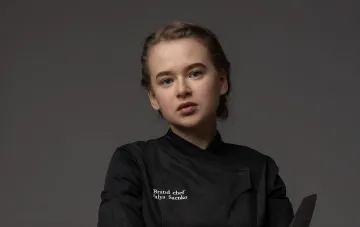
In the context of 2026, gastronomy remains one of the few spaces where cultural codes and personal memories intertwine most strongly. Italian chef Marco Cervetti, who has been part of the Ukrainian restaurant landscape for many years, recently spoke openly in an interview with Wave RBC.UA about his culinary principles, his childhood in Piedmont, and how his daily life has changed since the war began. For Cervetti, food is not just about satisfying hunger; it is a way to maintain a connection with his roots and pass on traditions.
Gastronomic taboo: why pineapple has no place on pizza
One of the most contentious topics in global gastronomy remains the question of combining the uncombinable. When it comes to pizza with pineapple, Marco Cervetti does not hesitate in his answer. "I think all Italians would say, pizza with pineapple (laughs). I have never ordered it and never will," the chef asserts. In his opinion, the reason for the rejection of this dish by Italians lies in a fundamental violation of ingredient combination rules. For carriers of a culture where pizza is a sacred dish, a sweet tropical fruit on savory baked dough is not just a quirk, but a gastronomic error that destroys the balance of taste.
Childhood in Piedmont: red wine culture from age three
Cervetti's culinary preferences were formed in Alessandria, the Piedmont region, known for its wine traditions. "Risotto with red wine" is the dish that remains the most delicious for him since childhood. The chef describes the unique culture of his native land, where red wine is used not only as an ingredient for stewing but also as a final accent: it is poured directly over the finished dish in the plate. Cervetti humorously notes that in Piedmont, children start to "eat" wine at three years old, and drink it in the conventional sense at 20. This early contact with rich flavors shaped his palette and his love for deep, wine notes in dishes.
Brazilian roots and sweet avocado
Despite his Italian origins, the chef's childhood was spent in various parts of the world. Until the age of seven, he lived in Brazil, where his unique view on certain products was formed. In particular, he remembers avocado not as an ingredient for salads, but as a sweet dessert. "There I ate avocado every day, but sweet. It was a smoothie with milk and cane sugar," Cervetti recounts. For him, the taste of avocado in such a sweet form will forever remain a product of his childhood, demonstrating how strongly geography influences the perception of taste.
Changing rhythm of life: from friends to neighbors
With the onset of the war and subsequent events that changed the face of Kyiv, the chef's own rhythm of life also changed. Cervetti moved to a closed quarter of the President's Administration, where it is impossible to enter without a pass. "Before, many friends came, now no one comes except neighbors," he admits. Under these conditions, his cooking has become more intimate and focused on maintaining a local circle of communication. He cooks simple but exquisite dishes for his neighbors: risotto with asparagus, soups, lots of vegetables and artichokes. He rarely makes desserts, preferring seasonal tomatoes and vegetables, which are always in demand.
Global gastronomic benchmarks
When asked which cuisine he considers the best, Marco answered in detail. He singled out Italian cuisine for its incredible diversity: "In our country, every city, every settlement has its own dishes, products, traditions." However, he also highly rates Chinese, Ukrainian, European, and Turkish cuisines. Among colleagues he considers teachers, Cervetti named Sicilian chef Carmelo Chiaramonte, as well as Diego Sorbu and Roberto Armari. He compares communicating with the latter to going to university, emphasizing the importance of professional dialogue even outside the restaurant walls.