
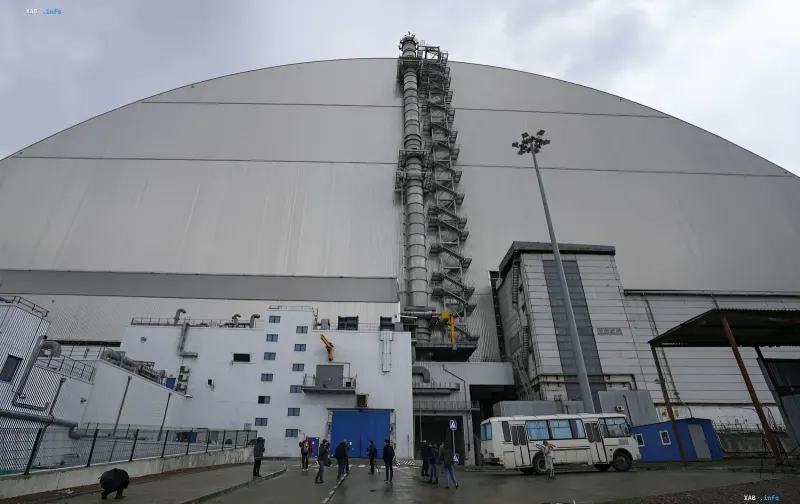
A New Line of Defense: From Trenches to 'Drone Nets'
In August 2026, the Chernobyl Exclusion Zone once again becomes a strategically vital sector of the front. Ukrainian military forces are actively fortifying positions, preparing for a potential return of Russian troops, who first occupied the nuclear power plant territory at the beginning of the full-scale invasion in 2022. Despite Ukraine currently maintaining control over the zone, tension in the region remains critical. According to the German publication Der Spiegel, new checkpoints are being established along the perimeter every few kilometers, while construction equipment is digging trenches in the sandy soil day and night.
The unique nature of the terrain dictates its own rules of fortification. Excavated soil is used to create embankments at intersections, which serve as natural shelters. Underneath the sandy hills, sources report that underground defensive galleries are being established. Wood from the surrounding pine forests is used to reinforce the walls and ceilings of these structures, allowing for the rapid creation of protected communications without using heavy machinery that could attract the enemy's attention.
Fighting Drones: Donbas Experience in the Exclusion Zone
Particular attention is paid by the Ukrainian side to protection against aerial attacks, especially from FPV drones. Along the main roads, builders are erecting tall metal poles and stretching dense plastic nets between them. This tactic, previously successfully applied in the Donbas, is designed to physically impede drone flights, causing them to get tangled in the nets and fall. Given that the border with Belarus is only 15 kilometers from Chernobyl, the Exclusion Zone is within direct range of drones launched from the neighboring state's territory.
Condition of the 'New Safe Confinement': From Fire to Threat
The central element of the zone's infrastructure remains the Shelter Object (NSC), erected over the destroyed fourth unit of the Chernobyl NPP in 2016. The structure was designed for 100 years of service, but reality has made corrections. In February 2025, the object was struck by a Russian drone. As a result, a smoldering fire occurred inside the shell, destroying the protective membrane. Although Ukrainian specialists promptly patched the damaged metal shell, the functionality of the structure was compromised, and it no longer operates in normal mode.
Contradictory Data
There are discrepancies in the details of recent attacks on nuclear infrastructure. While Der Spiegel focuses on the fire in the NSC in February 2025, other sources point to an incident in June 2026, when a Russian drone damaged a nuclear infrastructure object located in the immediate vicinity of Chernobyl — a nuclear fuel storage facility. Versions of events may differ depending on whether it concerns a direct hit on the storage facility or damage to auxiliary systems, but the fact of the attack on fuel storage objects is confirmed.
Strategic Threat: Proximity to Belarus and Risk of Escalation
The geopolitical situation around Chernobyl is exacerbated by the proximity of the Belarusian border. Only 15 kilometers separate the Exclusion Zone from the territory of Belarus, making the region vulnerable to attacks using drones and artillery. In the event of a change in the enemy's tactics, Chernobyl could become not only a site of local fighting but also a zone of potential radiation catastrophe if fuel storage facilities or the damaged NSC are harmed. The preparation of defensive lines indicates that the Ukrainian command considers the scenario of a repeated invasion as the most likely.