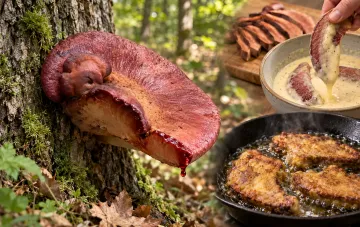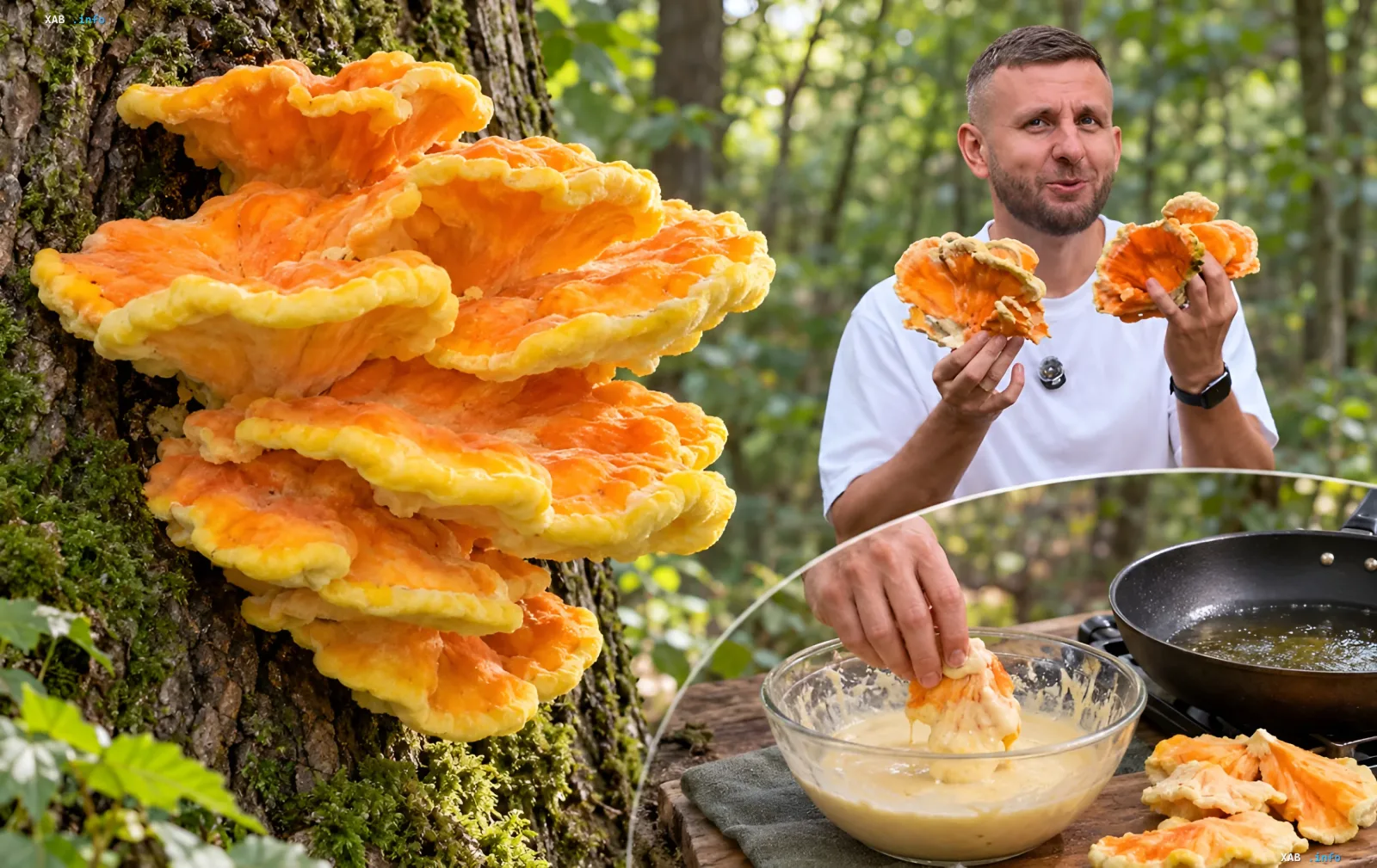
Laetiporus sulphureus, commonly known as the chicken of the woods, is one of the most vibrant and unmistakable bracket fungi that catches the eye during a forest walk. Due to its unique appearance, fibrous texture, and distinct flavor, young specimens are considered a culinary delicacy in many countries, prized for their resemblance to tender poultry meat.
Where to Look and How to Identify the Edible Delicacy
This fungus is easily recognized by its rich yellow, orange, or golden palette. Its fruiting bodies grow directly on tree trunks without a distinct stem, forming wide shelf-like clusters resembling roof shingles. Instead of standard gills, the underside features a fine-pored spore-bearing layer. In temperate regions, foragers should look for young specimens from late spring to early autumn, focusing on deciduous trees such as oaks, willows, and beeches.
Tree Interaction and Biological Features
Despite its culinary appeal, the sulfur shelf is an aggressive wood-decaying parasite. Its powerful mycelium penetrates deep into the heartwood of living yet weakened trees or dead stumps, causing hidden brown rot. The tree may outwardly appear completely healthy until the fungus bursts through with massive seasonal fruiting bodies. Colony sizes can be truly impressive: according to the Royal Botanic Gardens, Kew, individual brackets can reach up to 30 centimeters wide, and a world record found in the UK weighed around 45 kilograms.
Foraging Rules and Culinary Processing
The primary rule for any mushroom hunter is to harvest strictly young, soft, and juicy specimens with tender flesh. As it ages, the fungus loses its bright color, turning dry, fibrous, tough, and completely inedible. Furthermore, the sulfur tuft requires thorough heat treatment before consumption, as eating it raw or undercooked can cause gastrointestinal upset or individual allergic reactions.
Controversial Data
Disagreements persist among experts and foragers regarding the absolute safety of consuming sulfur tufts harvested from urban trees or toxic/coniferous species like yews or thujas. Official guides and mycologists emphasize that bracket fungi actively accumulate heavy metals and environmental toxins, making urban foraging strictly discouraged. Conversely, many amateur foragers often ignore this warning, relying solely on the visual appearance and softness of the harvested specimen's flesh.