On Tuesday, August 25, 2026, following talks in Beijing, China and India declared their readiness to continue the dialogue and to strive for a "fair, reasonable, and mutually acceptable settlement" of the border issue. The minister-level meeting marked yet another step in the two nuclear powers' attempt to ease the years of accumulated tension along their roughly 3,800 km shared border in the Himalayas.
Talks in Beijing: what was agreed
According to a statement by the Chinese Foreign Ministry, Foreign Minister Wang Yi and Indian National Security Advisor Ajit Doval held "comprehensive, in-depth, friendly, and candid" discussions on border issues and bilateral relations. The Indian embassy in China confirmed on social media that both sides reviewed the state of bilateral relations and discussed ways to further expand cooperation, as well as to maintain stability and peace in the border areas. The Chinese foreign minister, quoting his Indian counterpart, emphasized that "both sides should draw lessons from historical experience, give the border issue its proper place in bilateral relations, and move forward without stagnation, regression, or deviation."
Historical context: from the 2020 clash to thawing relations
China and India are the world's two most populous countries and both possess nuclear weapons. Their shared border is largely undemarcated and remains disputed in the mountainous regions of the Himalayas, where the difficult terrain makes drawing a clear boundary line extremely challenging. It was on this stretch that a deadly border clash occurred in 2020, triggering a prolonged military standoff. According to Reuters, relations between the two countries have gradually improved in recent years: a troop disengagement agreement was reached in October 2024, and last year Indian Prime Minister Narendra Modi visited China for the first time in seven years, a notable sign of thawing. Nevertheless, a new border dispute recently provoked a sharp diplomatic exchange between Beijing and New Delhi.
Military-political backdrop
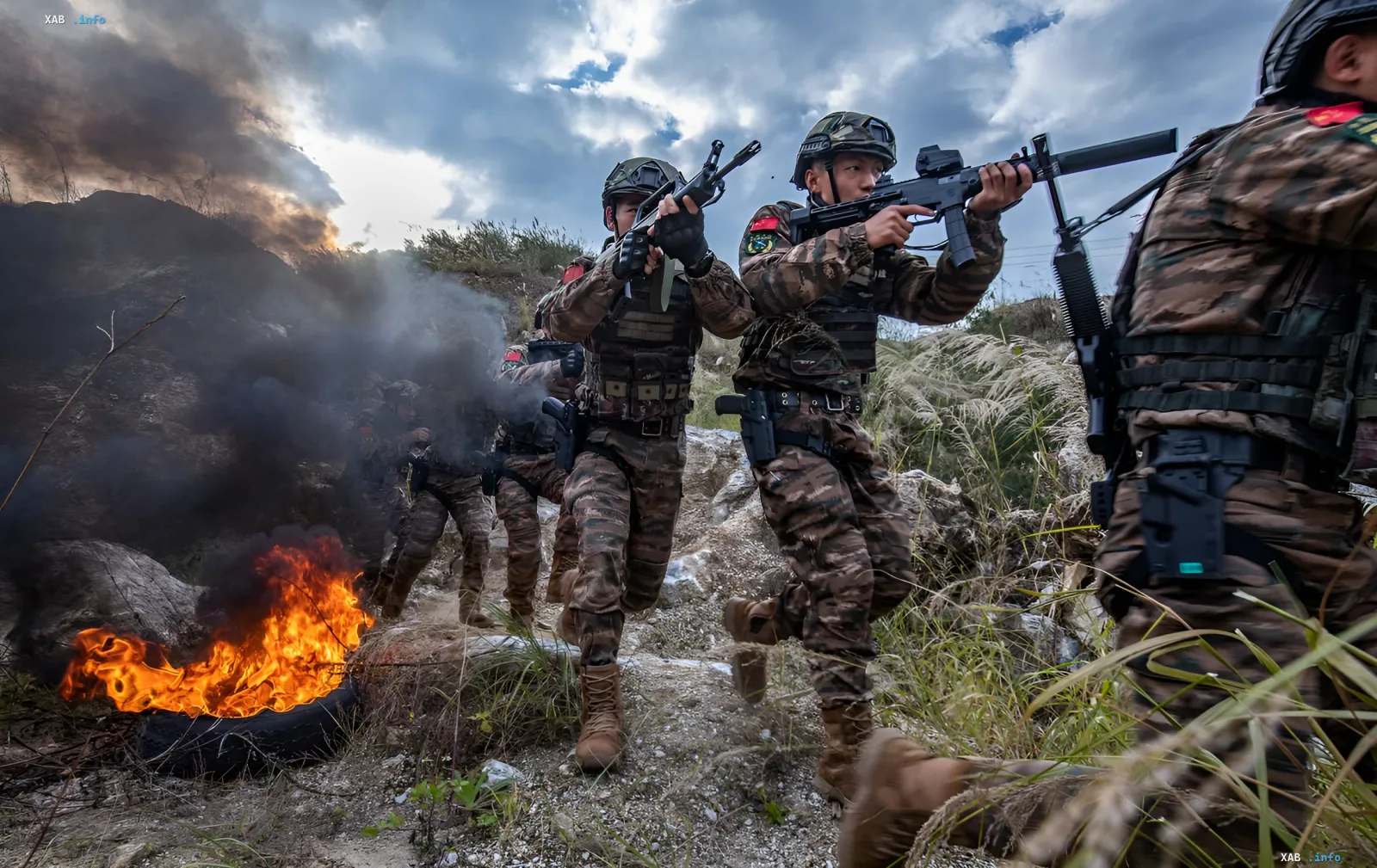
Against the backdrop of diplomatic statements about stability, observers point to parallel military preparations. As The Wall Street Journal reported, India and China are actively building infrastructure in the Himalayas, which is seen as preparation for a possible military confrontation in the disputed region. This factor underscores that even amid rhetoric of "friendly" talks, both sides continue to strengthen their positions along the border.
Contradictory data
It is appropriate here to compare two lines. On the one hand, official statements from Beijing and New Delhi paint a picture of sustained thawing: "candid" talks, the 2024 troop disengagement agreement, Modi's visit to China, and the resumption of direct flights in August 2025 — for the first time in five years after they were suspended following the Himalayan clashes. On the other hand, the same period is accompanied by reports of a buildup of military infrastructure in the disputed region and a recent sharp diplomatic conflict over a new border incident. Thus, the public rhetoric of "moving forward without regression" coexists with a de facto strengthening of the military presence, and the two sides interpret the dynamics of the relationship differently: for diplomats it is a step toward settlement, for military analysts — preparation for long-term rivalry.
Next steps
The Chinese Foreign Ministry's statement announced that the next round of talks on the border issue will take place on Indian soil — the meeting is scheduled for 2027. Separately, against the backdrop of global trade: after Donald Trump returned to the U.S. presidency in 2025 and launched a tariff war against several countries, China stated that it would "stand together with India" against American tariffs, adding yet another, economic, vector of rapprochement to the bilateral relationship.