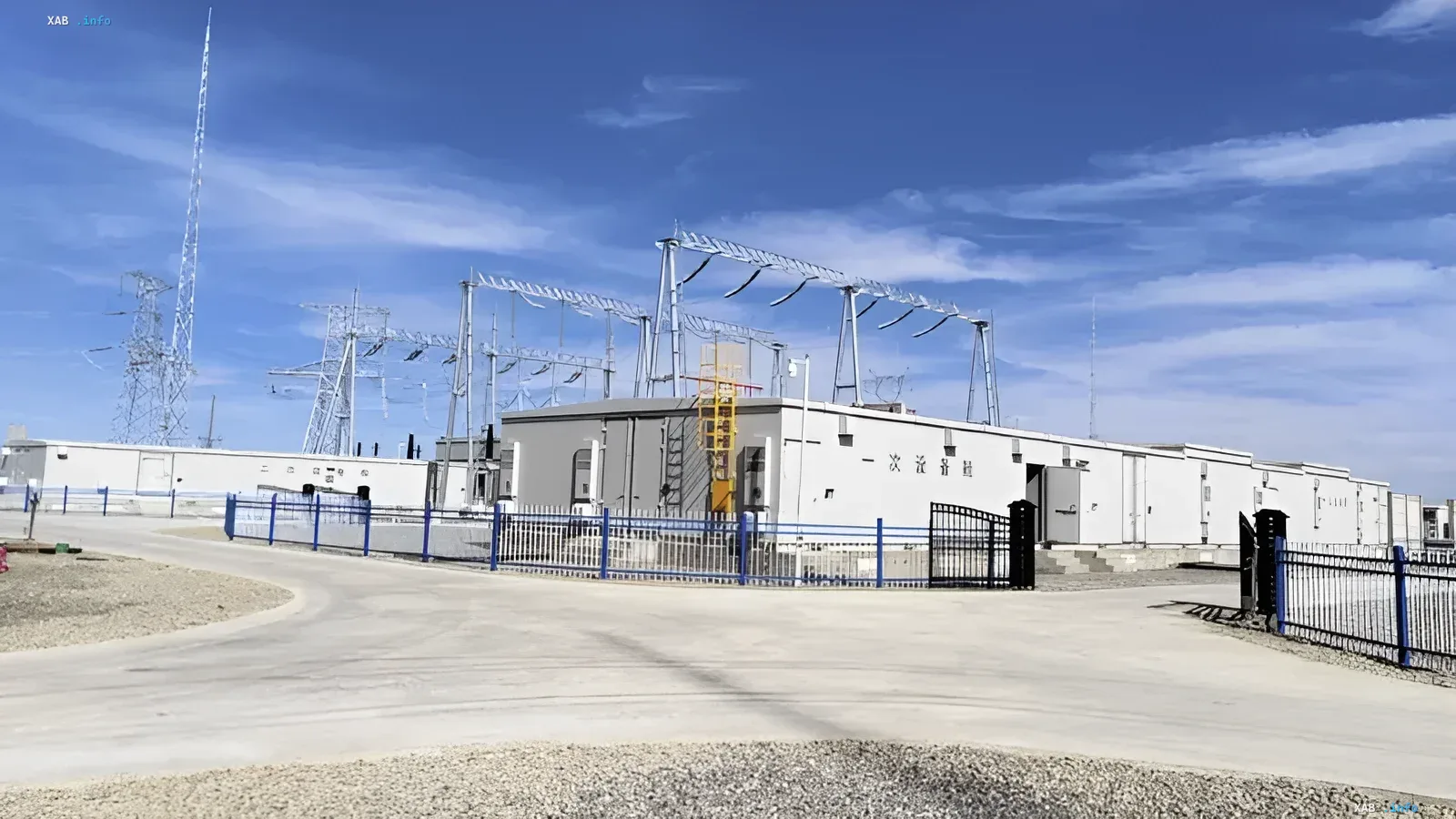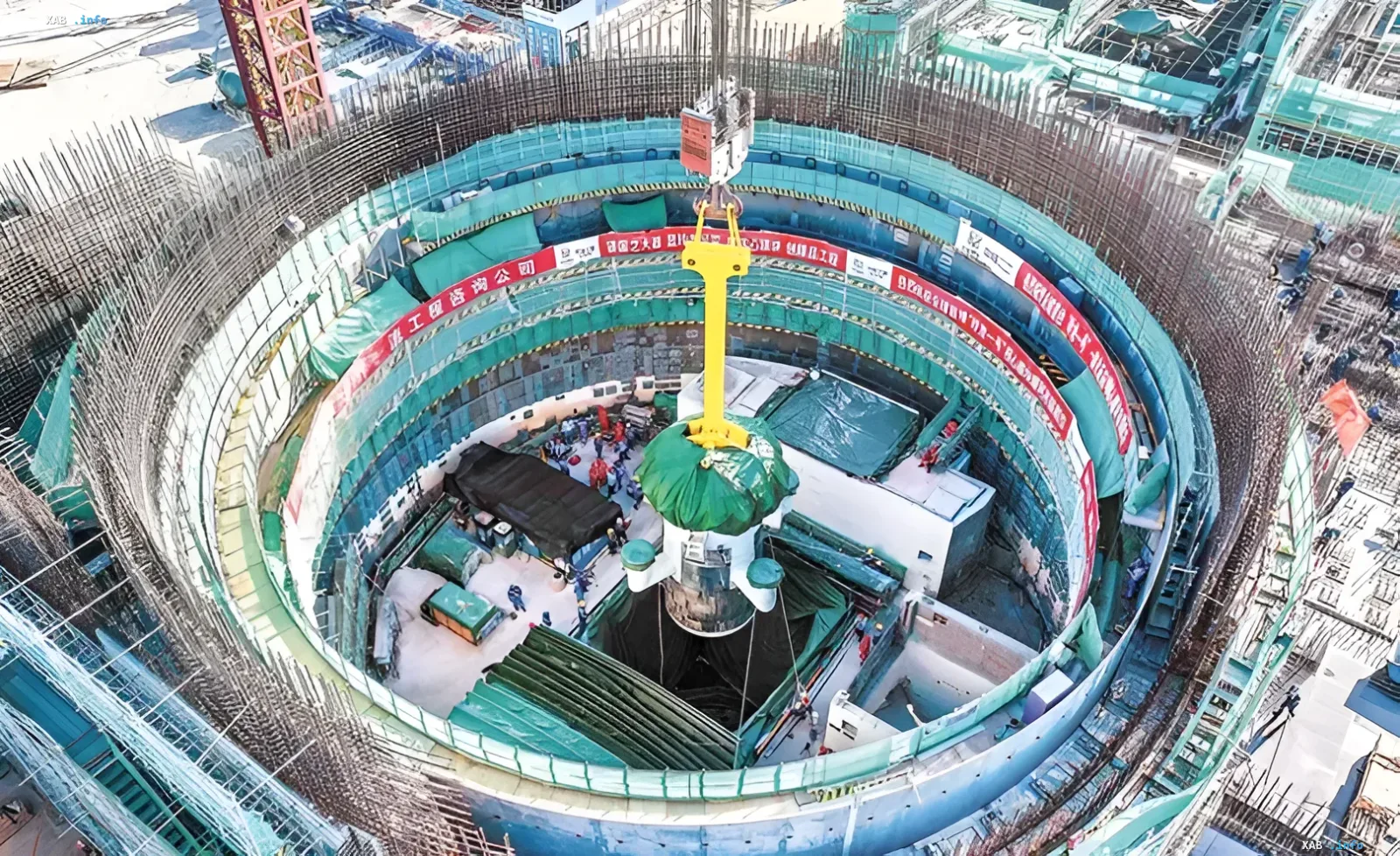
August 9, 2026. On Hainan Island, in Hainan Province, China, workers are completing a critical stage of construction for a new nuclear power plant. The photo, published by China Daily, captures the installation of the main module of the 'Linglong-1' Small Modular Reactor (SMR). This event symbolizes the global energy sector's transition to more compact and, according to developers, safer solutions. The focus is on a technology that promises to revolutionize energy production but also sparks sharp debates among experts.
Technological Breakthrough: From Aircraft Carriers to Shores
Small modular reactors, originally developed to power submarines and aircraft carriers, are now entering the civilian market. Their operating principle is similar to traditional nuclear power plants: a uranium-fueled nuclear reactor generates heat through fission, turning water into steam that drives turbines. However, the key difference lies in scale and deployment speed. Unlike giant traditional plants, whose construction can drag on for 7–10 years, SMRs can be commissioned in just 1.5–6 years. This is achieved through a modular structure: individual components are mass-produced in factories and then assembled on-site, like a construction kit.
Space Savings and Safety
One of the main reasons for the interest in SMRs is their compactness. Installing such a reactor requires only 2 hectares of land—an area equivalent to two football fields. For comparison, a traditional nuclear power plant occupies an area equal to 280 football fields. Furthermore, SMRs contain less radioactive material and are often located across multiple sites. Proponents of the technology argue that this reduces risks: even in the event of an accident or military attack causing core meltdown, the consequences would not be catastrophic, as in the worst-case scenario for large reactors.
Contradictory Data
Despite the optimism of developers, experts point to serious contradictions in assessments of SMR efficiency and safety. On the one hand, the International Atomic Energy Agency (IAEA) states that SMRs could theoretically extract 60–70 times more energy from uranium than traditional technologies. On the other hand, the output power of a single SMR is significantly lower: from 10 to 200 megawatts compared to 1000–1600 megawatts for a conventional nuclear power plant. This means that to replace the existing 400 large reactors, tens of thousands of small modules would need to be built, which, according to experts from the German Federal Office for Radiation Protection, could increase the overall risk of accidents many times over.
The Waste Problem: A Global Challenge
The issue of radioactive waste disposal remains unresolved for all types of reactors. Currently, there is not a single permanent repository for spent nuclear fuel operating in the world. However, by the end of 2026, the launch of the world's first repository, Onkalo, is expected in Finland. Located at a depth of 430 meters, it is designed to store up to 6,500 tons of nuclear fuel from five of Finland's reactors for at least 100,000 years. Construction of Onkalo began in 2004 and cost $1.16 billion. This event will be an important test for the entire industry, including new SMRs.
The Future of Energy: Prospects and Risks
Proponents of SMRs see them as the ideal solution for remote areas with underdeveloped infrastructure, where traditional nuclear power plants are not cost-effective. However, skeptics warn that the mass introduction of small reactors could create new problems related to waste management and safety. While the technology is still in the early stages of development, its effectiveness still needs to be proven in practice. The installation of 'Linglong-1' in China is just the first step on this long journey.