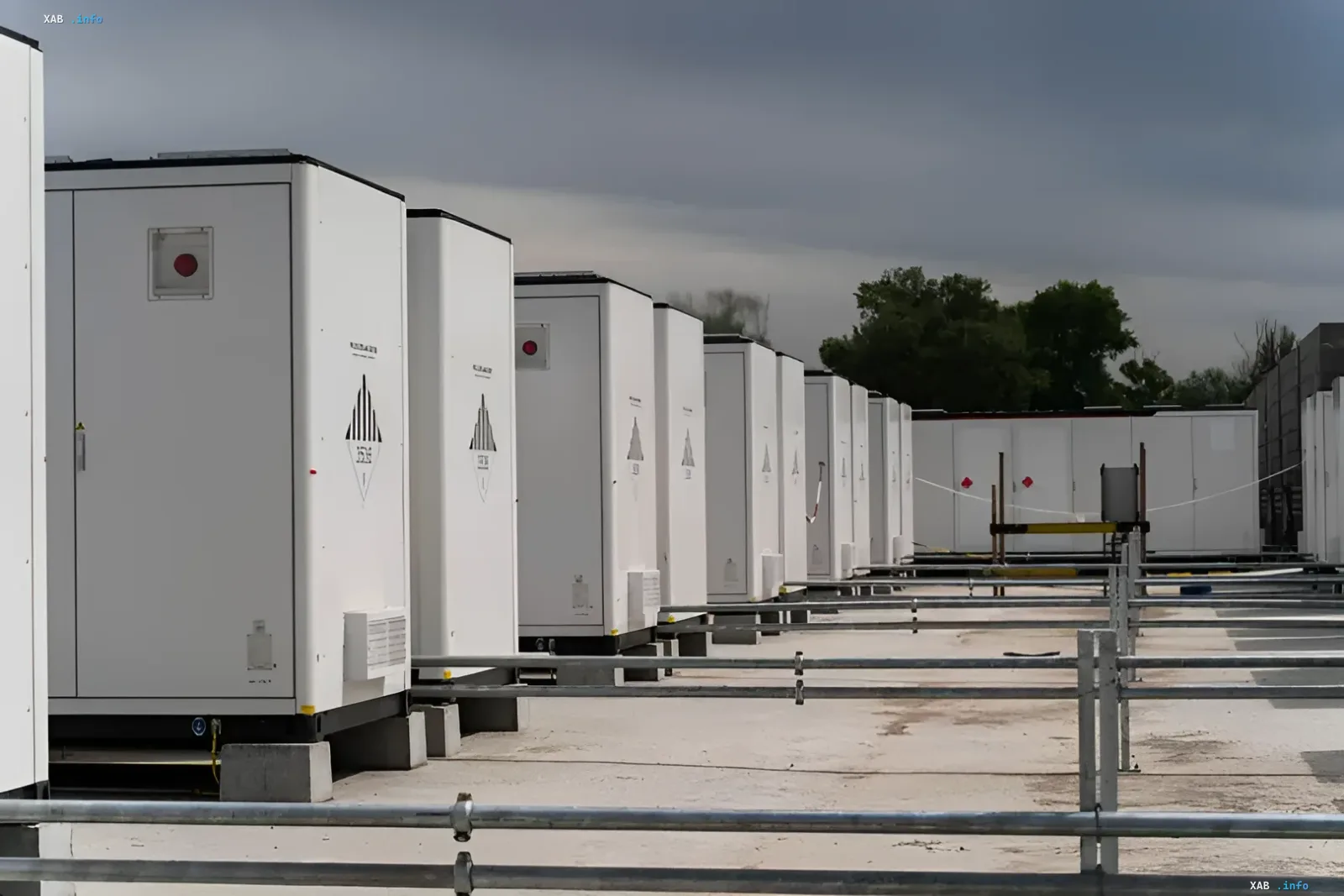
Amid the rapid transformation of the European Union's energy landscape, Battery Energy Storage Systems (BESS) are taking center stage as a critical infrastructure component. A prime example of this technology's scaling is the Engie Vilvoorde BESS project in Belgium. Although the commissioning of this massive storage facility was scheduled for 2025, it is precisely during this period that Europe made a qualitative leap in energy storage, turning scattered innovations into a powerful industry.
A Massive Breakthrough: 100 GWh and 75 Million Households
As of 2026, data indicates unprecedented growth in capacity. In 2025, an additional 36 GWh of energy storage systems were installed in Europe. This has pushed the total operational capacity beyond the 100 GWh mark. To put this in perspective: such a volume of stored energy can ensure uninterrupted power supply for approximately 75 million households. According to SolarPower Europe, these systems have become a catalyst for the integration of renewable energy sources (RES), significantly enhancing the continent's energy security.
Experts forecast that the share of renewable energy in the EU could reach approximately 69% by 2030 and 80% by 2050. However, wind and solar energy, being weather-dependent, are often generated in excess, overloading the grid. Without effective storage systems, this leads to electricity prices dropping to negative values and the loss of potential energy. BESS solve this problem by accumulating surpluses and releasing them into the grid during peak consumption hours.
Economic Efficiency: Batteries vs. Gas
A fundamental driver of this growth is the sharp decline in technology costs. The International Energy Agency (IEA) notes that the average cost of batteries has dropped by approximately 90% since 2010 due to advancements in chemistry and manufacturing. This has made energy storage an economically attractive alternative solution.
A study by Ember suggests that by 2030, large-scale batteries will be able to provide short-term balancing services for the EU power system at a price approximately 20% lower than building new gas power plants. Beatrice Petrovich, an expert at Ember, emphasizes that the rapid development of battery storage, alongside smart charging for electric vehicles and heat pumps, will allow Europe to significantly reduce its dependence on natural gas for grid balancing.
Contradictory Data: Risk of Overload or Managed Resource?
Despite the obvious advantages, there is debate within the expert community regarding the potential risks of rapidly deploying millions of battery systems. A report by the UK Government's Technical Expert Group expresses concerns that the mass proliferation of BESS could create additional strain on the power grid. The main risk lies in scenarios where millions of distributed systems simultaneously switch to charging mode for backup power during outages, causing a sharp spike in demand.
However, Adrian Hill, an expert from the Electrification Alliance, refutes these concerns, calling the risk minimal and fully controllable. In his view, using more accurate forecasting models and centralized coordination mechanisms allows companies to aggregate tens of thousands of battery systems. This enables the power grid to flexibly manage generation, increasing or decreasing it in short timeframes, turning a potential threat into a stabilization tool.
The Future of Energy: From Technology to Management
According to experts, today's problem lies less in technological innovation and more in removing administrative barriers and creating incentive mechanisms. The integration of renewable energy sources with storage systems is considered a key solution for reducing fossil fuel usage. Instead of slowing down the transition to clean energy due to hypothetical risks, Europe needs to increase investment in grid management and coordination to ensure energy self-sufficiency and security.