Historic Breakthrough: First Full Flight Cycle on Hydrogen
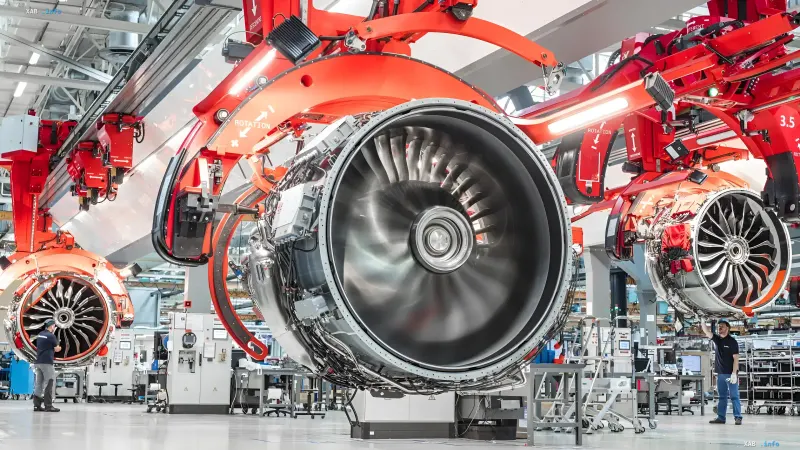
August 18, 2026, marked a landmark day for the global aviation industry. British giant Rolls-Royce announced the successful completion of unprecedented tests of a modern gas turbine engine that operated exclusively on hydrogen throughout the entire simulated flight cycle. This event signifies a transition from theoretical development to a practical demonstration of the viability of hydrogen propulsion in aviation.
During the tests, engineers managed to replicate all key operating modes of the power unit: takeoff, climb, cruise, and landing. The engine demonstrated stable performance under sharp changes in load and conditions, which is a critical requirement for the certification of any aviation equipment. The success of the experiment confirms that modern turbines are capable of functioning on hydrogen fuel without compromising performance or safety.
Technological Alliance: The Role of TCS and Project Evolution
The achievement by Rolls-Royce was made possible thanks to years of work and strategic partnerships. The company's hydrogen program was launched back in 2022 in collaboration with the airline easyJet. However, a key stage was the joining of the project in 2024 by the Indian technology giant Tata Consultancy Services (TCS) as an engineering and technology partner.
TCS specialists played a decisive role in the integration of the fuel system and engine control system. Their contribution included complex analysis of hydrogen combustion processes, preparation and conduct of tests, as well as deep data processing and risk assessment. Joint work allowed overcoming significant engineering barriers related to adapting existing technologies to new types of fuel.
Engineering Challenges: Why Hydrogen is More Complex than Kerosene
The main difficulty faced by developers lies in the fundamental differences between hydrogen and traditional aviation kerosene. Hydrogen possesses completely different storage and combustion characteristics, making it impossible to simply "repurpose" existing engines.
Developers had to integrate fundamentally new fuel delivery and control systems capable of ensuring stable engine operation at all flight modes. The tests conducted in August 2026 allowed these technologies to be verified within a single cycle, proving that hydrogen can be an effective and reliable energy source for aviation turbines.
The Path to Commercialization: From Tests to UltraFan
Despite the success of the tests, Rolls-Royce emphasizes that this event does not mean immediate readiness of hydrogen passenger aircraft for commercial operation. Engineers note a number of unresolved tasks that must be overcome before launching regular flights. These include issues of safe hydrogen storage on board, integration of equipment into the aircraft structure, and the creation of corresponding ground infrastructure at airfields.
Nevertheless, the results obtained will serve as the foundation for the development of future power units. The company intends to use the accumulated experience in creating technologies for the UltraFan program — an ambitious project to create next-generation engines that are set to become the standard for the eco-friendly aviation of the future.