A New Turn in the Aviation Race: The 'Flying Wing' Concept
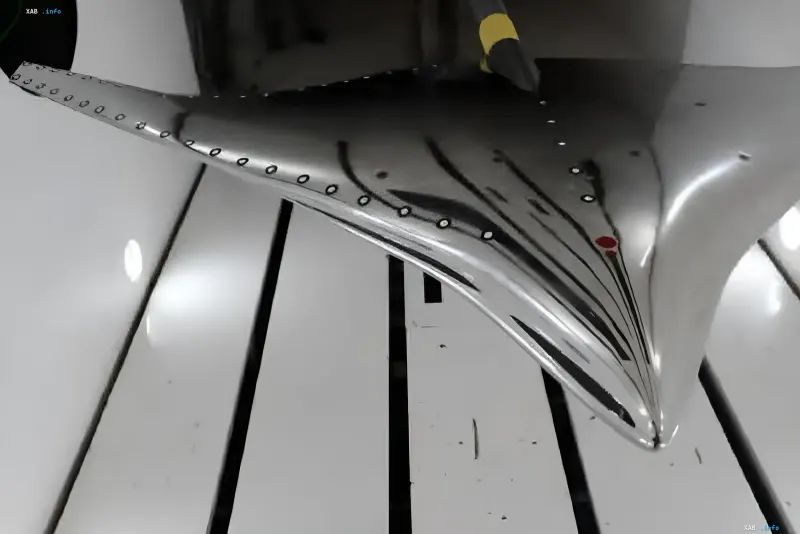
On August 18, 2026, the Chinese aviation industry demonstrated an ambitious step in the development of civil aviation to the world. The China Aerodynamics Research and Development Center (CARDC) presented an aerodynamic model of a prospective passenger airliner built on a 'flying wing' scheme. The project, which could become the flagship of the Chinese program for creating its own large aircraft, is designed to carry more than 800 passengers in a single flight. This number significantly exceeds the figures of the current record holder — the Airbus A380, which in a typical configuration accommodates about 555 people.
Technical Specifications and Aerodynamic Revolution
Unlike classic airliners, where the fuselage, wings, and tail assembly are clearly separated, the new Chinese concept represents a single wide lifting body. In this design, a significant part of the airframe simultaneously performs the function of a wing, generating lift. The dimensions of the future giant are impressive: the width of the aircraft should be about 85 meters, and the length — approximately 43 meters. For comparison, the wingspan of the new airliner will be about 1.6 times larger than that of the famous American strategic bomber B-2 Spirit, which is also built on a 'flying wing' scheme.
The main advantage of such a scheme is high aerodynamic efficiency. In a traditional airliner, a significant part of the fuselage creates drag and only limitedly participates in the formation of lift. In the 'flying wing' scheme, a large area of the body works to create lift, which theoretically allows for a significant reduction in fuel consumption per passenger when transporting a huge number of people.
Engineering Challenges and Infrastructure Limitations
However, the transition to such a scheme in civil aviation is fraught with many complex engineering problems. Developers will have to rethink the layout of the passenger cabin, ensure emergency evacuation of hundreds of people from a non-standard body, as well as seal a huge volume. Special attention is paid to controllability and the placement of windows, as well as ensuring passenger comfort, who will be sitting far from the longitudinal axis of the aircraft, which may cause discomfort during turbulence.
Moreover, the scale of the aircraft creates challenges for existing infrastructure. With a width of 85 meters, the airliner exceeds the standard limit of 80 meters for ICAO aerodrome code F, under which the Airbus A380 was designed, among others. This may require a massive reconstruction of taxiways, aprons, and terminals in the world's largest airports or changes in the design of the serial aircraft to meet standards.
Context of the Chinese Aviation Program
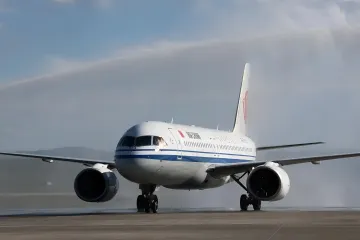
Work on the project is being carried out against the backdrop of the active expansion of the Chinese civil aviation program. In addition to the already produced narrow-body C919, China is actively developing the wide-body C929 for approximately 280 passengers, the first flight of which is expected around 2030. In parallel, the concept of a supersonic passenger aircraft C949 is being worked out, the technologies of which partially rely on NASA X-59 research. The new 'flying' giant completes the triad of ambitious projects aimed at the technological sovereignty of the PRC in the field of aircraft manufacturing.