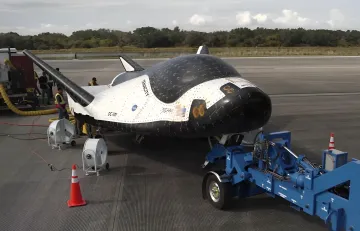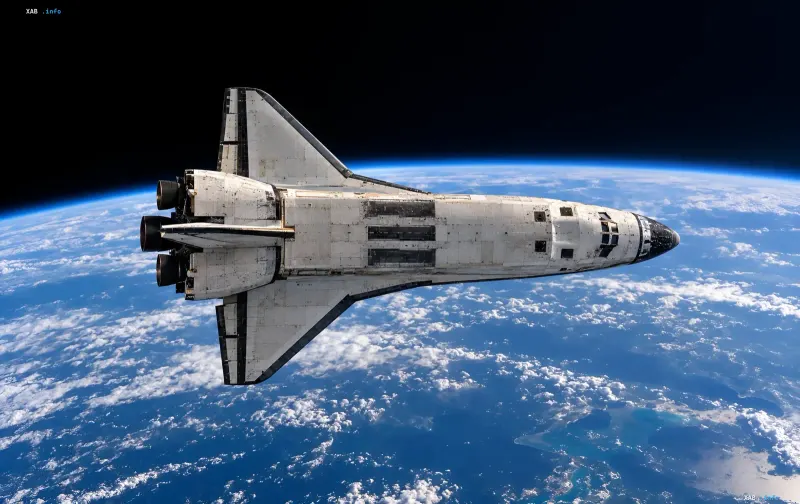
Chinese researchers have proposed a concept for an orbital fleet of forty reusable spaceplanes, capable of initiating a descent to almost any point on the planet within minutes upon command. The work of the team led by Du Chunryu from the School of Astronautics at Northwestern Polytechnical University in Xi'an was published in the peer-reviewed Chinese journal Acta Aeronautica et Astronautica Sinica. The authors emphasize that such an architecture could simultaneously transform ultra-fast intercontinental transport and open up new possibilities for military operations, making the project a classic example of dual-use technology.
The Xi'an Study: Forty Vehicles in Orbit
According to the authors' calculations, the key parameter of the proposed system is not the flight time itself, but the waiting time for the optimal moment to begin the descent. With an optimal distribution of vehicles in orbit, any one of them could begin its return to a designated point on Earth after waiting no more than 2.5 minutes. For most densely populated regions of the planet, this interval is reduced to approximately one minute. It is this density and geometry of the orbital schedule, according to the researchers, that ensures global coverage with minimal reaction time.
Minutes of Waiting Instead of Hours of Flight
It is important to distinguish between two different time scales mentioned in the publication. The minute referred to is not the duration of the flight to the destination, but the delay until the correct window for beginning the descent appears. The flight itself and the delivery of the payload or passengers take significantly longer; however, it is the reduction of "dead" waiting time to the level of minutes, rather than hours, that makes the concept fundamentally new for global logistics and rapid response. This approach allows the orbital constellation to be viewed as continuously on-duty infrastructure rather than a one-off launch.
Civilian Transport and Military Potential
The researchers explicitly point to the dual-use nature of the system. In the civilian segment, it opens up prospects for ultra-fast transport between remote parts of the world, shortening supply chains to the scale of a single orbital cycle. In the military sector, vehicles constantly in orbit are capable of executing orders rapidly, leaving a potential adversary minimal time to detect a threat and prepare a response. Theoretically, such a constellation could also allow for strikes from space, which drastically increases the strategic significance of the project and explains the heightened attention of intelligence services to any of its elements.
Context: The Secret Spaceplane Shenlong and Maxar Imagery
The publication of the study appeared against the backdrop of another event: the U.S. Defense Intelligence Agency released an image of a spacecraft believed to be the secret Chinese spaceplane Shenlong. The photograph was taken in May 2024 by a commercial satellite from Maxar Technologies. The vehicle’s shape resembles the American unmanned Boeing X-37B spaceplane, which reinforces speculation about comparable functionality. Since 2020, China has reportedly carried out four missions involving such reusable vehicles, while Beijing has consistently kept the program’s details secret.
Beijing's Stance and U.S. Intelligence Assessments
Earlier, U.S. intelligence recorded a Chinese spaceplane maneuvering near other satellites. Such actions can be interpreted in two ways: as peaceful orbital infrastructure maintenance or as the execution of potential military tasks, including intelligence gathering or hindering the operation of third-party assets. Official Beijing, in turn, insists that the program is aimed at "reducing costs and simplifying access to space." Thus, the study published in Acta Aeronautica et Astronautica Sinica regarding a fleet of forty vehicles fits into a broader context, where civilian rhetoric and the actual capabilities of the orbital constellation remain the subject of ongoing assessment.