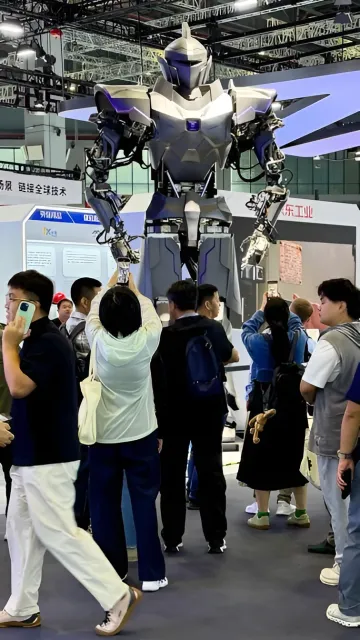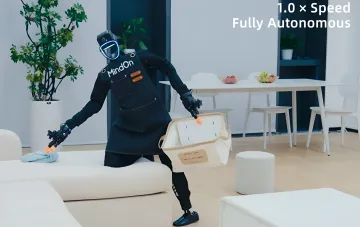
Chinese military institutes have begun actively preparing for the integration of humanoid robots into combat operations. According to documents from the National University of Defense Technology (NUDT), Chinese strategists are already modeling scenarios of armed conflict in urban environments, where assault teams may consist of a combination of live infantry and combat robots jointly clearing buildings. As of September 2026, such developments have moved from the theoretical phase to the stage of practical testing, as confirmed by several international publications citing Chinese defense sources.
Why the Humanoid Form Specifically
The key argument in favor of a human-like design is anatomical compatibility with existing infrastructure. Two arms and two legs allow a humanoid to combine mobility, climbing, and manipulation of objects in confined spaces — on ship decks, in tunnels, and in the narrow corridors of urban buildings. Unlike wheeled or tracked platforms, a humanoid can use stairs, doorways, and handrails designed for humans, making it a universal tool for clearing rooms without the need to modify the environment.
Industrial Base and Global Leadership
According to defense analysts, China's robotics sector accounts for around 95 percent of global supply of humanoid platforms. Manufacturers such as Unitree and a number of other companies are building a powerful industrial base that allows the military to rapidly scale up procurement. It is precisely this production concentration, experts believe, that gives Beijing a strategic advantage in the race to militarize robotics.
The American Response and Technological Lag
In parallel, similar programs are being developed in the United States. In 2025, the U.S. Army launched its own competition to create militarized humanoid systems for reconnaissance and security tasks. However, according to observers, the American industry still lags behind Chinese manufacturers in terms of production rates and price competitiveness, creating additional pressure on Washington within the framework of technological rivalry.
Ethical Challenges and the ICRC Position
The International Committee of the Red Cross and a number of experts in international humanitarian law emphasize serious ethical risks. Autonomous or semi-autonomous systems may face critical difficulties in recognizing civilians, signs of surrender, or wounded enemy fighters. In the conditions of urban combat, where population density is at its maximum, an algorithmic identification error could lead to the deaths of innocent people, calling into question the compliance of such systems with the principle of distinction enshrined in the Geneva Conventions.
Contradictory Data
Open sources show discrepancies in estimates of China's share of the global humanoid market. Defense documents and some analytical materials cite a figure of around 95 percent of global supply. At the same time, a number of industry publications, including data cited in January 2026, state that Chinese humanoid robots have captured "nearly half of the world market." The difference may be explained by different counting methodologies: the 95 percent may refer to the volume of production and export supply, while "half the market" may refer to revenue or the number of units sold, taking domestic consumption into account. The exact figure is currently not confirmed by a single independent source.
Forecasts: The Robot on the Front Line
Despite ethical and technical limitations, Chinese military analysts predict that, with further reductions in unit cost and breakthroughs in artificial intelligence, humanoid machines will take a firm place on the battlefield. It is expected that semi-autonomous platforms under remote operator control will be the first to be deployed in combat conditions, while fully autonomous systems will only appear at the next stage of technological development. Thus, by the end of the decade, the humanoid robot may become as standard an element of an assault team as a sniper rifle or a reconnaissance drone is today.