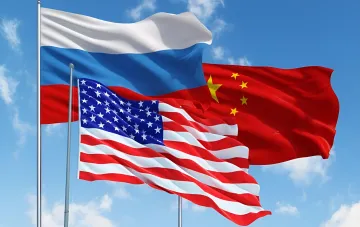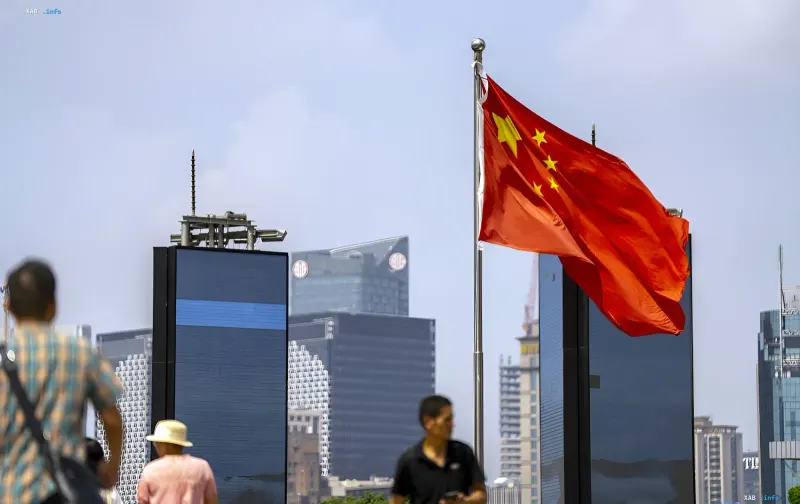
Amidst rising geopolitical tensions and Washington's preparation of new restrictive measures, Beijing has issued a stern warning. Liu Chang, a representative of the Chinese Embassy in the US, stated that any attempts to apply "double standards" and coercion methods will ultimately harm the American side itself. This statement came against the backdrop of news that the US Senate has supported a massive sanctions bill against Russia, paving the way for its further consideration in the House of Representatives.
Beijing's Position: Pressure as a Boomerang
Chinese diplomats emphasize that the policy of isolation and economic pressure is not an effective tool of foreign policy. In his comment, conveyed by the "RIA Novosti" agency, Liu Chang noted that the use of coercion methods will "backfire" on the initiators. Beijing views such actions as a violation of the principles of international law and the market economy. China, being Russia's largest trading partner, has repeatedly stated its commitment to the norms of free trade and its refusal to participate in sanction regimes that, in Beijing's view, lack legal grounds.
Details of the American Bill
The bill currently passing through the US Congress was initiated by the late Senator Lindsey Graham and provides for unprecedented measures. The document is aimed at maximally squeezing Moscow's economic space. Key provisions include the introduction of sanctions against the largest Russian banks, a complete ban on new American investments in the Russian Federation, and the purchase of Russian government debt. In addition, the bill targets the so-called "shadow fleet," which is used to transport Russian oil around existing restrictions.
Risk of Colossal Tariffs and Secondary Sanctions
Special attention in the document is paid to the mechanism of secondary sanctions, which could affect not only Russia but also third countries. The bill allows for the imposition of tariffs of up to 500% on Russian goods, which effectively blocks their export to the US. An even more radical measure is the introduction of tariffs of up to 100% on products from countries that buy Russian oil and gas or help Moscow circumvent sanctions. This creates a serious risk for global supply chains and could provoke trade wars with US partners, including countries in Europe and Asia.
Regional Context and EU Reaction
Against the backdrop of events in the US, the European Union is also continuing to tighten its position. After the intensification of Russian attacks against Ukraine, Brussels expanded the sanctions list by adding five more people. They were added to the list due to their involvement in actions directed against the Ukrainian population and critical infrastructure objects. This indicates that the Western bloc maintains unity in the issue of supporting Kyiv, despite possible disagreements in the methods of pressure on Moscow.
Contradictory Data
There is a certain discrepancy in assessments of the effectiveness of sanctions. On the one hand, Washington and its allies in the EU insist that economic pressure weakens Russia's military potential and forces it to negotiate. On the other hand, China and a number of experts point out that Russia has successfully adapted to sanctions by redirecting trade flows to the East. China's warning that sanctions will "backfire on Washington" is based on data showing that American companies are losing sales markets and facing resource shortages, while Russia is increasing cooperation with alternative partners.