The energy sector has received a powerful boost for development. Chinese scientists from Fudan University and the Chinese Academy of Sciences have presented a fundamentally new type of flow zinc battery. The experimental prototype demonstrated the ability to operate continuously for more than seven months, opening new horizons for energy storage systems.
Record endurance: 5128 hours non-stop
During testing, the new battery operated without interruption for 5128 hours — approximately 214 days. The efficiency indicators were impressive: the Coulombic efficiency reached 99.94%. Furthermore, the version of the device with a manganese dioxide cathode retained 81.1% of its initial capacity even after 5,500 full charge and discharge cycles.
Researchers are convinced that such durability makes the technology an ideal basis for large-scale energy storage systems needed to stabilize the operation of solar and wind power plants.
Liquid energy carrier instead of a solid electrode
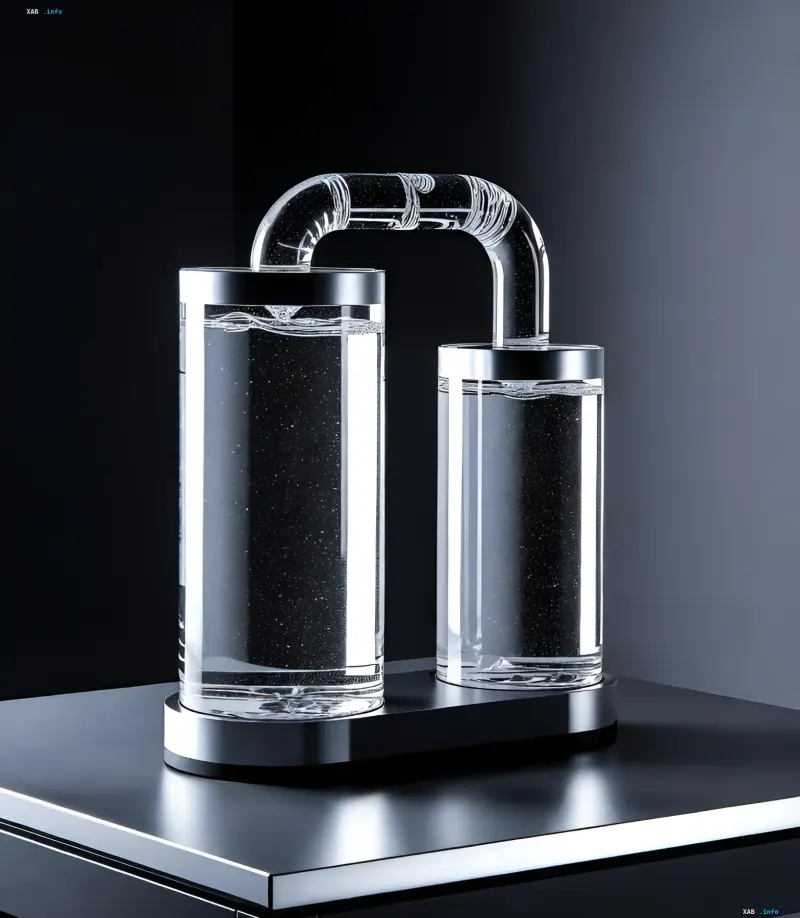
The main difference of this development from traditional zinc batteries lies in the abandonment of a stationary metal electrode. Instead, a liquid suspension of zinc nanoparticles is used, which continuously circulates between the reservoir and the electrochemical cell.
In this system, zinc acts not as a static element, but as a kind of "liquid energy carrier." During operation, its particles repeatedly transition from a metallic state to an ionic state and back, ensuring reaction stability.
The secret of the formula: nanoparticles and carbon framework
The key to success was the complex construction of the suspension. It includes:
- Zinc nanoparticles;
- Hollow carbon framework;
- Electrolyte with organic ligands.
This combination of components prevents particle agglomeration, improves their mobility, and guarantees the stable course of electrochemical reactions even after thousands of operating cycles.
Simple scaling for industrial giants
One of the main advantages of the new architecture is the ease of scaling. In classical batteries, increasing capacity requires creating larger and more complex elements. In a flow system, it is sufficient to simply increase the volume of the reservoirs with zinc suspension. This makes the technology particularly attractive for creating industrial energy storage systems.
From metallurgy to energy
The idea for the project arose in the mind of the research leader, Fei Wang, after visiting an electrolytic zinc production plant. The scientist noticed that the process of metal ion recovery, used in metallurgy, could be effectively applied to storing electrical energy.
The next stage will be the adaptation of the technology for industrial application. Researchers plan to improve the composition of the suspension, enhance battery performance, and explore the possibility of creating similar flow batteries based on other metals.