In the context of the global transition to renewable energy sources, their instability remains a key challenge. The sun does not always shine, and the wind does not always blow. However, engineers around the world are proposing unexpected solutions for energy storage, turning familiar elements into "batteries": air, salt, sand, and even human sweat.
Liquid Air as a Giant Battery
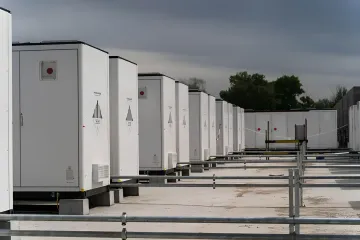
In the UK, the Carrington project by startup Highview Power is gaining momentum. Engineers use excess energy from renewable sources to cool air to a critical -96°C. At this temperature, the gas turns into a liquid that can be stored in tanks for several hours to several weeks.
When demand for electricity rises, the liquid air is heated and expands rapidly. This process drives turbines that generate electricity. The key advantage of this technology is the absence of greenhouse gas emissions, making it an environmentally clean alternative to traditional gas power plants.
The project launch is expected at the end of this year. It will provide a capacity of 50 MW for 6 hours, with a storage capacity of 300 MWh. This volume is sufficient to supply clean energy to nearly half a million households.
Desert Heat: Molten Salt
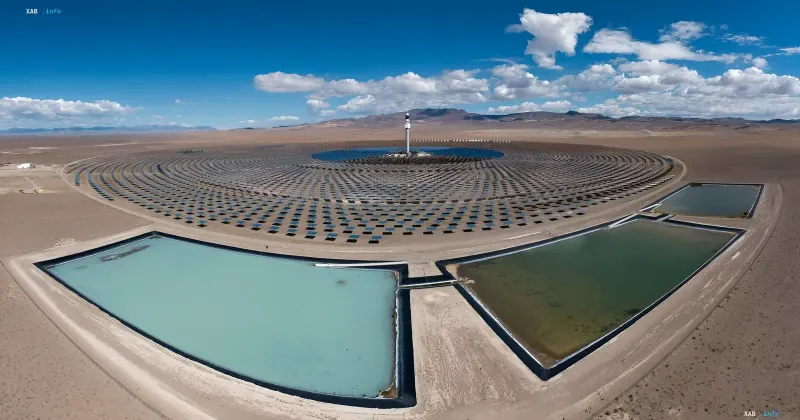
While the British are cooling air, researchers in the Nevada desert (USA) have chosen the opposite approach — heating. As part of the Crescent Dunes project, an array of 10,000 solar panels concentrates sunlight on a mixture of potassium and sodium nitrates.
The temperature of the mixture rises to 560°C. This heat is retained for up to 10 hours after sunset, allowing electricity generation even at night using traditional turbines. Molten salt technology has an interesting history: it has long been used in the military sector. Such accumulators serve as "reserve batteries" for launching modern guided missiles and nuclear weapons, releasing energy from the heat of an explosion.
Sand Batteries in Finland
Another effective heat carrier is ordinary sand. In the Finnish town of Porvoo, a unique heat storage system was created using about 2,000 tons of crushed soapstone. The system consists of cells capable of accumulating up to 100 MWh of thermal energy.
This installation supplies heat to local public buildings, including schools and libraries. The result of implementing the technology is impressive: the town has practically abandoned the use of oil in heating systems and reduced wood chip consumption by 60%. In summer, the system, 13 meters high and 15 meters wide, can meet the town's heating needs for almost a month, and in winter — for a week.
Energy from the Human Body
At the other end of the scale are micro-technologies. Researchers from the Tokyo University of Science (Japan) have developed a bio-battery powered by human sweat. Scientists created a thin wearable patch containing an enzymatic biofuel cell.
The device captures chemical compounds, specifically lactate, released with sweat and converts them into electricity. This allows for the continuous powering of smart wearable devices during walking, exercise, or work, eliminating the need to carry heavy mechanical batteries or frequently search for an outlet to recharge.
A Carbon-Free Future
From liquefied air and molten salt to sand and biological fluids, next-generation technologies are radically changing the approach to energy. They not only increase the efficiency of renewable resource utilization but also become a powerful tool in implementing the global program to reduce carbon emissions.