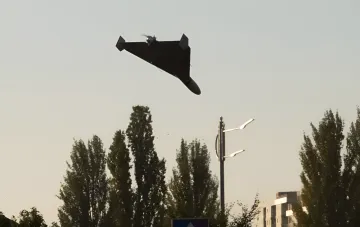
Western governments, having reviewed shipping and customs documents, obtained what Politico assesses to be the most compelling evidence to date that a major Chinese state-owned company continues to support a sanctioned enterprise of the Russian military-industrial complex. The company in question is Jilin Chemical Fiber Group — one of the world's leading producers of modern chemical and composite materials. According to the reports, this corporation allegedly disguised the shipment of materials needed to produce hundreds of suicide drones.
The essence of the investigation
According to the documents, the Chinese firm exported 46 tons of carbon-fiber-based chemicals in early 2026 to a subsidiary of Russia's Rosatom. This entity, the outlet reports, develops key components of suicide drones. Politico notes that Chinese components have long been recovered from Russian drones used in Ukraine, but the collected documents for the first time describe in detail the mechanism by which a Chinese state company supplied drone-critical components directly to Russia.
How the shipments were disguised
A key detail of the investigation is that, judging by the shipping and customs paperwork, the shipment was disguised. This means that the nature and end use of the cargo were not openly reflected in the standard documentation, making it harder to trace the supply chain. For a company positioning itself as a civilian producer of composite materials, exporting carbon chemicals to entities of the military-industrial complex of a sanctioned country constitutes a serious violation of export controls and sanctions restrictions.
Confirmation by the US and Ukraine
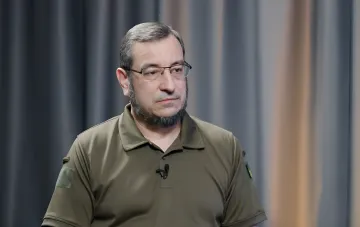
The documents were compiled from Russian sources by the Ukrainian Center for Security and Cooperation, an organization close to the Ukrainian Cabinet of Ministers. According to a Ukrainian official, the Cabinet of Ministers reviewed the materials and confirmed their authenticity. A US government representative stated that the US House of Representatives' special committee on China also analyzed the documents and deemed them "authentic." Thus, both sides whose statements are cited by Politico agree on the credibility of the collected materials.
Contradictory data
Despite confirmation of the documents' authenticity by US and Ukrainian officials, the materials contain a significant caveat. Jilin Chemical Fiber Group itself did not respond to numerous requests for comment, which precludes comparing the state company's version with the investigation's findings. Moreover, the evidence is documentary in nature — it is based on shipping and customs paperwork, not on an independent physical examination of the specific 46-ton shipment. Thus, on the one hand, we have a coordinated position of two governments on the authenticity of the documents, while on the other, there is the company's lack of response and the absence of public independent verification of the cargo's end use.
Reaction and context
The publication fits into a broader context of growing attention by Western regulators to supply chains of dual-use components from China to Russia. Chinese elements had previously been identified in dismantled Russian drones, but direct documentary confirmation of exports from a Chinese state company to a sanctioned Russian enterprise marks a new stage. The absence of an official comment from Jilin Chemical Fiber Group at the time of publication leaves room for further scrutiny by export authorities of the US, the EU, and other countries.