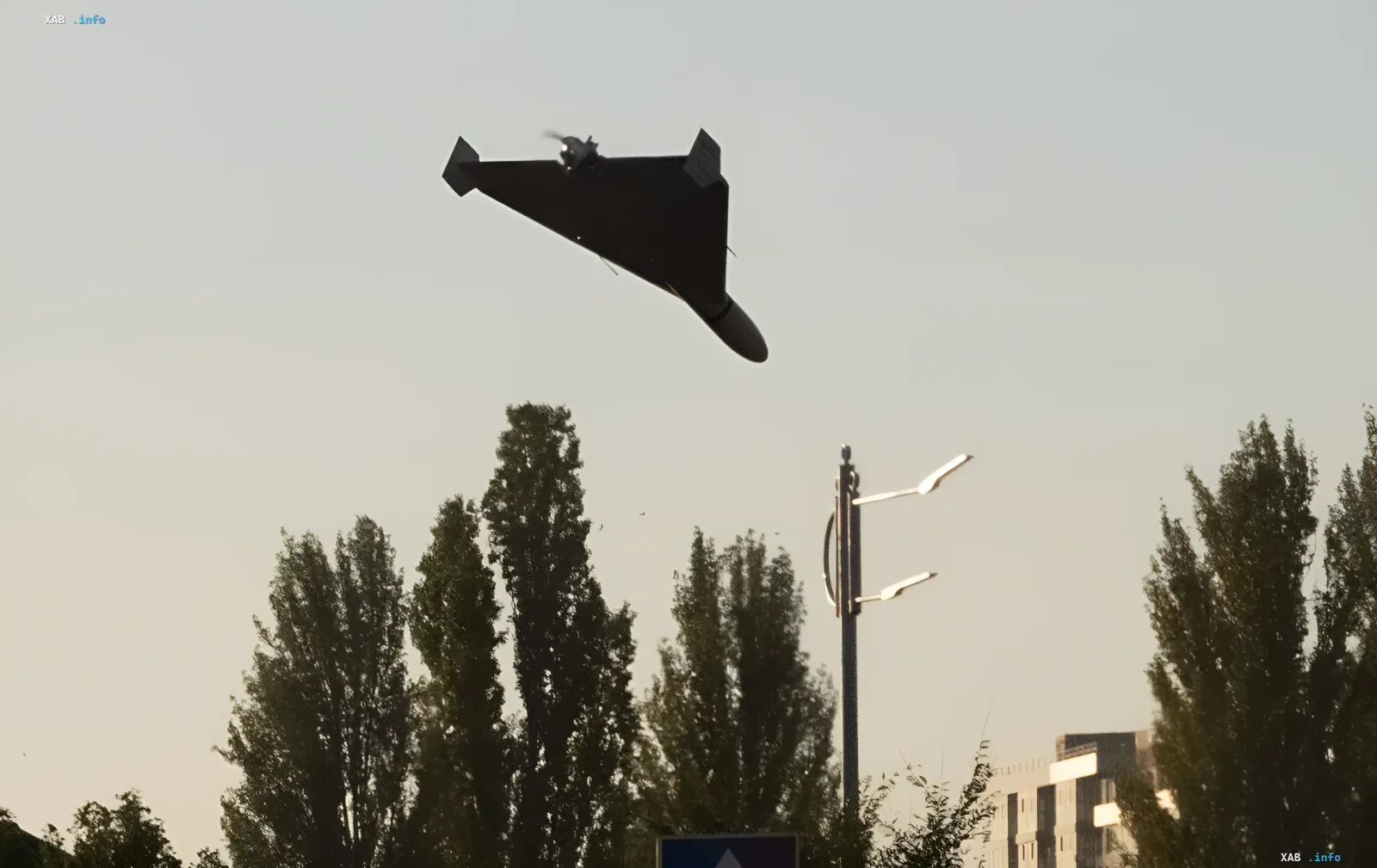
Russia is preparing a sharp expansion of military-grade carbon fiber production — the key material for the airframes of "Geran" strike suicide drones. According to data obtained by the Ukrainian Security and Cooperation Center (USCC) and confirmed by the relevant committee of the U.S. House of Representatives and the Ukrainian government, the expansion of the "Alabuga-Volokno" plant in Tatarstan will allow Moscow to produce an additional 500 tonnes of carbon fiber annually by 2029. Experts estimate that this will enable the production of roughly 28,000 additional armed drones per year — a 78% increase compared to the current level, which stands at more than 36,000 "Gerans" annually.
Scale of expansion and satellite confirmation
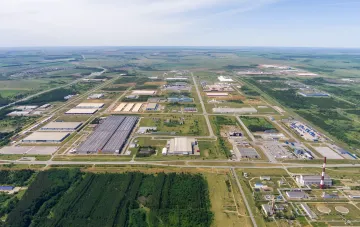
Satellite imagery taken between May and July 2026 shows that the area immediately adjacent to the "Alabuga-Volokno" plant is already being cleared for new construction. This indicates that the expansion plans have moved beyond the documentation stage and entered the phase of practical implementation. Notably, in September 2026, Russian Prime Minister Mikhail Mishustin personally visited the "Alabuga" special economic zone, confirming the high level of state attention to this industrial cluster. The GUR of the Ukrainian Ministry of Defense previously published data on 20 units of foreign technological equipment used at the SEZ facilities for drone production.
Sanctions context and supply circumvention schemes
The "Alabuga-Volokno" plant and its parent company UMATEX are subject to U.S., UK, and several other Western sanctions. Nevertheless, intelligence indicates that earlier in 2026 the enterprise already received a disguised shipment of chemicals for carbon fiber production from China. Moscow is consistently seeking to reduce its dependence on imports of critical materials and is scaling up domestic production. Under the national project on the development of unmanned systems, the country plans to produce around 130,000 drones by 2030 and up to 350,000 by 2035, which will require a multiple increase in raw material volumes, including carbon fiber.
Related intelligence on the military-industrial supply chain
Against the backdrop of the revealed plans to expand carbon fiber production, Ukrainian intelligence also published on the War&Sanctions portal data on the enterprises of the "Radioelectronic Technologies" concern under the "Rostec" holding. According to available information, a third of them still remain outside any sanctions restrictions, even though the concern's products are directly used in the production of electronic warfare systems, electric motors, and navigation systems for unmanned aerial vehicles. This indicates that sanctions pressure, despite its formal expansion, still does not cover the entire supply and production chain critical to Russia's drone fleet.
Strategic significance of the expansion
Scaling up domestic production of military-grade carbon fiber is for Moscow not merely an industrial investment but a strategic step to ensure the sustainability of massive drone strikes. The shift from imports to localization reduces vulnerability to sanctions restrictions and logistical disruptions. The combination of factors — confirmed expansion plans, satellite evidence of site preparation, state-level support at the prime minister's level, and circumvention supply channels from China — paints a picture of a systematic, rather than improvised, strategy for building up drone potential, oriented toward the 2029–2035 horizon.