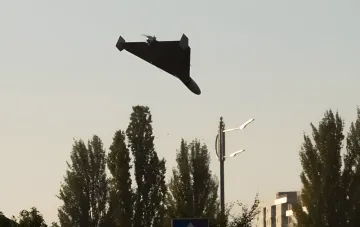
The Alabuga Special Economic Zone in Tatarstan, which concentrates Russia's main production of Geran/Shahed strike UAVs, has become one of the most heavily protected facilities in the Russian Federation. According to satellite monitoring published on October 21, 2026, the number of air defense positions deployed around the SEZ perimeter has reached 33. This is reported by RBC-Ukraine, citing the Radio Liberty Telegram channel, which analyzed fresh space imagery of the area.
What Satellite Images Show
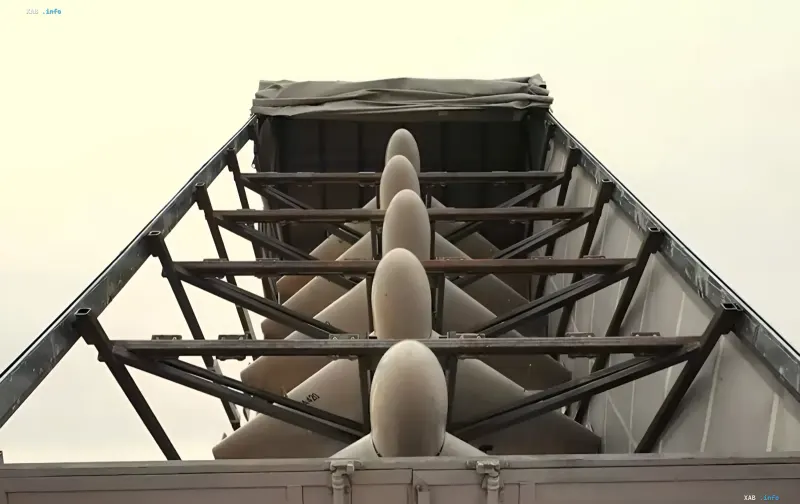
According to the publication, since the spring of 2026, new anti-aircraft installations and air defense systems have been erected and put into operation around Russia's main strike drone production site. A satellite image dated October 21 records 33 separate positions distributed along the perimeter of the special economic zone. The footage also shows logistics infrastructure: transport vehicles with characteristic launch containers and missiles placed in multi-tier racks, indicating the presence of mobile anti-aircraft missile systems in the immediate vicinity of the production buildings.
Comparison with Other Protected Russian Facilities
In terms of air defense density, Alabuga is now comparable only to Vladimir Putin's residence in Valdai, which, according to previously known data, houses 31 air defense towers and two S-300/S-400 missile system positions. For context: more than 100 new air defense positions have been built in Moscow and the Moscow region since the beginning of Russia's full-scale invasion of Ukraine. Thus, the concentration of air defense assets around a single industrial facility in Tatarstan approaches the level of protection of the head of state's key residence.
Context: Scaling Up Drone and Carbon Fiber Production
The strengthening of Alabuga's defensive perimeter comes amid Moscow's plans to drastically increase the output of kamikaze strike drones. RBC-Ukraine previously reported that Russia is preparing a large-scale expansion of carbon fiber production — a key material for drone hulls. The expansion of the Alabuga-Volokno plant in Tatarstan, according to available data, will additionally produce 500 tons of military-grade carbon fiber annually by 2029. This indicates that the SEZ is viewed by the Kremlin as a strategic asset whose vulnerability to UAV strikes has been recognized as critical.
Foreign Equipment in Geran Production
Special attention deserves information previously released by the Main Intelligence Directorate of the Ministry of Defense of Ukraine: the GUR published data on 20 units of foreign technological equipment that Russia uses directly on the territory of the Alabuga SEZ to produce Geran strike drones. The presence of Western machine tools and assembly lines at the key drone plant makes it an even higher priority target and likely explains the unprecedented density of air defense reinforcements around the perimeter.
Thus, Alabuga is turning into an industrial hub that is virtually impenetrable from the air, protected at a level comparable to top state residences. This underscores how critical preserving this strike drone production has become for Russia's military machine.