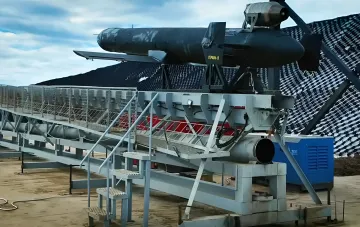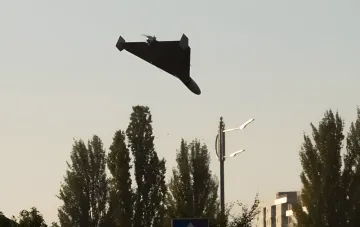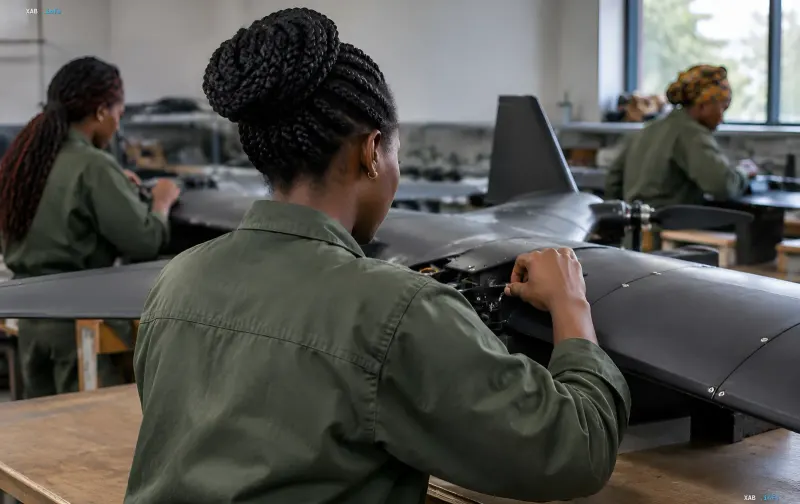
The Ukrainian Center for Security and Cooperation (UCSC), in cooperation with the American TV channel Fox News, has published the results of a joint investigation documenting a transnational network that recruits citizens of African countries to manufacture 'Geran' strike drones on Russian territory. According to researchers, the structure operates on three levels simultaneously — ideological, corporate, and field-based — and relies on the work of female foreign recruiters and coordinators who establish contact with potential workers even before their departure to the Russian Federation. The countries from which personnel are reportedly recruited include Uganda, Ethiopia, Zambia, Zimbabwe, Tanzania, Kenya, Gambia, the Democratic Republic of the Congo, and Sri Lanka.
Under the Cover of an Educational Program
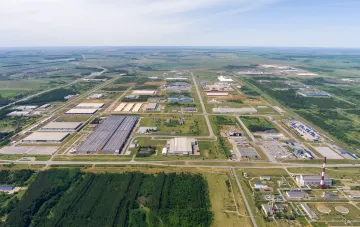
The key tool of the network is the 'Alabuga Start' program, operating since 2022. At the initial stage, as noted by the UCSC, it is positioned as an educational and labor project: candidates are promised civilian professions, leisure, and relocation to Russia. In reality, the recruited foreigners are sent to the 'Alabuga' Special Economic Zone to assemble drones, which, according to the center, are used to strike Ukraine's civilian infrastructure. UCSC expert Solomiia Foma explains that such a scheme allows the Kremlin to cover personnel shortages in the military-industrial complex by shifting part of the production tasks onto foreign workers who are difficult to attract through direct channels.
Recruitment Channels and the Russia-Africa Summit
To search for new personnel, Moscow, according to the investigation materials, uses educational and cultural channels, including the Coordination Councils of Russian Compatriots operating abroad. Institutionalization of cooperation took place in late October at the Russia-Africa summit, where the Alabuga SEZ signed official youth employment agreements with Ghana and the DRC. The UCSC emphasizes that formally legal agreements on 'employment' and 'training' serve as a facade for the actual involvement of foreigners in defense production.
From Factories to the Frontline
The investigation fits into a broader context also documented by Western publications: Russia is systematically searching for human resources abroad—both for work at military enterprises and for direct participation in combat operations. In late October, it became known that mercenaries from African and Asian countries were being involved in assaults in the Huliaypole direction. According to Western media, recruitment focuses on the poorest and most distressed countries of the continent; among the countries where Russian recruiters are reportedly active are Zimbabwe, Burundi, Sierra Leone, and Madagascar — the latter reportedly becoming the target of a recruitment campaign following a coup d'état.
Sanctions Pressure and Criminal Liability
The Ukrainian Center for Security and Cooperation states that the investigation has gathered an evidentiary base for imposing sanctions on the implicated structures and bringing them to international criminal responsibility. The center notes that masking the involvement of foreigners in the military-industrial complex as training or legal earnings is not a new tactic by the Kremlin, and the documented 'Alabuga Start' network is one of its most extensive manifestations. The publication of the materials aims to provide international regulators and law enforcement agencies with a factual basis for further restrictive measures.