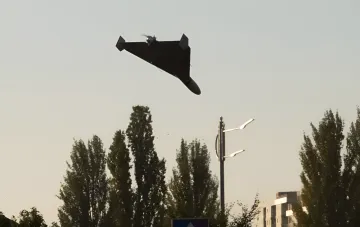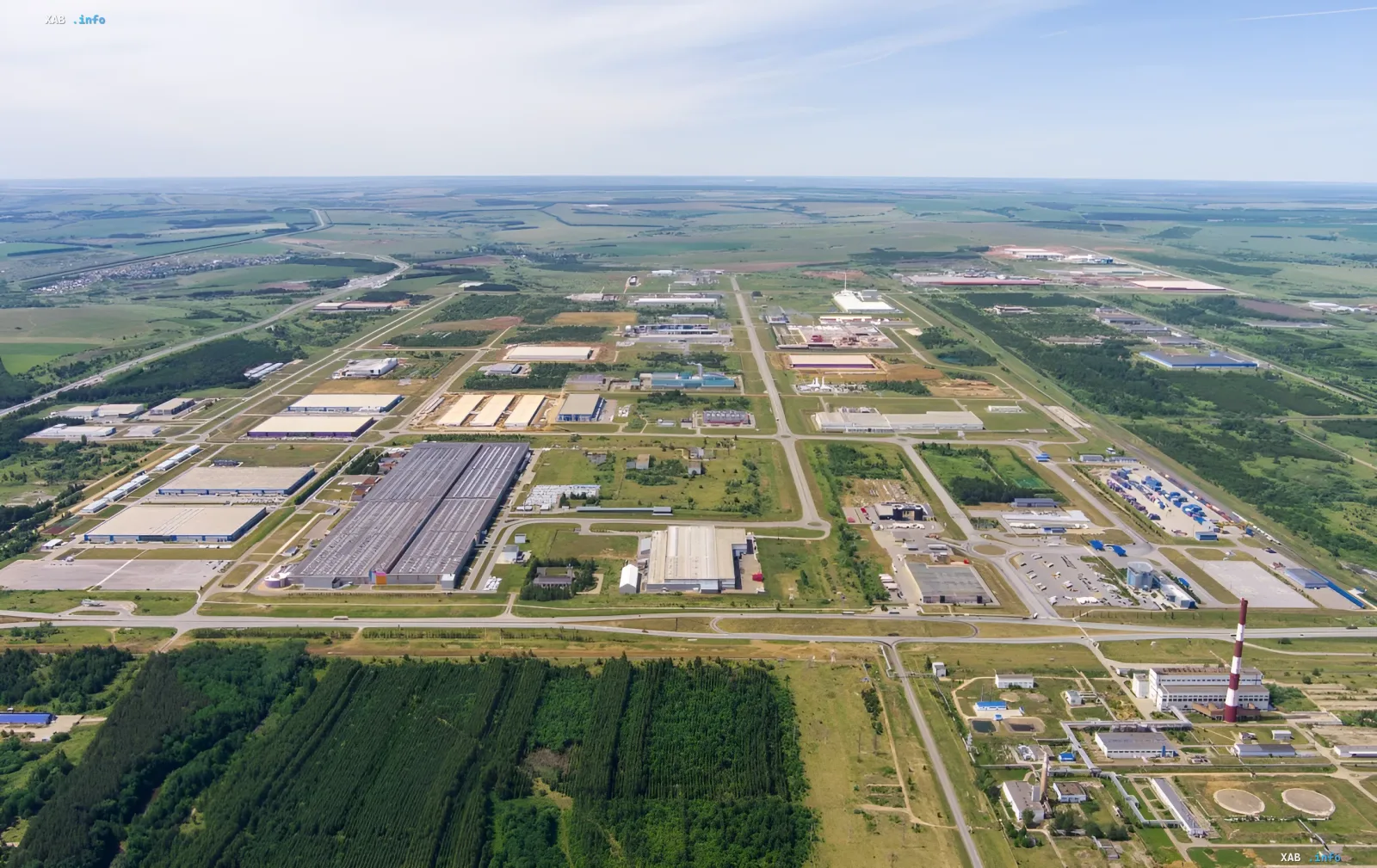
The Main Directorate of Intelligence (GUR) of the Ministry of Defence of Ukraine has published a detailed list of 20 pieces of foreign technological equipment that, according to Ukrainian intelligence, is being used within the 'Alabuga' Special Economic Zone for the serial production of 'Geran' strike unmanned aerial vehicles in various modifications. The information was released on the GUR's official War&Sanctions portal and widely disseminated through Ukrainian and international media, including RBC-Ukraine. The publication forms part of the intelligence service's systematic work to document the supply chains that enable the Russian military-industrial complex to sustain and expand the production of suicide drones used to strike Ukrainian infrastructure.
What exactly is on the list
According to the published data, the list includes lathe, milling and drilling machines, multi-functional machining centres, industrial robotic complexes, automatic component placement machines (pick-and-place) for surface-mount technology, as well as specialised soldering equipment. In the GUR's assessment, this equipment is deployed across all key stages of the production cycle — from the mechanical machining of metal housings and parts to the high-precision mounting of SMD components onto the printed circuit boards of the drones' onboard electronics. The fact that such a diverse park of machines is concentrated in a single industrial cluster indicates, in the intelligence service's view, the presence of a fully vertically integrated production line in 'Alabuga', rather than isolated assembly sites.
Supplier geography: from Germany to Iran
Particular attention in the report is given to the country profile of the equipment manufacturers. The list features products from companies in China, Germany, Japan, Switzerland and Iran. Thus, Ukrainian intelligence records that the technological base for building strike UAVs in Russia is being formed through imports from at least five jurisdictions, including EU member states and countries with developed export-control regimes. Switzerland and Germany, in particular, traditionally maintain strict legislation on dual-use goods, which makes the identified supply facts potentially significant from the standpoint of international law and sanctions pressure.
Call to manufacturers: on-site inspections and contract termination
Alongside the publication of the list, the GUR issued a direct appeal to manufacturers of high-tech industrial equipment. Ukrainian intelligence called on companies to strengthen control over end users and the actual installation location of the equipment sold. Specific recommendations include conducting on-site inspections at the declared installation addresses, investigating the supply chains of their own products into Russian military-industrial complex entities, and terminating contracts with distributors that fail to ensure proper end-user control. In essence, the GUR proposes moving from formal end-user declarations to real field inspections — a mechanism that, to date, is not mandatory for most Western and Asian machine-tool manufacturers.
Context: 'Radioelectronic Technologies' and sanctions gaps
The publication of data on 'Alabuga' fits into a broader cycle of intelligence disclosures. Recently, the same War&Sanctions portal published data on the enterprises of the 'Radioelectronic Technologies' (RET) concern, part of the 'Rostec' holding. According to the GUR, a third of the concern's enterprises still fall under no sanctions regime, even though their products — electronic warfare systems, electric motors and navigation modules — are directly used in UAV production. Taken together, these two publications allow the intelligence service to demonstrate that the technological ecosystem of Russian drone production rests on two pillars: imported machine-tool equipment from abroad and domestic electronic components, the production of which partially remains outside the sanctions perimeter.
Contradictory data
It should be noted that all the information provided comes from a single source — the Main Directorate of Intelligence of the Ukrainian Ministry of Defence, operating within its official information campaign on the War&Sanctions portal. None of the mentioned equipment manufacturers (from Germany, Switzerland, Japan, China or Iran) has confirmed or refuted the fact of specific machine-tool deliveries to the 'Alabuga' SEZ. The Russian side, for its part, has not commented on the publication. Thus, the list of 20 pieces of equipment and its linkage to 'Geran' production currently represents one side's intelligence assessment in the conflict, which has not been independently verified by either the manufacturers or neutral observers. This does not diminish the GUR's evidentiary base accumulated over the years of the War&Sanctions portal's work; however, from a journalistic standpoint, the data should be regarded as a claim by Ukrainian intelligence rather than as an established, multi-source fact.