At the end of autumn, the leaves of the spider plant (Chlorophytum comosum) often lose their rich color, and the characteristic light stripes of variegated varieties become less distinct. The shortening of the day, the start of the heating season, and changes in indoor temperature all require adjustments to your usual care routine. By observing changes in coloration and the condition of the foliage, you can determine what the plant is lacking — which is precisely what makes the spider plant a convenient "indicator" of room conditions.
Lighting: Why the Stripes Fade
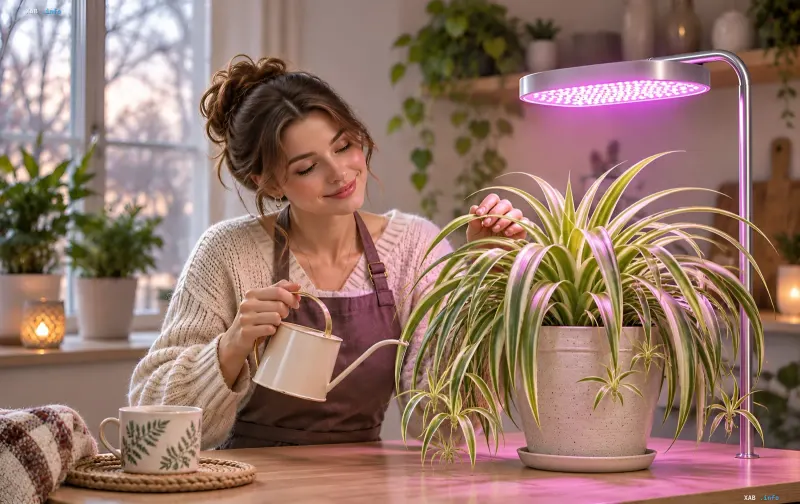
Experts at the New York Botanical Garden note that the spider plant can grow in low light, but under such conditions the leaves lose their vibrancy and color contrast. General fading may also indicate insufficient soil moisture. Plant care expert Marina Prokatien, speaking in a Homes & Gardens article, recommends placing the plant near an east- or west-facing window, where it receives bright, indirect light. If the pot is standing deep in the room, it should be moved closer to a source of natural light, while avoiding prolonged exposure to direct sunlight, which damages the foliage. If light is insufficient even by the window, a grow light can be used.
Temperature and Air
The optimal temperature for the spider plant is approximately 18–24 °C. It is important to ensure that the leaves do not touch cold window glass, and that the plant is not exposed to drafts during ventilation. The plant tolerates normal indoor humidity well, however, proximity to heating devices can cause the leaf tips to dry out.
Watering: Rely on the Soil, Not the Calendar
The spider plant has thickened, fleshy roots that store water, so it can tolerate brief drying of the soil. An RHS article emphasizes that dull, pale leaves often indicate a lack of moisture; at the end of autumn and in winter, when growth slows, watering is reduced. You should rely on the condition of the soil rather than the number of days since the last watering. If the leaves continue to wilt in moist soil, check for waterlogging and signs of root rot: healthy roots are firm, while those affected by rot become soft, darken, and may have an unpleasant odor.
Water and Fertilizing
The North Carolina State University reminds us that the plant is sensitive to fluorides and chlorine in tap water, which also damage the foliage. Dried-out areas of the leaves do not recover, so the effectiveness of care changes is best assessed by the absence of new damage. Additional fertilizing does not compensate for a lack of light or improper watering: as growth slows during the heating period, the need for water and fertilizers decreases, and if the spider plant is producing almost no new leaves, it is sensible to postpone regular feeding until active growth resumes in spring.
How to Tell If Things Have Improved
After adjusting care, observe the coloration of the young leaves. If they retain the variety's characteristic light stripes, remain turgid, and do not dry out at the tips, the growing conditions have probably improved. A change in leaf color does not always indicate a nutrient deficiency, so there is no need to rush to fertilize — first review the lighting and watering schedule.