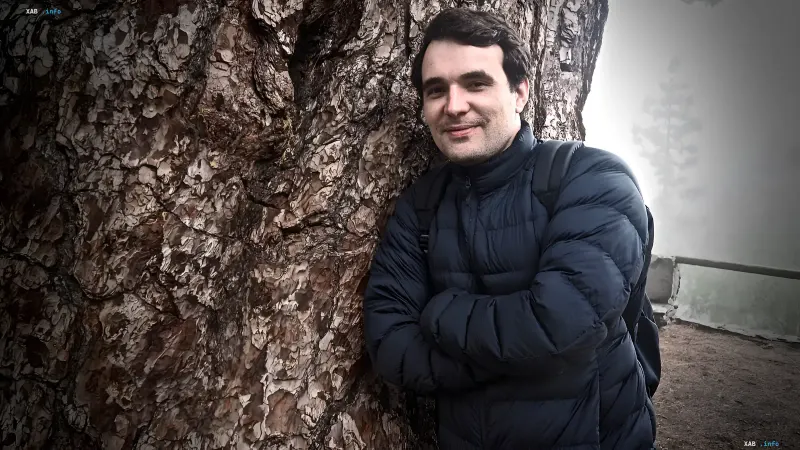
French sports journalist Christophe Gleizes, a correspondent for So Foot and Society magazines, has spent 500 days in Algeria's Kolea prison. According to Euronews, ahead of this milestone, he received a letter in detention from his centenarian grandmother, Georgette Belle, who wrote that she would like to see her grandson "before I die" but is "very tired" at her age. Gleizes' story, arrested in May 2024 while working on a report about a youth football club in the Kabylie region, has turned into one of the most high-profile cases surrounding press freedom and remains a flashpoint in Franco-Algerian relations.
Five hundred days behind bars
According to the publication, an Algerian court sentenced the journalist in June 2025 to seven years in prison on charges of "glorifying terrorism" and possessing "publications intended for propaganda undermining national interests." In December of the same year, the appeals court upheld the first-instance decision. As Christophe's childhood friend noted in an interview with Euronews, his release now depends on whether Algerian President Abdelmadjid Tebboune agrees to a pardon. The journalist's lawyers have consistently insisted on his innocence, arguing that he was merely performing his professional duties, while French authorities have repeatedly expressed concern and called for his release.
"Our Christophe": Support from the football and journalistic community
Gleizes' case has sparked widespread condemnation in journalistic circles and the sports community. Football legend Zinedine Zidane, the new coach of the French men's national team, expressed hope at a July press conference that the journalist "will be able to come home." These words, according to Christophe's parents—Sylvie and Francis Godard—did not go unnoticed in Kolea prison: as soon as about 8,000 inmates saw the press conference, they called him "our Christophe," and since then he has been considered a "hero, a star" there, they said at the 108th congress of the National Union of Journalists. Ahead of the 2026 World Cup, FIFA President Gianni Infantino stated that an empty seat will be reserved for Christophe Gleizes at matches, as he is the world's only imprisoned sports journalist and, moreover, the only French journalist currently detained abroad.
Charges and "lack of evidence"
Among the charges brought against Gleizes is entering Algeria as a tourist without a work permit; according to Antoine Bernard, advocacy and support director for Reporters Without Borders (RSF), the journalist feared he would not be granted a permit and admitted this in court. The charges are also linked to his contacts with officials of the Jeunesse sportive de Kabylie (JSK) football club in northeastern Algeria, one of whom, according to authorities, was a member of the Movement for the Self-Determination of Kabylie (MAK), designated a terrorist organization in 2021. According to RSF, most of Gleizes' contacts with this individual date back to 2015 and 2017, i.e., before MAK was banned, and their only communication in 2024 concerned the preparation of a report. Lawyers argue that the investigation revealed no material evidence of terrorist propaganda, and Bernard emphasizes: "The key word in this case is 'lack of evidence.'" According to him, an analysis of the journalist's career, working since the age of 15, revealed no signs of anti-government propaganda or activities against Algeria.
Against the backdrop of diplomatic crisis
Gleizes' detention comes against the backdrop of deteriorating relations between Paris and Algiers, which began in 2024 after France recognized Morocco's sovereignty over Western Sahara in July, followed by the arrest of prominent Franco-Algerian writer Boualem Sansal in November of that year. Algeria has not had an ambassador in Paris since July 2024, having recalled its diplomat, and visa restrictions have been another source of friction. In 2025, there were signs of a thaw, followed by a series of high-level visits to restore cooperation in security, justice, and migration; however, Christophe Gleizes' imprisonment, now lasting over a year and a half, remains a source of tension. According to Pierre de La Sossaye, prison staff treat Gleizes with respect, and his family can visit him every three months depending on the authorities' approval of visa applications.