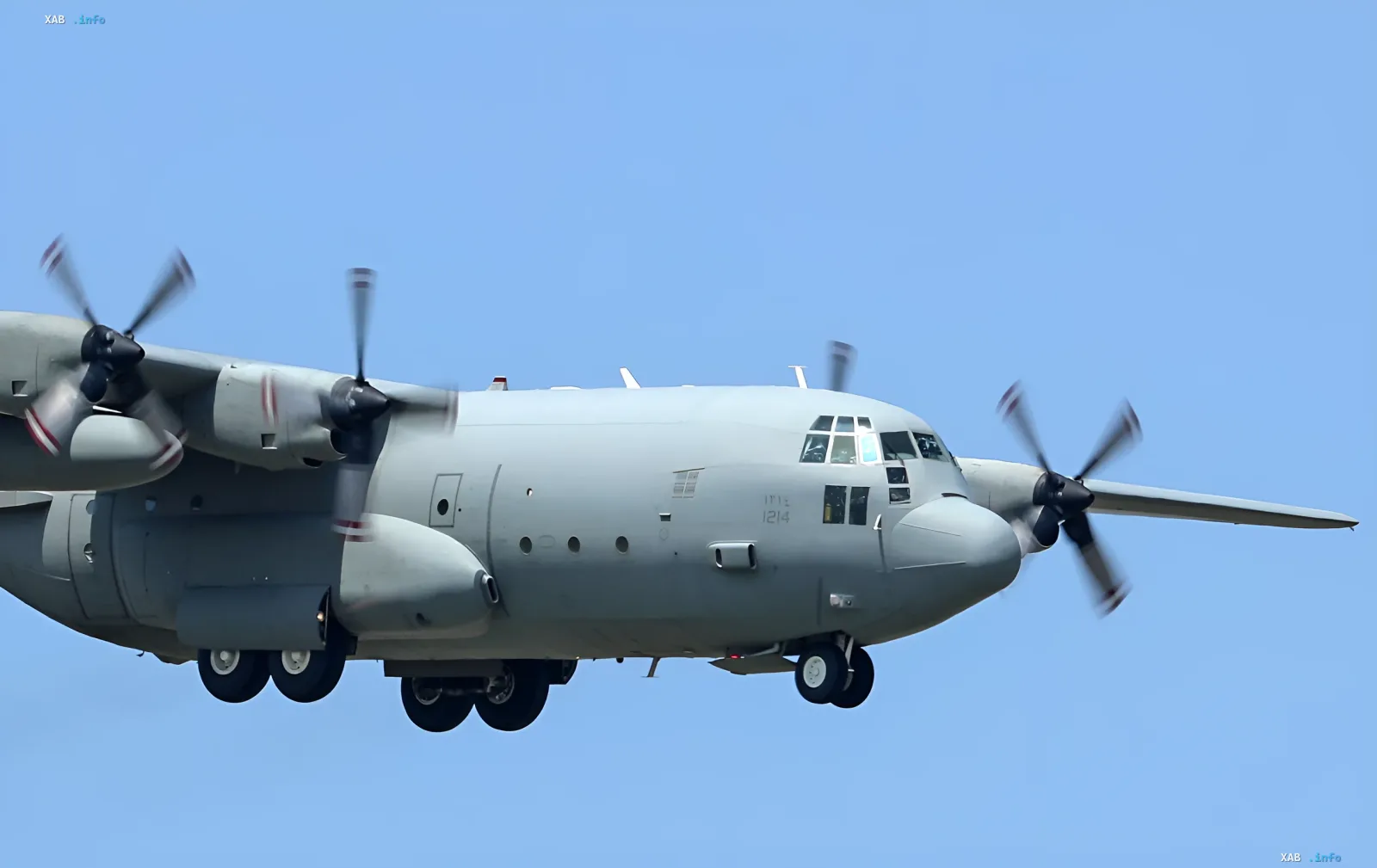
Algerian military transport aviation regularly flies to Russia, plotting its routes through the airspace of NATO member states, including Poland. On board such aircraft is military equipment and various supplies, which raises concerns among security experts. According to recent journalistic investigations, another such flight was recorded on Tuesday, October 6, 2026, when an Algerian aircraft crossed European borders.
Route details and flight monitoring
According to open sources and monitoring service data, specifically Polish Military Radar, an Algerian Lockheed C-130H-30 Hercules military transport aircraft entered Polish airspace. This flight started from the Boufarik air base in Algeria, after which it sequentially crossed the airspace of Italy, Croatia, Hungary, and Slovakia. Subsequently, the aircraft entered Polish airspace from the south and headed east.
Flying near the town of Hajnówka, the Algerian transport aircraft crossed the border with Belarus, after which it headed to Moscow and successfully landed at Vnukovo capital airport. Such logistics chains have become part of established military cooperation practices. Journalists note that in recent weeks, similar flights by Russian and Algerian aircraft, including Il-76MD models and various Hercules modifications, have been repeatedly recorded over European territory.
Military-technical cooperation and Warsaw's reaction
Experts emphasize that transport aviation in this context is used not only for routine cargo transportation, but also to ensure deep military-technical partnership between Moscow and Algiers. This concerns the transportation of weapons, components, and maintenance personnel for Russian systems in service with the Algerian army. Similar corridors are also actively used for logistics operations from African countries to Belarus.
For the authorities of Poland and other Eastern European countries, the key problem lies in the very fact of using an air corridor over NATO territory to supply the military needs of a state in severe confrontation with the Alliance. The situation is complicated by the fact that all these movements are taking place against the backdrop of the general expansion of Russian military presence and infrastructure on the African continent, utilizing Algerian and Libyan logistics routes as hubs.