Ukraine's agri-sector is undergoing a significant wage review in 2026: employers are increasingly competing for workers with practical skills and experience, and in some cases seasonal staff are being offered amounts well above last year's levels. According to OLX Work data, cited by RBC-Ukraine, the median wage in the "Agriculture/Forestry and Agribusiness" category in July 2026 stood at 32,500 hryvnias. A year earlier, in July 2025, this figure was 22,000 hryvnias, meaning growth of nearly 48%.
A 48% Jump: What Is Happening to Wages in the Agri-Sector
This trend stands out against the broader backdrop: the average wage in Ukraine in June 2026 rose by only 5.9%, reaching 32,783 hryvnias. Thus, in year-on-year terms, the agri-sector outpaces the national indicator in wage growth by more than eightfold. Experts attribute this to the seasonal need of businesses to attract staff during narrow periods of the year — the harvest campaign, fruit and berry picking, timber harvesting — as well as to a shortage of workers willing to perform operations requiring specific practical skills.
Who Earns the Most: Combine Harvester Operators and Seasonal Workers
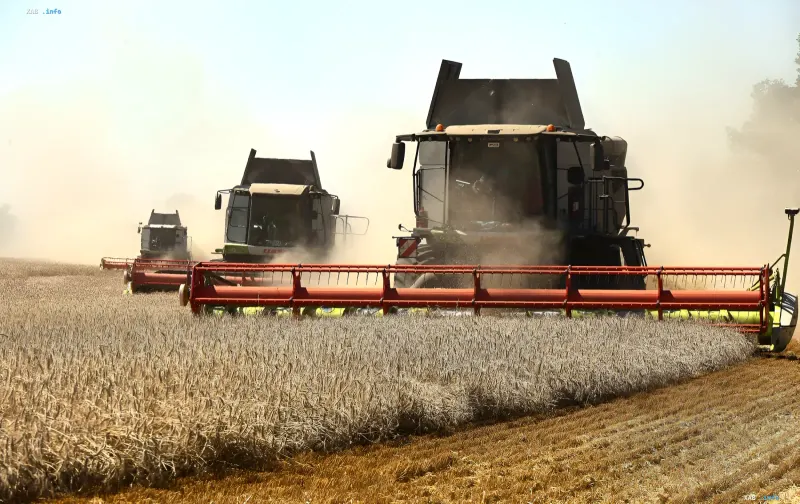
Combine harvester operators remain the leaders in pay among individual professions: their median wage in July 2026 is 60,000 hryvnias. The sharpest jump was recorded for seasonal workers and berry pickers — from 12,125 hryvnias in 2025 to 37,500 hryvnias in 2026, i.e. more than a threefold increase. Sawmill workers and lumberjacks saw growth of almost 2.7 times — from 12,500 to 33,750 hryvnias. Tractor drivers were offered an average of 36,250 hryvnias in July 2026, compared with 25,000 a year earlier, a 45% increase. A more moderate trend is characteristic of general laborers (growth of about 18%, from 20,000 to 23,500 hryvnias) and foresters (15%, to 48,750 hryvnias).
Regional Map of Job Vacancies
Geographically, demand for agricultural labor is concentrated in certain regions. Among the analyzed regions, the highest number of current vacancies in agriculture and forestry was recorded in Kyiv Oblast — 75 offers. This is followed by Dnipropetrovsk and Poltava Oblasts with 33 vacancies each, Odesa Oblast — 29, and Zhytomyr Oblast — 21. This distribution reflects both the structure of sown areas and the logistics of harvest campaigns, where machinery and operators migrate between farms.
Labor Shortage: Higher Pay Does Not Close the Gap
At the same time, wage increases do not automatically solve the problem of a shortage of hands. As noted in industry publications, a number of high-paying vacancies in the agri-sector still remain unfilled: employers compete not only on money but also on living conditions, work schedules, and guarantees of seasonal employment. This means that even with a median of 60,000 hryvnias for combine harvester operators, some positions are filled with a delay, creating risks for the timing and volume of the harvest during peak periods.
Context: The Agri-Sector Against the Backdrop of the Country's Average Wage
For comparison: in June 2026 the average wage in Ukraine was 32,783 hryvnias, with growth of 5.9%, and income levels vary significantly depending on region and field of activity. The median in the agri-sector (32,500 hryvnias in July) has virtually caught up with the national average, which in itself indicates a structural shift: agriculture is transforming from a traditionally "low-paid" segment into one of the most competitive in terms of pay. Separately, RBC-Ukraine noted that from 1 September 2026 teachers' wages are to rise by a further 20%, and by 50% overall compared with 2025, which will create additional competition for labor between sectors.