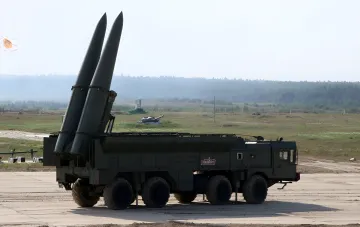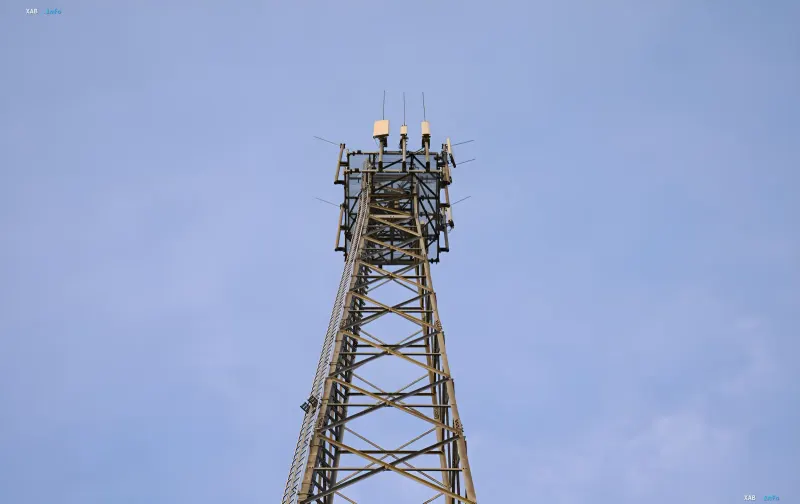
Timofey Yurkov, co-founder of the Ukrainian company Contra-Drone, explained the navigation beacon system used in Russian Shahed drones and missiles in detail on the RBC-Ukraine podcast "TSE BAZA." According to him, such beacons are periodically detected in various territories, including the zone of Belarusian towers, and serve as guidance points for the attack aircraft. Yurkov emphasized that countering this system is fundamentally more difficult than dealing with standard GPS, as the beacons are capable of changing their operating frequencies each time.
Beacon Navigation Principles in Shaheds and Missiles
Yurkov explained that ground-based beacon navigation is a standard feature in the guidance systems of Russian Shaheds and missiles. Unlike satellite navigation, which relies on fixed orbital signal sources, the beacon system involves ground transmitters deployed in specific areas. The expert noted that such beacons are "periodically detected in certain territories," which allows the enemy to track their appearance and activity. When asked if the Belarusian towers are still operational, Yurkov confirmed they are — beacons continue to be detected, although their parameters and locations may change.
Why Beacons Are Harder to Jam Than GPS
The key difference, according to Yurkov, lies in frequency predictability. In the GPS system, the L2 and L5 operating frequencies are well-known, the signal is standardized, and jamming methods are well-established. Beacons, on the other hand, "can use different frequencies each time," which creates a series of challenges for electronic warfare systems: operators cannot instantly identify the parameters of a new transmitter to begin jamming. "If beacons appear unexpectedly, a problem can arise," the expert noted. However, he mentioned that once frequencies and approximate locations of the beacons are known, they can be jammed effectively. Yurkov emphasized that this is complex work requiring constant monitoring and adaptation.
Belarusian Towers: Scale and Coverage
Previously, RBC-Ukraine reported that jet-powered Shaheds over Kyiv are controlled via towers located in Belarus. According to the same expert's estimate, one such tower covers a radius of about 140 kilometers. Data suggests that the Russians plan to build about 26 such towers along the border with Ukraine. This means creating a dense network of relay and navigation points capable of ensuring stable drone control at a significant distance from the border.
Mesh Networks and Relay Drones
Additional context on drone control was provided by Air Force representative Yuriy Ihnat. He explained that Russia controls drones via mesh networks — decentralized networks where each node can simultaneously receive and transmit signals. According to him, Russian troops can use the drones themselves as relays to create such networks. This increases the resilience of the control system: even if one or more points are lost, the connection between the operator and the drone is maintained via alternative routes.
The Only Guaranteed Countermeasure
Summarizing, Timofey Yurkov stated that the most guaranteed method of defeating navigation beacons is their physical destruction. Unlike GPS signals, which can be jammed by electronic warfare means over a wide range, a beacon operating on an unknown or changing frequency does not yield to instantaneous jamming. As long as the transmitter functions, it remains an element of the guidance system, and the only way to completely deprive the enemy of this tool is to destroy the infrastructure itself. According to the expert, this makes the task of countering beacons one of the most difficult in the electronic warfare arsenal.