
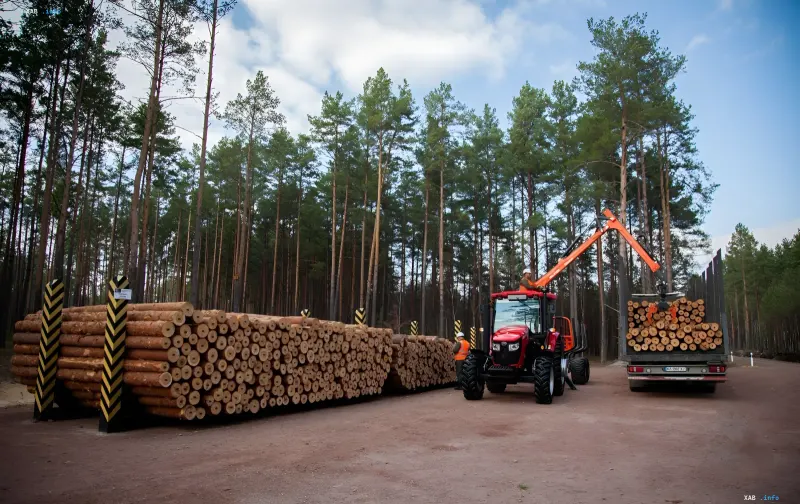
The transformation of the state-owned enterprise «Forests of Ukraine» into a joint-stock company has become one of the most discussed steps in the Ukrainian economy. Amid citizens' concerns about potential privatization and the loss of national heritage, industry management and specialized agencies emphasize that this is exclusively about introducing modern European management standards, rather than selling forest areas. The state retains 100% of the company's shares, and forestry land remains in state ownership, continuing to fulfill all protective and environmental functions.
The Essence of the Reform and Management Model Shift
The reorganization of Ukraine's forestry sector started back in 2022, when instead of a hundred and a half separate forestry enterprises, a single vertically integrated structure—SE «Forests of Ukraine»—was created. Now the process is moving to the next level. In September 2025, the stage of transforming the enterprise into a joint-stock company officially began. This step makes it possible to implement transparent corporate governance tools that are successfully applied in European Union countries and are understandable to international investors, including the World Bank and the EBRD.
Controversial Data
While officials and experts declare the transparency of the reform, increased efficiency, and attraction of investment, opposing views are actively circulating in social networks and among the public. Critics of the reform express fears that corporatization could become a cover for covert privatization, corruption risks, and uncontrolled logging. State representatives refute these speculations, reminding that the legal successor receives only the right of permanent land use, and the company's activities will be strictly controlled by an independent supervisory board and mandatory external audit.
Implementation Deadlines and Large-Scale Inventory
The scale of transformations is impressive: the company manages about 6.6 million hectares of the forest fund, and the staff numbers over 22,000 employees. Due to difficulties and insufficient preparation by the previous management, the transformation commission was forced to present an updated action plan. According to the updated government program, the completion of the entire complex of corporatization measures is scheduled for the end of 2027. The first major stage of this work is already in full swing—a detailed inventory of all company assets is being carried out for their effective use.
Expected Economic and Infrastructure Consequences
The main advantage of corporatization should be flexibility in making business decisions and the opportunity to direct earned funds toward the development of forestry, the renewal of the machinery park, and road construction. Unlike unitary enterprises, joint-stock companies have greater opportunities to attract long-term financing and reinvest income from illiquid assets. According to management representatives, these changes are designed to make the forestry sector economically self-sufficient and as open to society as possible.