While irregular migration flows are declining on most routes into the European Union, Europe’s southern maritime border is seeing the opposite trend. Crete—an island primarily associated with beaches and the tourism industry—is facing a sharp increase in arrivals from North Africa and Asia. It is here, in the waters south of the Greek island, that one of the most intense operational zones for EU border and rescue services is focused. To understand what is happening in this area, Euronews journalists joined a patrol of the European Border and Coast Guard Agency, Frontex, spent time at sea with its crews, and visited the facilities where aerial surveillance is coordinated.
Figures that are changing the picture
According to reports, approximately 24,000 migrants arrived in Crete in the first ten months of 2026, compared to about 17,000 for the entire year of 2025. Thus, the current year has already exceeded the previous year's total. Most boats depart from eastern Libya and cross hundreds of kilometers of open sea, heading either toward Gavdos—a small island south of Crete—or directly to the southern coast of the island itself. Despite reinforced patrols, surveillance aircraft, and advanced monitoring systems, these crossings continue.
A patrol on the front line
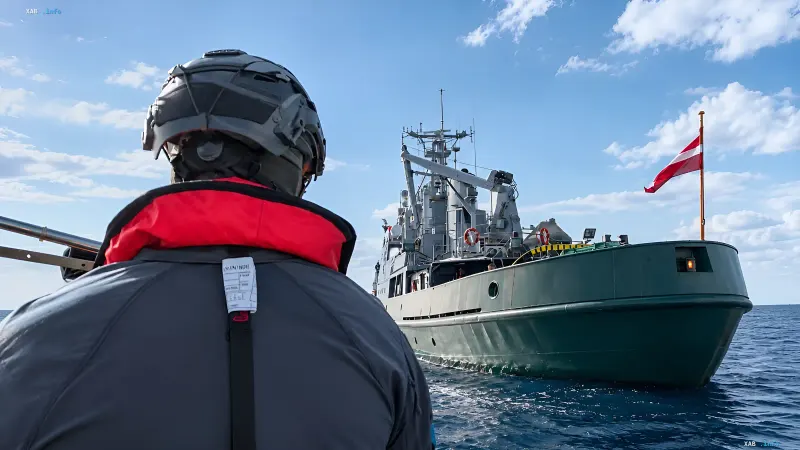
Greece hosts the largest Frontex operational deployment in the European Union. The agency provides technical equipment, surveillance assets, and support for the return of migrants who have no legal right to stay in the EU; all these actions are carried out in cooperation with Greek authorities, who retain operational command. On Crete and Gavdos alone—the southernmost inhabited point in Europe—more than 40 staff members, three aircraft, one drone, and six patrol vessels are deployed to support Greek authorities. Among them is the Latvian patrol vessel Valpas, which has been operating south of Crete for about 18 months. A typical deployment at sea lasts 72 hours, and for the 20-member crew, the vessel becomes both a workplace and a temporary home: crew members maintain contact with Latvia and preserve familiar traditions even far from their homeland.
One survivor—and 60 missing
During operations at sea, an incident occurred that clearly demonstrated the danger of this increasingly busy route. On the afternoon of November 4, on the island of Chrysi, about 15 kilometers from the southern coast of Crete, one migrant was found. He stated that he had crossed the sea with 60 other people, which launched a massive search-and-rescue operation. This is just one of dozens of episodes to which Greek and European patrol and rescue teams must respond. Officials from the local coast guard in Heraklion told Euronews that in just 48 hours, 13 boats with about 400 migrants had arrived in their area of responsibility, and about 20 bodies had been recovered in the same period.
The cost of the crossing
The captain of the Latvian vessel Valpas, Ozers, a father of three, said that rescue operations can be extremely complex and dangerous for both migrants and crews. He recalled an incident where passengers tried to stand up all at once, the boat began to list, and two people fell overboard: in the dark, the team managed to keep them in sight, throw life buoys, and first ensure the safety of the main group before approaching the people in the water. According to him, one of the main dangers arises when migrants set sail in good weather, but it deteriorates sharply during the crossing. Commander of the 7th Regional Directorate of the Hellenic Coast Guard, Ioannis Orfanos, who coordinates operations across Crete, noted that the area is vast, weather conditions are often adverse, and some incidents turn out to be extremely complex—and, unfortunately, lives are lost in them.
A tougher EU course
Events off the coast of Crete are taking place against the backdrop of Brussels preparing a tougher course on migration and border management. According to Anadolu, citing Euractiv and EU officials, the European Commission is preparing a new regulation that will significantly expand the powers of Frontex: in the areas of cooperation with third countries, the return of illegal migrants, the fight against cross-border crime, and countering hybrid threats. The plan includes increasing the agency's standing corps from 10,000 to 30,000 staff members, as well as more active participation by Frontex in migrant return operations between non-EU countries. These steps indicate that the pressure on such "hot" spots as the south of Crete may only increase in the coming years.