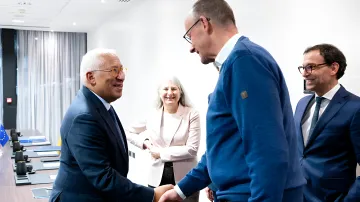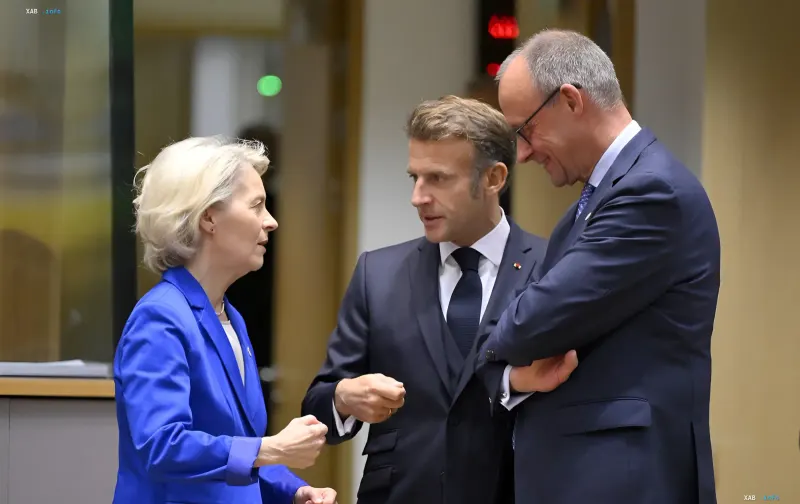
It took European states nearly five years of full-scale war to move from coordinating individual political positions to attempting to form a unified mechanism for representing their interests in negotiations regarding Ukraine and the future security of the continent. Political analyst Oleksandr Kondratenko, in a column for RBC-Ukraine, argues that the very appearance of such a format signals Europe's desire to regain influence over the processes that will directly determine its future. However, he says, this same fact exposes a much deeper problem: why do European states, possessing a combined economic, diplomatic, and military potential of global proportions, still require separate agreements between leading capitals to form a common political position?
Military Dependency: What Remains for Europe Without Washington
The column raises a question that, according to the author, is not frequently addressed in European discussions: how can Europe defend its own territory from large-scale Russian aggression without the US? Kondratenko cites a hypothetical scenario of a direct armed invasion of one of the Baltic states and asks a question that can no longer be answered by a declaration: who will organize the defense, who possesses the necessary military resources, and who will make the decisions? Formally, NATO countries have collective defense obligations under Article 5 of the North Atlantic Treaty, and the EU provides for mutual assistance to member states in the event of aggression. But, as emphasized in the text, critical European defense capabilities still depend on Washington: intelligence, satellite capabilities, strategic aviation, missile defense, logistics, command and control, and the American nuclear umbrella. This, according to the analyst, is one of the main contradictions of European agency—the desire to independently define security policy while its implementation depends on the political will and military capabilities of the US.
Security Guarantees: Declarations versus Resources
Against this background, as noted in the column, discussions about security guarantees for Ukraine—which are supposedly meant to be analogous to NATO's Article 5—sound particularly ambiguous. The logic the author constructs is simple: if Europe cannot fully guarantee its own security without US participation, then what will the promises to Ukraine be based on if they are not backed by specific forces and resources at the disposal of European states? Promises without material support, according to Kondratenko, do not translate into an effective deterrent mechanism.
Budgetary Disputes and the Problem of a Single Voice
A separate block of problems highlighted by the analyst concerns internal EU processes. He points out that the plan to allocate funds for Ukraine in the 2028–2034 EU budget has exposed a conflict of interest among the bloc's members. Simultaneously, the question of the negotiation format is raised: instead of giving a mandate to the EU's top diplomat, Kaja Kallas, the European Union is represented by five leading countries at once. This approach, according to the author, demonstrates the bloc's inability to develop a coordinated mandate, obligations, and the resources to execute them—without which, a seat at the negotiating table does not mean real influence over the outcome.
The Main Condition: Transforming Resources into Shared Strength
Concluding the analysis, Kondratenko formulates a key thesis: Europe's future depends on its ability to turn existing resources into a shared strength and independently defend its interests. Differing national interests, dependence on external power centers, and the complexity of decision-making, in his view, call into question the EU's role in the world and the bloc's ability to remain a coherent political project in the future. While Washington, Beijing, and Moscow engage in negotiations, Europeans, as the text emphasizes, are looking for a way not to be left out of decisions regarding their own security—but to do so, they need not just political unity, but a new architecture for decision-making and implementation.