Stockpile Crisis: CSIS Audit Data
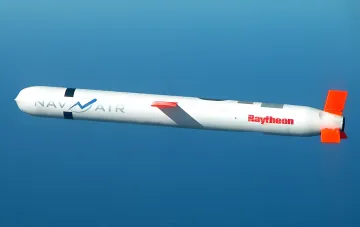
On August 16, 2026, the British publication The Sunday Times, relying on data from the Center for Strategic and International Studies (CSIS), published a detailed report on the state of US missile stockpiles. According to the document, as a result of an 18-month active phase of conflict in the Middle East and support for allies, the Pentagon has faced unprecedented depletion of critical munitions. In particular, Tomahawk cruise missile stockpiles have decreased by 50% of the total volume, while the number of PAC-3 interceptor missiles for Patriot systems has fallen below the strategic safety threshold.
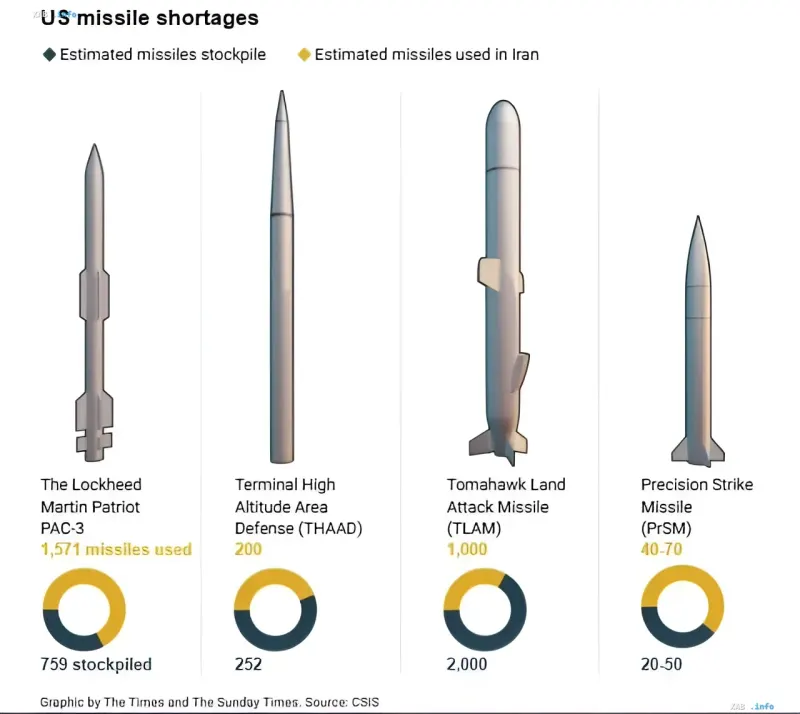
Infographics prepared based on the audit demonstrate that from an initial arsenal of 3,100 PAC-3 missiles (as of the beginning of 2022), only 759 units remain in storage. The majority of losses were due to active combat operations against Iran, where more than 1,500 interceptors were expended. The situation is exacerbated by the fact that the production of new missiles cannot keep up with the rate of consumption: the cycle to create one interceptor takes about two years, and its cost exceeds $4 million.
Structural Problems in the Defense Industry
Analysts point to the systemic nature of the crisis, which was caused by a long-term imbalance in the distribution of the defense budget. Over the last few decades, priority has been given to purchasing expensive platforms — F-35 fighters, aircraft carriers, and submarines — at the expense of producing consumables. Lobbying for the interests of complex equipment manufacturers led to the fact that missile and munitions factories were funded on a residual basis.
In the conditions of modern conflict, where Iran uses massed salvos of ballistic missiles and drones, American industry proved unprepared for the rate of consumption. Conglomerates such as Lockheed Martin, Raytheon, and Boeing are facing physical limitations: a shortage of solid-fuel engines, a lack of rare earth metals, and qualified personnel. Current capacity allows for the production of about 500 PAC-3 missiles per year, which covers only a third of the monthly consumption in the combat zone.
Contradictory Data
The report contains discrepancies in the assessment of the remaining stock of the latest Precision Strike Missiles (PrSM). According to The Sunday Times, between 20 and 50 units remain in storage, whereas some internal Pentagon documents cited by other sources mention a figure of up to 100 units. The difference may be due to the fact that some missiles have already been issued to forward bases but have not yet been counted as "expended" in the overall statistics. Additionally, data on the number of THAAD missiles expended during the defense of Israel and US bases varies from 180 to 220 units, which requires clarification from military departments.
Geopolitical Consequences and Deterrence Threat
The main conclusion of CSIS experts is that the depletion of stockpiles in the Middle East directly threatens the US ability to deter China. In the event of a hypothetical conflict around Taiwan, US armed forces risk being left without long-range precision missiles and air defense systems by the second or third week of active combat operations. This creates a dangerous "window of opportunity" for Beijing, which could exploit the temporary weakness of US military potential.
The US administration is forced to consider emergency measures to militarize civilian industry and reallocate budget funds. However, given the long timelines for restructuring production chains, restoring stockpiles to a safe level will take at least three to four years. In the short term, Washington may be forced to reduce commitments to allies or revise its strategy of global presence.