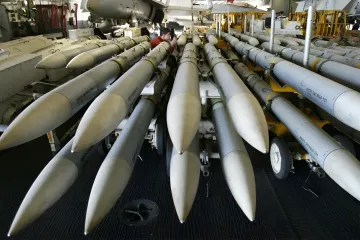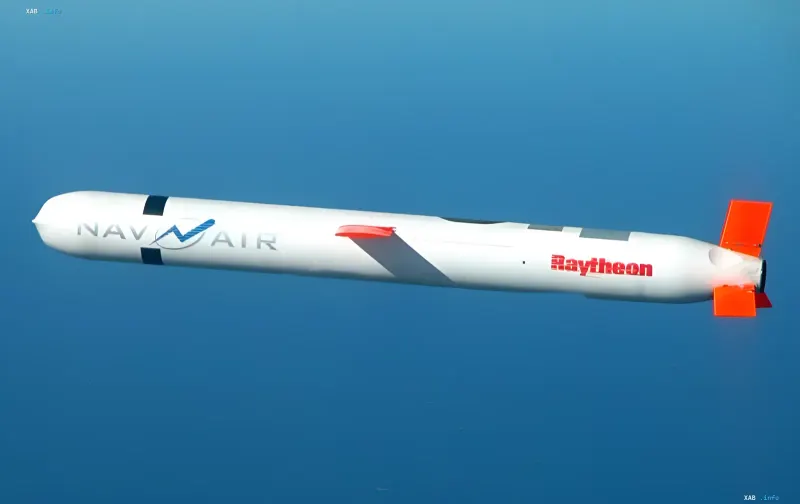
Amid a critical shortage of precision munitions arising from recent combat operations, the Pentagon has made an unprecedented decision to ramp up defense industry production capacity. The U.S. Navy has signed a seven-year contract worth $22.9 billion with Raytheon Technologies. The primary goal of the agreement is to increase the production rate of Tomahawk cruise missiles from the current 60 units per year to 1,000, representing a seventeen-fold increase in production.
The 'Arsenal of Freedom' Initiative and Contract Scale
The new agreement builds upon a framework deal signed back in February 2026 under the 'Arsenal of Freedom' initiative. The strategy of this program is to radically shift the American defense industry from peacetime production levels to a scale approaching wartime capacity. Acting U.S. Secretary of the Navy Huan Cao emphasized that authorities have called on industry to urgently increase munitions output to ensure the military has the necessary firepower.
Raytheon President Phil Jasper confirmed that the company will direct significant investments toward expanding personnel, implementing new technologies, optimizing supply chains, and modernizing production lines. The contract concerns Block V modification missiles, which are designed to strike both land and sea targets. In the first half of 2026, Raytheon already demonstrated the ability to accelerate, delivering three times more missiles than in the same period of the previous year.
The War in Iran as a Catalyst for Shortage
The main driver for such a sharp increase in production was the critical depletion of precision weapon stocks during the war in Iran. According to analysts, at the start of the conflict, the U.S. military had a stockpile of about 3,100 Tomahawk missiles. However, the intensity of combat exceeded forecasts: approximately 400 missiles were expended in the first 71 hours of the operation, and more than 850 units were used within the first month of the campaign.
By the time the April ceasefire was declared, the U.S. had fired more than 1,000 such missiles. Following the resumption of hostilities in July 2026, the use of Tomahawks continued, which, by estimates, reduced the total stockpile of the U.S. armed forces by about one-third. The situation is exacerbated by the fact that the U.S. Army has practically exhausted its stocks of other types of precision long-range missiles, such as ATACMS and PrSM, over the five months of the war.
Contradictory Data
Despite the clarity regarding the total contract value ($22.9 billion), there are discrepancies regarding implementation details and current logistics. First, the U.S. Navy and Raytheon have not disclosed the exact number of missiles ordered under this specific agreement, nor have they provided a detailed delivery schedule, raising questions about when exactly the shortage will be fully eliminated. Second, while officials claim a seventeen-fold increase in production, experts note that the U.S. still significantly lags behind Ukraine in the production rates of combat drones and is only at the initial stage of developing its own drone industry, creating an imbalance in the overall weapons structure.
Strategic Consequences
The Pentagon's decision signals a paradigm shift in American military doctrine. If the previous focus was on accumulating strategic reserves, the events of 2026 have demonstrated the necessity of creating a flexible and scalable production base. Investments of nearly $23 billion will not only allow for the replenishment of losses suffered in the conflict with Iran but will also create a security buffer for the future. However, given that the contract spans seven years, the question of how quickly the American industry can realistically reach the target of 1,000 missiles per year remains open.