
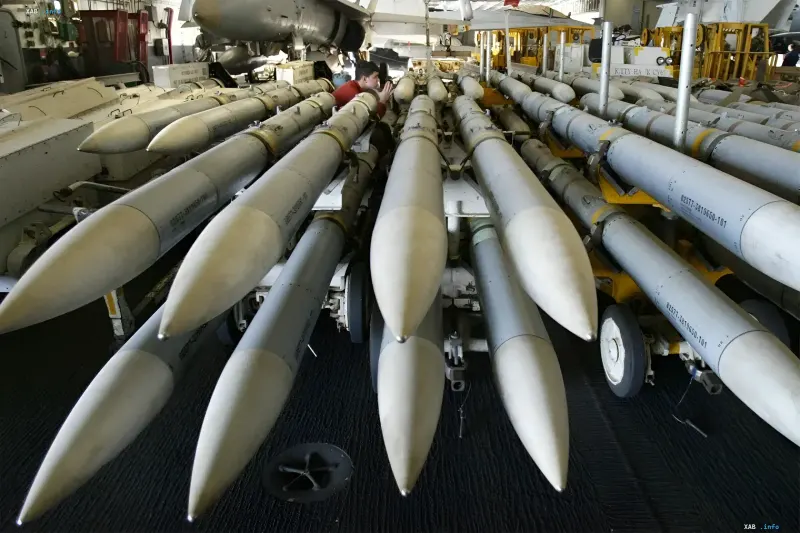
The US Department of Defense has signed a strategic agreement worth $20.7 billion with aerospace and defense giant RTX Corp. (Raytheon division). The five-year deal, with a two-year extension option, provides for a nearly twofold increase in the production of air-to-air missiles, specifically advanced AMRAAMs. The decision comes amid immense pressure on military logistics and supply chains.
Causes of Shortages and Scale of Expenditures
According to the Center for Strategic and International Studies (CSIS), active military operations against Iran have led to a massive depletion of arsenals. In just two months, Washington expended one-third of its available Tomahawk cruise missiles (over 1,000 units) and nearly half of its top-tier Patriot interceptor missiles. Experts point out that current manufacturing rates cannot keep up with the expenditure pace.
Contradictory Data
While official Pentagon statements emphasize the effectiveness of multi-billion-dollar contracts and defense plants shifting to round-the-clock operations, independent analysts and reports in The Wall Street Journal highlight deep structural problems. Specifically, despite plans to produce up to 1,000 missiles annually, actual factory capacities are limited to about 400 units, and fully replenishing stockpiles will take at least three years.
Geopolitical Consequences
The rapid consumption of precision-guided munitions poses serious risks to global US security. Analysts warn that depleting stockpiles during the Middle East campaign could weaken Washington's strategic stance in other critical regions, including the Asia-Pacific and Taiwan, where systems like AMRAAM and Patriot air defense act as a vital defensive shield.