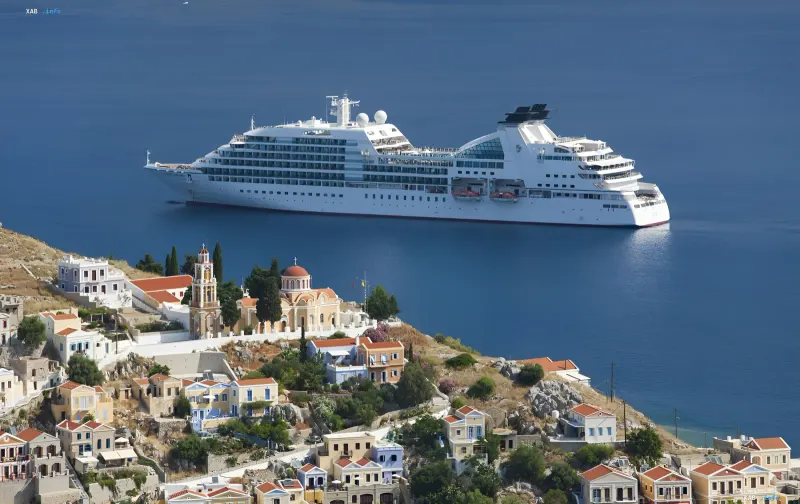
When a tourist first hears the word "cruise," a set of persistent fears immediately comes to mind: the ship will rock, a week on board will be boring, everyone around will be elderly, and there won't even be time to take photos at the port. According to Natalia Yakimenko, director of the travel agency "Fly Wherever I Want!", these very myths deter millions of potential passengers from one of the most comfortable travel formats. Meanwhile, a modern cruise is not just moving from point A to point B by water, but an opportunity to see several cities and countries in a single trip, wake up in a new place every day without wasting time on transfers, packing suitcases, and searching for the next hotel.
"Won't I Get Seasick?" — The Beginner's Main Fear
This is perhaps the most common argument against a cruise, especially among those who have never traveled by sea. A person imagines a small ship rocking on the waves and immediately abandons the idea. The reality is fundamentally different: modern cruise ships are massive vessels designed with stabilization systems that significantly reduce the sensation of movement. In calm weather, many passengers get so used to being on board that they barely notice the motion. Of course, the sea is unpredictable, and everyone's sensitivity to movement varies, so guaranteeing that no one will feel sick is impossible. But this fear should certainly not automatically put an end to a cruise vacation.
"What Will I Do for a Whole Week?" — The Illusion of Boredom
At first glance, several days on the same ship looks like a limitation: you are bound to one place and see only the sea. However, a large liner is more like a resort complex than an ordinary ship. On board, there are pools, spa areas, gyms, theaters, cinemas, numerous restaurants and bars, shops, sports grounds, kids' clubs, discos, and casinos. Some ships feature water slides, climbing walls, surfing simulators, and even full-scale attractions. Add to this decks with views of the endless sea, sunrises, sunsets, and evenings under the stars, as well as daily stops in new ports where you can go on an excursion or explore the city on your own. A cruise is not about sitting in a cabin waiting for arrival, but about the freedom to choose what your day will be like.
"Are There Really Only Pensioners There?" — The Age Myth
This stereotype has long been outdated. Yes, cruises are indeed popular among older audiences because they allow for comfortable travel without constant relocations and hotel changes. But this is definitely not the only type of tourist who prefers cruises. On a single liner, you can meet young couples, groups of friends, families with young children, solo travelers, and older people. For families, there are kids' clubs and entertainment; for youth, parties, sports activities, and social networking; for couples, romantic dinners; and for solo travelers, a cruise becomes an opportunity not only to see new places but also to meet new people. The age of passengers, of course, depends on the route, season, and cruise company, so if a certain atmosphere is important, you should choose a liner and route not at random, but according to your own expectations.
"Will I Manage to See Anything If the Ship Stops for Only a Day?"
If you imagine a cruise as endless sitting on the deck with a book, this fear is understandable. But modern cruise companies invest huge resources to ensure passengers have plenty to do throughout the journey. The entertainment program can be so rich that you won't have time to try everything in a week: during the day you can swim in the pool, work out, attend master classes, or relax in the spa, and in the evening watch shows, listen to live music, go to restaurants, and dance. At the same time, the best part is that you don't have to participate in everything. Want active recreation? Choose it. Dreaming of peace, a book, and coffee with a sea view? That is also an excellent scenario. A cruise doesn't dictate how to rest; it provides many options, and the passenger chooses their own. As for port stops, routes are usually planned so that travelers have time to explore the main sights and the atmosphere of the place. In many ports, you can spend a significant part of the day ashore: visit the historical center, see architectural gems, taste local cuisine, and simply walk through the narrow streets, soaking in the spirit of the city.
A Cruise as a Format, Not a Sentence
Having sorted out the four main myths, it becomes obvious: a cruise is not "a vacation for those who have nowhere else to go," but a full-fledged tourism product that has radically changed in recent years. Liners have become larger, more diverse, and more technological; routes more flexible; and the audience younger and more active. If you have long postponed a trip "to the sea, but not to the beach," perhaps a cruise will become the format that allows you to see more than you expected without feeling forever on the move.