
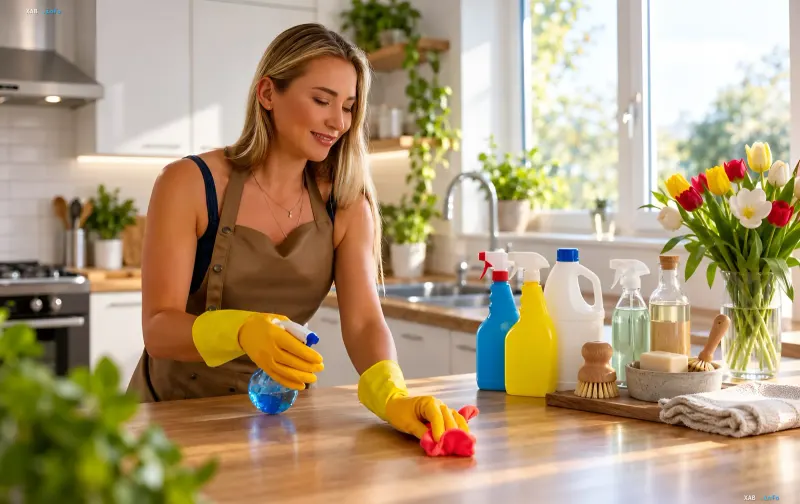
During major house cleaning or everyday surface wiping, many homeowners are used to combining several household chemicals, believing that using them together will enhance the effect. However, as warned by the US Centers for Disease Control and Prevention (CDC), household chemicals contain active substances that undergo chemical reactions upon contact. Instead of more effective cleaning, dangerous fumes, corrosive mixtures, and toxic gases can form indoors, causing respiratory irritation, mucosal burns, and in severe cases, serious lung damage. The situation is especially critical when one product is applied to a surface where traces of another have not yet dried: in this case, the reaction triggers without directly mixing liquids in a single container.
Chlorine and Vinegar: The Source of Toxic Chlorine Gas
The most common and simultaneously most dangerous combination is chlorine bleach (sodium hypochlorite) and acetic acid. Vinegar is traditionally used to remove limescale, and chlorine products are used to disinfect plumbing. According to the Washington State Department of Health, contact between these two substances releases toxic chlorine gas. Inhaling even small concentrations causes a burning sensation in the throat, watery eyes, coughing, and dizziness. Significant exposure can result in severe lung damage. Cleaning product expert Natalia Gromova, who has 12 years of experience in a quality control laboratory, emphasizes that chlorine gas begins to release within seconds, and a few breaths of the vapors can trigger an acute bodily reaction. It is strictly forbidden to pour a chlorine product into a bathtub or toilet bowl and then add vinegar "to boost the effect." This rule also applies to other acidic preparations, including rust and limescale removers.
Ammonia and Chlorine: The Invisible Enemy in Glass Cleaner
Ammonia (aqueous ammonia solution) is a component of several glass, mirror, and glossy surface cleaners. Mixing ammonia with chlorine bleach produces chloramines—toxic compounds whose vapors aggressively irritate the respiratory tract. According to Poison Control, such a reaction provokes coughing, inflammation of the mucous membranes, and breathing difficulties. A particular danger is that the presence of ammonia is not always obvious to the consumer: it may be listed in small print on the label or under its chemical name. Therefore, it is essential to carefully study the ingredients before using any product. Cleaning toilets and areas where urine traces may remain deserves special attention, as urine also contains substances capable of reacting with chlorine compounds and releasing harmful vapors.
Hydrogen Peroxide and Vinegar: The Myth of the "Magic" Cleaning Mix
On social media and home-cleaning videos, people are often advised to prepare homemade cleaning solutions based on hydrogen peroxide and vinegar. However, the reaction between hydrogen peroxide and acetic acid can form peracetic acid—a substance that irritates the skin, eyes, and respiratory tract. Both components are widely used individually in household cleaning, but using them together in a single container or on the same surface is unacceptable. Experts strongly advise against experimenting with such "recipes," even if they look harmless and do not contain aggressive industrial reagents.
Chlorine and Alcohol: The Risk of Chloroform Formation
Another unacceptable combination is chlorine bleach and alcohol-containing products. The latter include certain disinfectants, surface cleaners, and preparations based on ethyl or isopropyl alcohol. According to Transport Canada, mixing such substances can produce toxic compounds, including chloroform. Contact with hazardous fumes causes headaches, dizziness, nausea, and other symptoms of acute poisoning. The rule is simple: do not mix different disinfectants and do not add alcohol to chlorine products.
Drain Cleaners: Do Not Experiment
Drain cleaning products contain strong acids or alkalis designed to dissolve organic waste. They can cause chemical burns to the skin and mucous membranes. If one product fails to clear a clog, it is strictly forbidden to immediately pour another down the drain: depending on the composition, this can lead to intense heat generation, splashing of caustic liquid, or the formation of dangerous fumes. In such cases, you must act strictly in accordance with the manufacturer's instructions and, if necessary, call specialists.
First Aid: What to Do in Case of Household Chemical Vapor Poisoning
If a sharp, unusual odor, coughing, burning eyes, or breathing difficulty occurs during cleaning, you must immediately stop work and move away from the reaction site. You should leave the room for fresh air right away. It is strictly forbidden to try to "neutralize" the mixture by adding vinegar, baking soda, water, or other agents: this can intensify the reaction and increase the release of toxic substances. If symptoms persist—such as difficulty breathing, severe coughing, nausea, or fainting—you must seek medical attention or call poison control. Prevention remains the best tool: store household chemicals in their original containers with labels, do not transfer them into unlabeled bottles, and always check the ingredients before use.